


Kitchen cabinets influence the appearance and function of the entire room. Since they cover a large portion of the walls and provide much of the available storage, their design can affect how the kitchen feels and how easily it can be used. Choosing a cabinet style may seem simple at first, but there are several factors to consider. Door profiles, colors, finishes, hardware, countertops, lighting, and the architecture of the home all contribute to the final result. Homeowners should also think beyond current trends. A cabinet style should fit the character of the home and continue to feel appropriate as other parts of the kitchen change over time. Understanding the differences between common cabinet styles can make the selection process easier and help Milwaukee homeowners create a kitchen that balances appearance with everyday practicality.
Start With the Overall Character of the Kitchen
The existing character of the kitchen is a useful starting point when selecting cabinets. A traditional home may work well with more detailed cabinetry, while a contemporary interior may benefit from simpler doors and cleaner lines. Transitional kitchens provide more flexibility because they combine traditional and modern elements. This does not mean homeowners must strictly match their cabinets to the architecture. A modern cabinet can work in an older home when the surrounding materials are carefully selected. The goal is to create a relationship between the cabinetry and the rest of the room. Homeowners should consider the flooring, countertops, backsplash, lighting, appliances, and nearby living spaces before choosing a cabinet profile.
Compare Different Cabinet Style Options
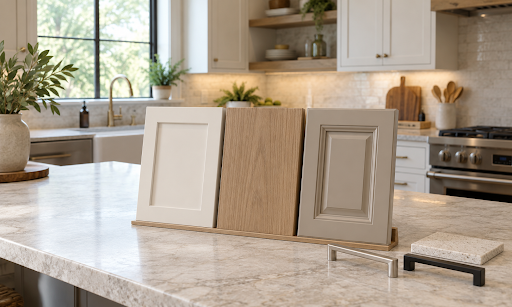
There are several common cabinet profiles, each with its own visual character. Homeowners comparing cabinet style options can explore different profiles, including Shaker, Flat Panel, Recessed Panel, and Raised Panel designs. Each style creates a different visual effect and can be matched with various colors, finishes, hardware, and kitchen layouts.
Shaker Cabinets
Shaker cabinets feature a simple frame around the center panel. Their relatively clean appearance allows them to work across traditional, transitional, farmhouse, and contemporary interiors. They can also be paired with many different colors and hardware finishes.
Flat-Panel Cabinets
Flat-panel doors have a smooth surface with little or no decorative detailing. They are often associated with modern and minimalist interiors. Their simple profile allows other features, such as countertops or lighting, to become stronger design elements.
Raised-Panel Cabinets
Raised-panel doors include a center section that adds dimension and decorative detail. This style can work well in traditional or formal kitchens where homeowners want more visual depth.
Recessed-Panel Cabinets
Recessed-panel doors have a center panel set behind the surrounding frame. They provide more detail than flat-panel doors while maintaining a relatively balanced appearance. When comparing cabinet style options, homeowners should consider how much detail they want and how the profile will interact with the other surfaces in the room.
Consider the Size of the Kitchen
The size of the kitchen can influence how a cabinet profile appears. In a small kitchen, heavily detailed doors may create a busy visual effect if combined with patterned countertops and backsplashes. Simpler cabinet profiles can provide a quieter appearance and allow the room to feel more organized. Larger kitchens offer more room for decorative details. However, even in a large space, homeowners should consider whether multiple patterns and textures compete with one another. The goal is visual balance rather than simply filling every available surface with detail.
Think About Cabinet Color
Cabinet style and color should be considered together. A Shaker door in white can look completely different from the same door in a dark wood finish. Likewise, a flat-panel door can feel warmer when finished in natural wood rather than a cool grey or crisp white. Homeowners should think about the atmosphere they want to create. Light colors can help produce a bright appearance, while darker finishes can introduce contrast and depth. Natural wood tones can add warmth and texture. The cabinet profile should support the selected finish rather than competing with it.
Consider the Countertop
Countertops occupy a large visual area, so they should be considered before finalizing cabinet style. A detailed cabinet profile may pair better with a countertop that has subtle movement. A simple flat-panel or Shaker cabinet can provide a good background for stone with stronger veining. Homeowners should also consider countertop thickness and edge details. If the countertop already has several decorative elements, a simpler cabinet profile can help keep the overall design balanced.
How to Choose the Right Hardware for Your Kitchen Cabinets
Hardware can change the appearance of even a relatively simple cabinet door. Long bar pulls can reinforce a contemporary appearance, while knobs or decorative handles may create a more traditional feeling. The size of the hardware should also relate to the cabinet doors and drawers. Large hardware can become a design feature, while smaller hardware allows the cabinet profile to remain the primary focus.Hardware can influence both the appearance and usability of cabinetry. Homeowners exploring cabinet hardware styles can compare different shapes, finishes, sizes, and designs to find an option that complements their cabinet style.
Consider Maintenance Requirements
Cabinet style can influence everyday cleaning. Highly detailed doors may contain more grooves, edges, and decorative areas where dust or cooking residue can collect. Smoother surfaces can be easier to wipe down because they contain fewer recessed areas. However, the finish also matters. Glossy surfaces may make fingerprints more visible, while textured or matte surfaces can have different cleaning requirements. Homeowners should consider both appearance and maintenance before selecting a cabinet profile.
Think About Lighting
Lighting affects how cabinet styles and finishes are perceived. Natural light can highlight texture and color during the day, while artificial lighting can create a different appearance in the evening. Under-cabinet lighting can also emphasize the relationship between upper cabinetry, countertops, and backsplashes. A cabinet style that looks subtle in a dim showroom may appear more detailed in a brightly lit kitchen. Viewing samples under different lighting conditions can therefore be useful before making a final decision.
Consider Two-Tone Cabinet Designs
Homeowners do not always need to use one cabinet style and finish throughout the kitchen. Two-tone designs can create visual separation between different areas. For example, perimeter cabinets may use a neutral finish while the island uses a contrasting color. Another approach is to use lighter upper cabinets and darker lower cabinets. When using multiple finishes, the cabinet profiles should still work together. Repeating hardware, countertop materials, or other design details can help connect the different cabinet sections.
Match Cabinet Style With Flooring
Flooring can influence how the cabinet style is perceived. Natural wood flooring can add warmth to a modern cabinet design. Tile flooring can support both traditional and contemporary styles depending on its color and pattern. If the flooring contains strong visual movement, simpler cabinets may create better balance. Homeowners should look at cabinet and flooring samples together whenever possible.
Consider Open and Closed Storage
Cabinet style is not only about the doors. The combination of closed cabinets, open shelves, glass fronts, and display areas can affect the overall design. Open shelving can introduce visual space and provide a place for frequently used dishes or decorative items. Glass-front cabinets can provide a similar display function while protecting the contents from dust. Closed cabinets are useful for items homeowners prefer to keep hidden. Combining these storage types can create variety without requiring multiple cabinet door profiles.
Think About Long-Term Design
Kitchen cabinets are usually a long-term investment. Homeowners should consider whether the selected cabinet style will continue to suit their preferences if they later change the countertop, backsplash, flooring, or hardware. Versatile styles can make future updates easier. For example, a simple cabinet profile can work with different hardware finishes and countertop materials over time. Choosing a style that provides flexibility can therefore be more practical than selecting a design solely because it is currently popular.
Consider the Kitchen Workflow
A beautiful cabinet style cannot compensate for a poor kitchen layout. Homeowners should make sure cabinet placement supports cooking, cleaning, food preparation, and storage. Frequently used items should remain easy to access. Drawers should open without interfering with nearby appliances or walkways. Cabinet doors should have sufficient clearance. These functional considerations should be resolved before the final appearance is selected.
Review Physical Samples
Online images are useful for initial research, but physical samples provide more information. Homeowners can see the actual color, texture, door thickness, and finish. Samples can also be placed beside countertops, flooring, backsplash materials, and hardware to evaluate the complete combination. This process can reveal differences that may not be obvious on a computer screen.
Consider Professional Guidance
Cabinet selection can involve many decisions. Professional guidance can help homeowners evaluate measurements, cabinet profiles, storage requirements, and installation considerations. For Milwaukee-area homeowners, local cabinet planning can also make it easier to view different styles and finishes in person. A professional can help identify potential layout issues before cabinets are ordered. This can make the renovation process more organized and reduce the risk of choosing a cabinet style that does not suit the space.
Final Thoughts
Choosing a cabinet style requires more than selecting the door that looks best in a photograph. Homeowners should consider the architecture of the home, kitchen size, storage requirements, cabinet color, countertops, backsplash, flooring, hardware, lighting, and long-term maintenance. Shaker, flat-panel, raised-panel, and recessed-panel cabinetry each provide different visual characteristics. The best choice depends on how these characteristics fit the complete kitchen design. With careful planning, homeowners can select cabinetry that provides both visual appeal and practical everyday performance. For Milwaukee homeowners, taking time to compare cabinet style options before installation can help create a kitchen that feels cohesive, functional, and appropriate for the home.
William