


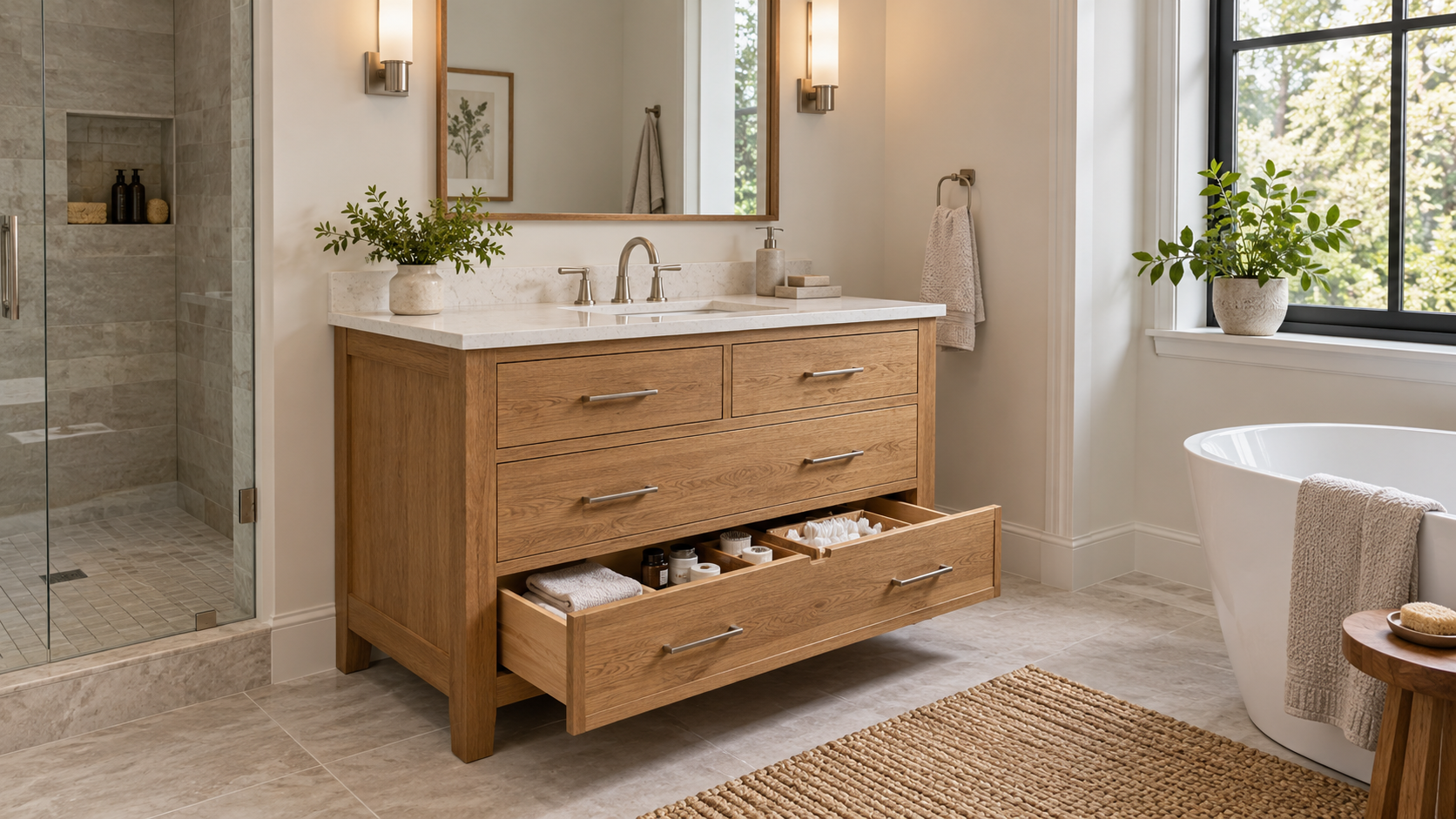
A bathroom vanity isn’t just a cabinet under a sink. Can serve as a valuable storage option, as a functional countertop, and as an important part of the overall aesthetic of the room. There are numerous sizes, configurations, materials and finishes for vanities, so it takes more than just picking a design that looks attractive. The ideal vanity should fit into the space that’s available and complement the use of the bathroom. The needs of a small water closet can be quite different from those of a big family bathroom that is used by several people. Other factors that homeowners must take into account include the placement of plumbing, door swings, counter space, sink design, storage space, and room layout. When remodeling a bathroom in Dublin, Ohio, it’s important for homeowners to take these factors into account before buying a vanity. With a little planning, a vanity can help to improve the organization of the bathroom and add a completed and unified look.
What Is a Bathroom Vanity?
Usually, a bathroom vanity is a combination of a sink, counter surface, and cabinet storage in one convenient space. It will have a design that can feature drawers, doors, open shelving or extra storage for bathroom items depending on the design. Vanities come in a variety of sizes, too. The smaller units could work for smaller bathrooms, and the larger units could offer more counter and storage space. Double-sink layouts might be helpful in multi-occupant bathrooms. The Columbus Cabinets City bathroom vanity collection comes in various sizes, sink options and countertop finishes such as marble and acrylic. Homeowners that understand these parts can make an informed decision about which vanity to buy, making sure they pick the one that will fit their needs more than its looks.
Start With the Bathroom Layout
When choosing a vanity, the space available will be the first consideration. However, no matter how good-looking, a vanity can be a hindrance if it impedes mobility or is just in the way of nearby fixtures.
Homeowners should measure:
- Available wall width
- Floor space
- Door clearance
- The place of the shower or bathtub
- Toilet position
- Plumbing connections
- Existing electrical fixtures
Especially significant is the location of a bathroom door. If the vanity looks out too far into the room, it may create the illusion of a more confined space or block the door opening. Drawers and cabinet doors should also be considered. They should have adequate clearance to open easily without striking another fixture. These arrangements can be made in advance of purchase to avoid issues when installing.
Choose the Right Vanity Size
Vanity size should correspond to both the room and the household’s needs. A large vanity may provide excellent storage, but it can make a small bathroom feel crowded. A smaller vanity can preserve open floor space while still providing enough room for essential items. This can be particularly useful in powder rooms, guest bathrooms, and compact layouts. Larger bathrooms offer more flexibility. Homeowners may have room for wider vanities, additional drawers, or double-sink configurations. Instead of choosing the largest available option, homeowners should determine how much counter and storage space they actually need.
Consider Single or Double Sink Configurations
The number of sinks can affect both the vanity size and the way the bathroom is used.
Single-Sink Vanities
Single-sink vanities are often suitable for smaller bathrooms or spaces primarily used by one person. They can provide enough counter and storage space without taking up excessive floor area.
Double-Sink Vanities
Double-sink vanities can be useful in shared bathrooms where multiple people need to use the space at the same time. They provide separate sink areas while often adding additional countertop space. However, a double-sink configuration requires sufficient room. Homeowners should make sure the larger vanity does not leave the bathroom feeling cramped. The choice should therefore be based on both household requirements and available dimensions.
Think About Storage Requirements
Bathroom storage needs vary depending on the size of the household and the items that need to be kept nearby.
A vanity can store products such as:
- Towels
- Toiletries
- Hair-care products
- Cleaning supplies
- Personal-care items
- Extra bathroom accessories
Drawers can provide convenient access to smaller items, while larger cabinet compartments can accommodate taller bottles and bulkier products. Homeowners should think about the items they currently store in the bathroom. This makes it easier to determine whether they need more drawers, larger cabinet compartments, or a combination of both. A vanity should solve an actual storage problem rather than simply occupy available space.
Choose Between Freestanding and Wall-Mounted Designs
The way a vanity is positioned can affect the appearance and functionality of the bathroom.
Freestanding Vanities
Freestanding vanities sit directly on the floor and can provide a traditional or transitional appearance. They are available in many sizes and styles and can offer substantial cabinet storage.
Wall-Mounted Vanities
Wall-mounted or floating vanities are attached to the wall and leave visible floor space underneath. This can create a more contemporary appearance and may make a smaller bathroom feel more open. The choice depends on the design direction, available space, and desired amount of visual openness. Homeowners should also consider how plumbing will be handled and whether the wall can adequately support the selected vanity.
Select a Vanity Style That Complements the Room
A bathroom vanity should coordinate with the rest of the interior. Door profiles, colors, hardware, countertops, flooring, and lighting all contribute to the finished appearance. Traditional bathrooms may work well with more detailed cabinetry and warmer finishes. Modern spaces often benefit from cleaner lines and simpler hardware. Transitional designs offer greater flexibility because they can combine traditional details with contemporary elements. Rather than selecting a vanity independently, homeowners should compare it with the bathroom’s existing materials. This helps create a more cohesive design.
Pay Attention to Countertop Materials
The vanity countertop serves both a practical and decorative purpose. It needs to provide enough space for everyday use while complementing the cabinet finish.
Common options can include:
- Marble
- Acrylic
- Quartz
- Other engineered or natural surfaces
Each material can create a different appearance and may have different maintenance requirements. Natural stone can introduce unique patterns and texture, while engineered surfaces may provide a more consistent appearance. Homeowners should consider cleaning requirements, durability, moisture exposure, and overall design before selecting a countertop. The countertop should also work with the sink configuration and available vanity dimensions.
Consider Sink and Faucet Placement
Sink placement affects both functionality and countertop usability. Homeowners should think about how much counter space they want on either side of the sink. Faucet selection is another important consideration. The faucet should be compatible with the sink and countertop configuration, while its finish should coordinate with other bathroom hardware. Before installation, confirm the locations of plumbing connections and ensure that the vanity provides appropriate access. These details may seem small, but they can significantly affect how convenient the completed bathroom is to use.
Match the Vanity With Bathroom Lighting
Lighting can change how cabinet colors, countertops, mirrors, and hardware appear. A vanity positioned beneath strong natural light may look different from one located in a bathroom with limited daylight. Task lighting around the mirror can improve visibility for grooming activities. General lighting can provide overall illumination, while decorative fixtures can contribute to the room’s atmosphere. Homeowners should consider lighting and vanity finishes together. A warm cabinet finish may appear different under cool lighting, while darker colors can require stronger illumination to maintain a comfortable environment. Planning these elements together can create a more balanced bathroom.
Consider Hardware and Finishing Details
Knobs and pulls may be small components, but they can influence the overall appearance of a vanity. Simple hardware can reinforce a clean contemporary design, while more decorative pieces can complement traditional cabinetry.
Popular finishes include:
- Matte black
- Brushed nickel
- Chrome
- Brass
Hardware should also be comfortable to use. Bathroom cabinets and drawers are opened frequently, so the pieces should be easy to grip and appropriately sized. Matching the hardware with faucets, shower fixtures, towel bars, and lighting can create a more consistent appearance.
Think About Moisture and Maintenance
There is more moisture in bathrooms, of course, than in other parts of the house. This means that homeowners should think about the performance of the vanity material and finish in a humid environment. Water should not be left on cabinet surfaces for long periods of time. There should be quick cleanup of spills around the sink, and homeowners should use the manufacturer’s recommendations for cleaning products. Ventilation too is a factor. Humidity and excess moisture exposure can be controlled by using an exhaust fan while showering and after showering. Normally, regular care will help keep the look of vanity and surrounding surfaces.
Compare Cabinet Brands Before Choosing a Vanity
Once homeowners understand the size, storage, style, and material requirements, comparing cabinet brands can help narrow the options. Homeowners researching KNB cabinet options can consider a brand that offers both kitchen and bathroom cabinetry. The KNB page describes its collection as covering kitchen and bathroom cabinets, with options designed around different styles and finishes. Columbus Cabinets City Brand selection should still involve more than appearance. Homeowners should compare construction, available configurations, finishes, hardware, warranty information, and compatibility with the planned bathroom layout. This approach helps ensure that the selected vanity fits both the design and practical requirements of the room.
Consider Customization for Unusual Spaces
Not all bathrooms are in standard measurements. Standard vanity sizes may prove cumbersome in older houses, small bathrooms, angled walls and in places with unusual plumbing. When a homeowner requires specific width, storage needs, finish or countertop layout, customization can offer increased flexibility. Customisation should address a specific space and/or function need, however. The first step a homeowner should take is to find what is hard in the current design and then think about what will be beneficial to making changes. When it’s time to maximize space and not compromise on comfortable mobility, a customized vanity can come in especially handy.
Bathroom Vanity Planning in Columbus, Ohio
The bathroom layouts, size and architectural characteristics can vary quite a bit from house to house in Columbus, Ohio. What works great in a primary bathroom might not work in a guest bathroom. Local residents should therefore gauge and determine their space before buying a product. Existing plumbing, flooring, wall conditions and fixture locations may impact installation. Columbus Cabinets City offers vanities for bathrooms in Dublin, OH, which come in a variety of sizes and styles. Some vanities with various surfaces and surface finishes are also included in the collection. It can be a more functional bathroom if it’s designed specifically for the room, instead of going with a standard bathroom cabinet.
Common Bathroom Vanity Selection Mistakes
There are a number of common pitfalls to avoid that can turn an otherwise good looking vanity into one that isn’t practical for use in your regular life. Appearance might be the most important factor to a homeowner, but it could be important to consider measurements, storage, clearance, or plumbing needs. It’s helpful to walk through various scenarios of how the vanity will fit in the bathroom and how it will work around other bathroom elements before making a selection. With careful planning, installation issues can be minimized and a more comfortable and organized space will be created.
Selecting Based Upon First Appearance
While a cool bathroom vanity can add an extra touch of style to the bathroom, its looks are not the sole reason to choose one. Other considerations include the storage options available, the counter space, the location of sinks and how the household will use the sink. Attractive vanities can be a cumbersome problem if they don’t offer enough space for toiletries or bathroom items. If one can decide on a design that incorporates both design elements and functionality, then the resulting bathroom will be more functional.
Ignoring Measurements
Before choosing a bathroom vanity, it’s crucial to perform correct measurements. When looking at the wall space at your house, it is important to take into account the space that is available, as well as other fixtures, doors, showers, and toilets that are nearby. A vanity that is poorly designed or too large can cause issues, or if it does not fit in between features. Purchasing the perfect size can help avoid the need to make changes later and ensure a seamless installation process.
Avoiding the hassle of finding the door and drawer keys.
The space between the door and the frame and between a cabinet drawer and its handle should be adequate to let the doors swing open and slide easily. A vanity that is too close to another fixture, wall or doorway may make it hard to store items. Owners should look at the direction and how far the door and drawer should slide. Proper clearance can enhance functionality and avoid cabinets obstructing other bathroom elements.
Overlooking Plumbing
The availability of existing plumbing, including the location, may affect the placement of a vanity and may require some adjustments. Before finalizing the size and placement of the vanity, sink drains, water supply lines and other connections should be taken into account. If it is not pretty easy to work with the current plumbing, then there can be more installation work involved. When looking through these connections early on, homeowners can select a layout that best works for the bathroom.
Choosing Materials for no thoughts of maintenance.
Bathrooms are a place that’s continually exposed to moisture, and owners should know what the materials they choose require to be cared for. By steering clear of these pitfalls, the remodeling process can run more smoothly, and the resulting space will be more functional and enjoyable to live in.
Final Thoughts
When choosing a bathroom vanity, there are a number of factors to consider, including looks, storage space, size, material, and functionality. The right one will fit the space and complement the daily use of the bathroom. Homeowners should start by getting accurate measurements and then take into account sink configuration, storage needs, cabinet style, countertop material, hardware, lighting and maintenance.When it comes to choosing a vanity, homeowners in Columbus, OH can get a feeling of the bathroom that looks organized, and also provides a truly cohesive visual impact. Planning is essential to making it more comfortable and functional, no matter how small or large the vanity is intended.