


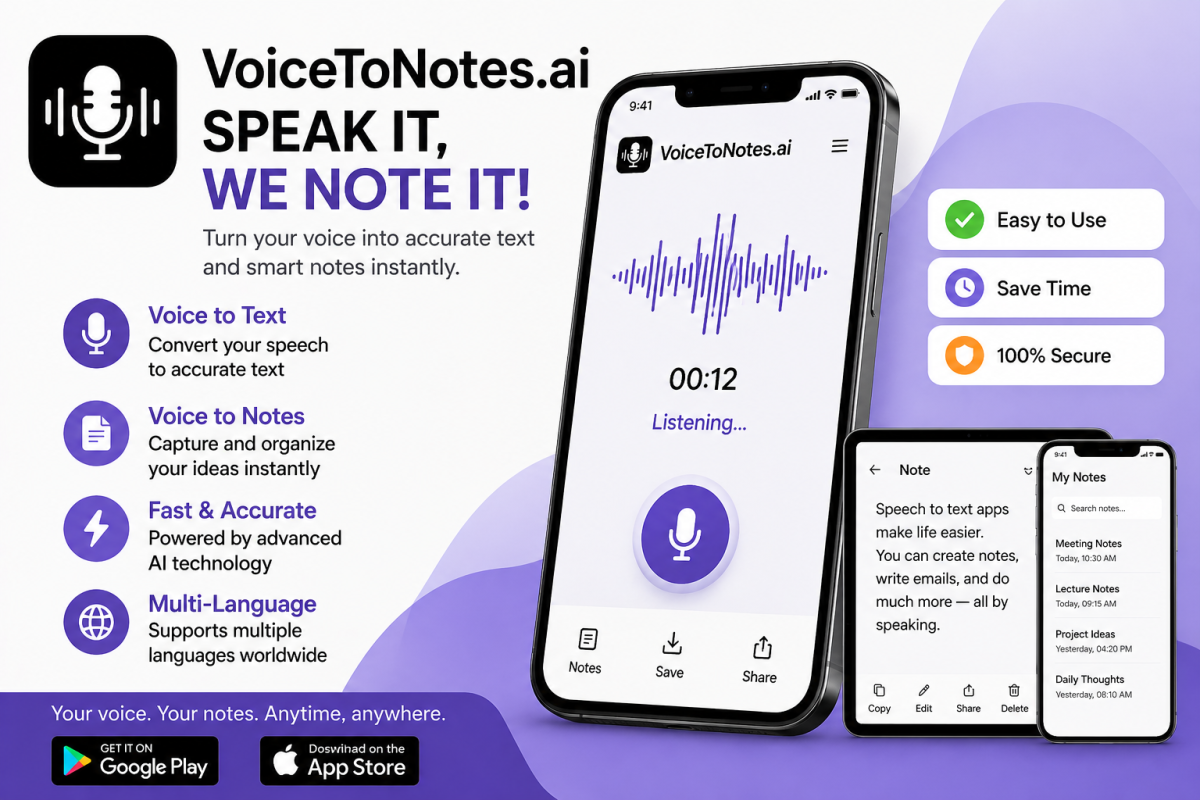
Technology has changed the way people capture information. A few years ago, most notes were written manually in notebooks or typed on keyboards. Today, people want faster and more flexible ways to save ideas, reminders, and work updates. This is where a speech to text app and AI voice notes tools have become increasingly useful.
Instead of typing every detail, users can simply speak into their phone and convert their words into text instantly. This saves time, reduces effort, and helps users stay focused on their actual work.
What Is a Voice to Text App?
A voice to text app is a tool that converts spoken words into written text. Using speech recognition technology, the app listens to your voice and automatically creates readable text in real time.
This is useful in many daily situations. For example, someone in a meeting can record ideas quickly without opening a laptop and typing notes. A student can save lecture summaries while listening actively instead of splitting attention between hearing and writing.
The biggest benefit is speed. Most people can speak much faster than they can type, which makes voice-based note-taking highly practical.
How AI Voice Notes Work
Traditional note apps usually require manual input. AI voice notes tools improve this process by adding intelligence to recordings.
Instead of only saving raw audio, AI can:
- convert voice into text
- organize notes automatically
- separate key points
- help summarize longer recordings
For example, after recording a brainstorming session, an AI-powered app can turn scattered ideas into organized text that is easier to review later.
This makes voice notes more useful than simple recordings. Users no longer need to replay long audio files to find one important detail.
Benefits for Professionals
Business professionals often handle multiple tasks throughout the day. Emails, meetings, project updates, and planning can quickly create information overload.
A voice to text app helps reduce this friction.
A project manager can dictate meeting summaries immediately after calls. A sales executive can save client feedback while traveling. A founder can record quick ideas without interrupting workflow.
This improves speed while maintaining better documentation.
For remote teams, AI voice notes are especially helpful. Team members can record updates, convert them into text, and share them asynchronously with colleagues in different time zones.
Why Students and Creators Use Voice Notes
Students are increasingly using voice tools for study and productivity.
Instead of manually writing everything, students can:
- record lecture highlights
- capture revision notes
- save research ideas quickly
This is especially useful during fast-paced classes where typing may not keep up.
Content creators also benefit from speaking ideas naturally. Writers, marketers, and podcasters often think faster than they type. Voice capture allows them to preserve creative flow.
For example, a writer planning a blog article can outline sections by speaking naturally instead of staring at a blank page.
Accessibility and Ease of Use
Another major advantage of voice tools is accessibility.
Not everyone prefers typing for long periods. Some users experience fatigue, discomfort, or simply work faster by speaking.
Voice-based apps make digital note-taking easier for these users.
Modern apps are designed to be simple:
- open the app
- tap record
- start speaking
Within seconds, text is generated and ready for editing or saving.
This simplicity is a major reason why adoption continues to grow.
Security and Cloud Convenience
As more users store work-related notes digitally, security matters.
Modern AI voice notes platforms often support secure cloud syncing, allowing users to access notes across devices while keeping files protected.
This is useful for professionals working across mobile, tablet, and desktop environments.
Scalability also matters for growing teams. As note volume increases, searchable text becomes far more manageable than dozens of audio files.
Instead of listening through recordings, users can instantly search keywords inside saved notes.
This saves time and improves information retrieval.
The Future of Voice Productivity
Voice technology is moving beyond simple transcription.
Future voice tools will likely include:
- smarter summaries
- action item extraction
- meeting highlights
- calendar integration
- multilingual transcription
As AI improves, voice tools will become more integrated into daily workflows.
This does not mean typing will disappear. Instead, users will choose the fastest method depending on the task.
For capturing ideas, reminders, and first drafts, voice is often the more natural option.
Conclusion
A best ai note taker and AI voice notes solution can make note-taking faster, easier, and more organized. By converting speech into text instantly, these tools help users save time while reducing manual effort.
Professionals use them for meetings and workflow management. Students rely on them for faster note capture. Creators benefit from preserving ideas naturally.
As work becomes more mobile and fast-paced, tools that reduce friction will continue gaining importance. Voice-based note-taking is one of the simplest examples of technology making everyday tasks more efficient.
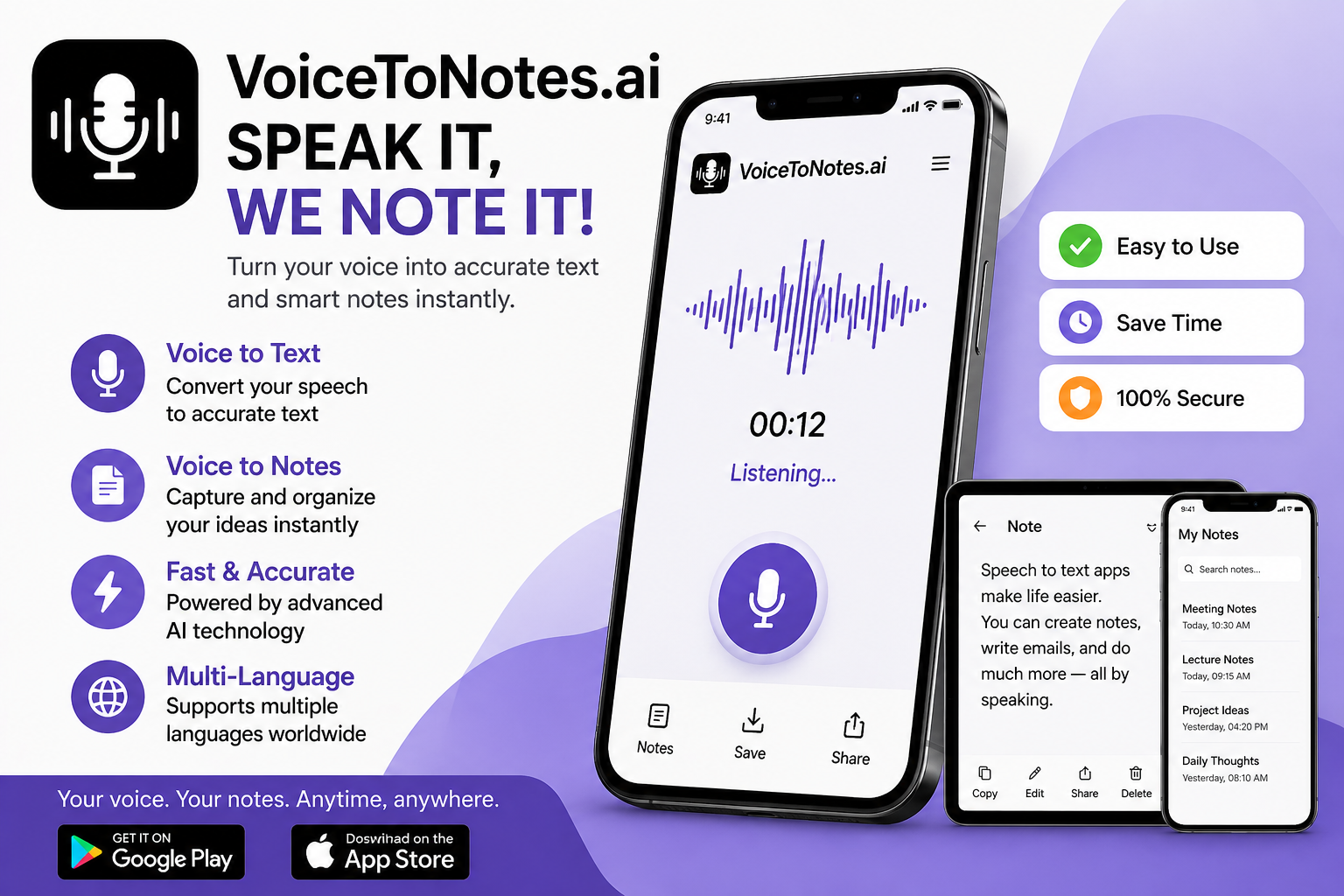
voicetonotes.ai