


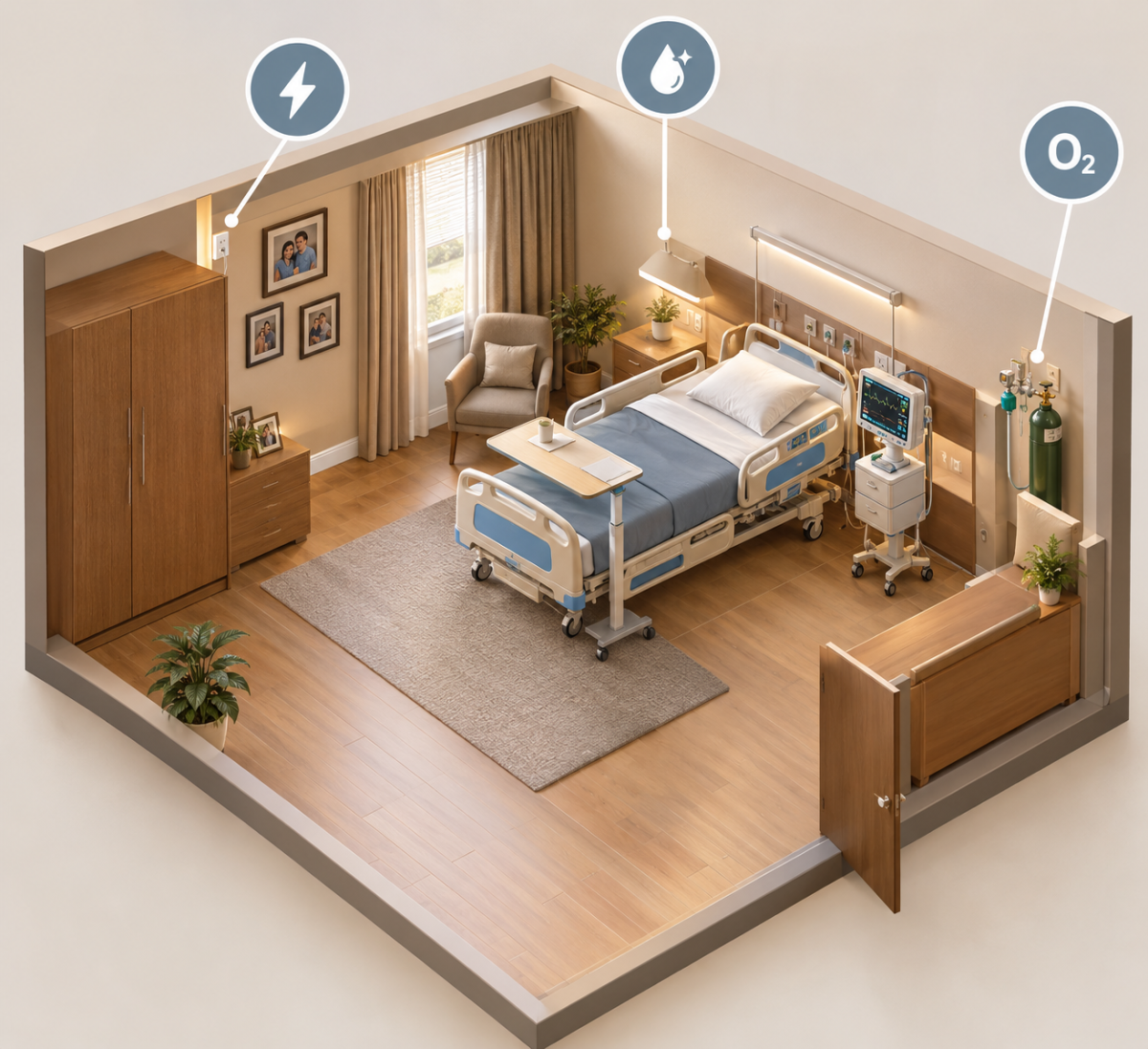
ICU Care at Home may be considered when a patient needs close medical monitoring and advanced support but does not require continuous treatment inside a hospital ICU. The decision is not based simply on the family’s preference to bring a patient home. A doctor must first assess the patient’s medical stability, required equipment, nursing needs, risk of complications, and ability of the home environment to support the care plan.
For some patients, home based critical care can support recovery after hospitalisation, long term medical management, or palliative care. It can involve trained nurses, regular monitoring, oxygen support, medication administration, vital sign checks, wound care, and coordination with doctors and hospitals.
The main question is whether the patient can receive the required level of medical supervision safely outside a hospital setting.
When Can ICU Care at Home Be Considered?
Home based intensive medical support may be considered when a patient is medically stable but still requires frequent observation or specialised nursing attention.
Common situations include:
Recovery After a Major Hospital Stay
Patients recovering from serious infections, surgery, respiratory problems, neurological conditions, or other major illnesses may need continued medical supervision after discharge.
A hospital may determine that the patient no longer needs an ICU bed but still requires regular monitoring at home. In such cases, trained home nurses can follow the doctor’s instructions and monitor changes in the patient’s condition.
Long Term Medical Conditions
Some patients live with chronic conditions that require regular medical attention without requiring permanent hospital admission.
Depending on the condition, home care may involve medication management, oxygen therapy, vital sign monitoring, feeding support, catheter care, wound management, or other prescribed services.
Patients Who Are Stable but Medically Dependent
A patient may be stable but dependent on medical equipment or regular nursing care. For example, some patients may require oxygen, suction support, feeding through a tube, or frequent medication administration.
The care plan should be created around the patient’s actual medical needs rather than around the availability of a caregiver alone.
What Medical Factors Do Doctors Consider?
The decision to shift intensive medical support to the home requires careful assessment.
Doctors and care teams may consider:
- The patient’s current diagnosis and medical history
- Stability of blood pressure, heart rate, breathing, oxygen levels, and other vital signs
- The type of medication and frequency of administration required
- Whether oxygen or other medical equipment is needed
- Risk of sudden deterioration
- Frequency of doctor visits and nursing supervision
- Ability to access emergency medical services quickly
- Availability of a trained caregiver at home
- Whether the home has adequate space, electricity, hygiene, and equipment
- The patient’s ability to communicate symptoms or respond to changes in health
A patient who needs immediate emergency treatment or continuous hospital level intervention should remain under hospital care. Home care should never be treated as a substitute for emergency medical treatment.
What Does Home ICU Support Usually Involve?
The exact services depend on the patient’s condition and the doctor’s instructions.
A home based care plan may include:
- Regular monitoring of vital signs
- Medication administration according to prescription
- Oxygen support where medically prescribed
- Feeding and nutritional support
- Catheter and wound care
- Bedside nursing
- Personal hygiene assistance
- Mobility and positioning support
- Monitoring for signs of infection or respiratory distress
- Coordination with doctors for follow up consultations
- Assistance with hospital admission when a patient’s condition changes
For families managing care from another city or country, regular communication with the care team can also be important. Pranyaas, for example, provides medical and nursing support, post surgical care, tele consultations, medication related assistance, and emergency coordination for elderly patients at home.
Why Family Involvement Still Matters
Professional nursing support does not remove the family’s role in the patient’s care.
Family members should understand the diagnosis, medication schedule, warning signs, emergency contacts, and doctor’s instructions. They should also know who to contact if the patient develops a sudden change in breathing, consciousness, blood pressure, temperature, or other important symptoms.
This becomes particularly important when family members live away from the patient. A structured home care service can help with regular updates and coordination, while relatives can remain involved in major medical decisions.
Pranyaas follows a care model where families can stay connected through regular updates and communication with the care team.
What Should Families Check Before Starting Home ICU Support?
Before arranging home medical care, families should ask practical questions rather than focusing only on the cost.
Medical Questions
Ask the treating doctor:
- What level of nursing care does the patient require?
- Which medical devices are needed?
- How often should vital signs be checked?
- What symptoms require immediate hospital attention?
- How frequently should the doctor review the patient?
- Is the patient medically stable enough for home care?
Home Preparation
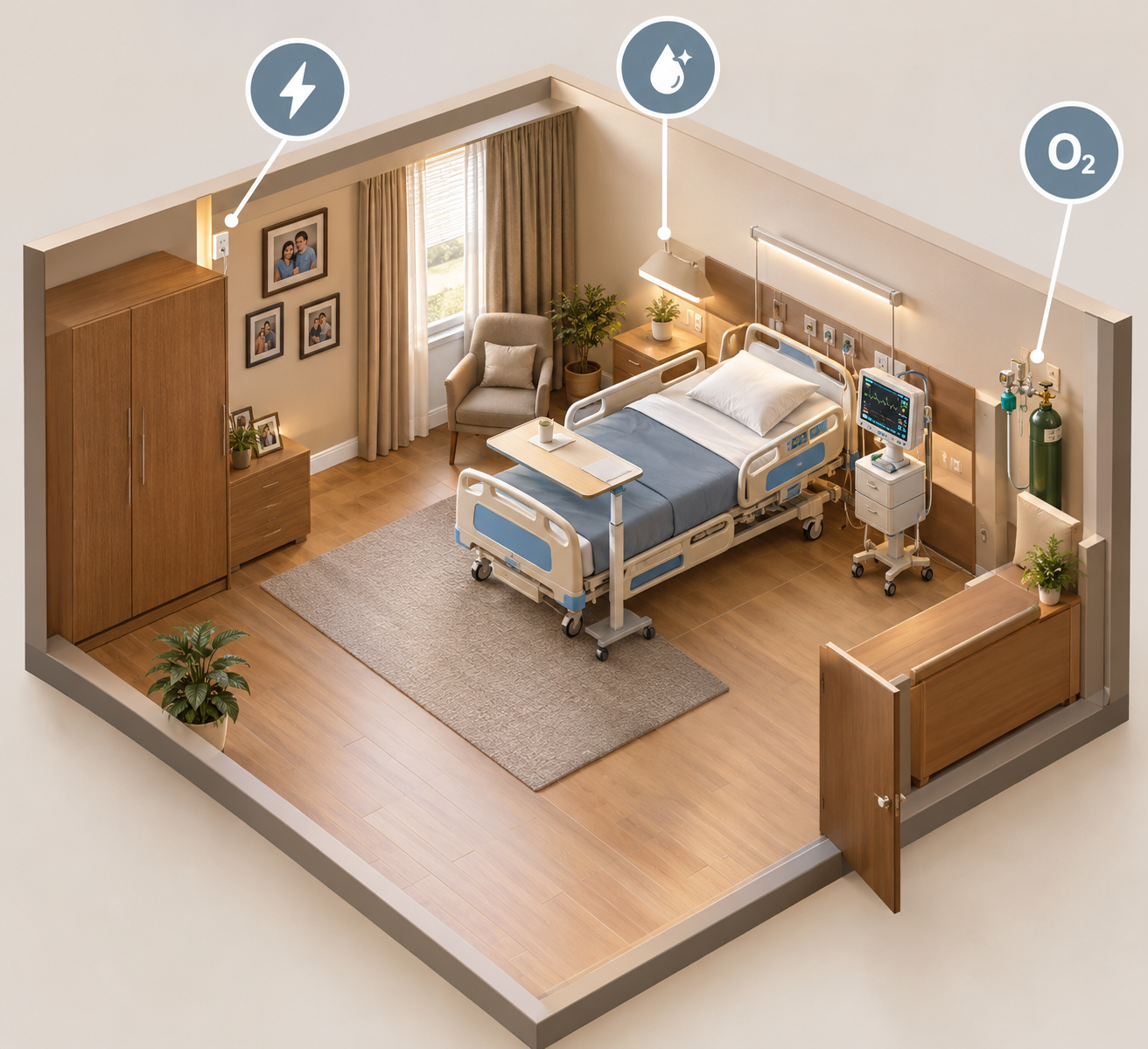
The room should have adequate space for the patient, nursing equipment, and movement of caregivers.
Families may need to arrange a suitable bed, oxygen equipment, power backup, medicines, hygiene supplies, monitoring devices, and other items recommended by the medical team.
Caregiver Availability
Families should also decide who will be available when the nurse is not present. Depending on the patient’s condition, round the clock supervision may be necessary.
A professional home care provider can help coordinate nurses, attendants, medical appointments, emergency support, and other practical requirements. However, the exact level of support should be based on medical advice.
When Home Care May Not Be Appropriate
Home based intensive care is not suitable for every patient.
Hospital treatment may be necessary when a patient has severe breathing difficulty, uncontrolled bleeding, serious changes in consciousness, unstable blood pressure, severe infection, repeated seizures, major cardiac symptoms, or another condition requiring immediate hospital intervention.
Families should not delay emergency treatment while waiting for a home care team.
The treating doctor should decide whether the patient is appropriate for discharge and what level of support is required after returning home.
How a Home Care Provider Can Support the Family
Managing complex medical care at home can involve much more than having a nurse visit the patient.
Families may need help coordinating doctors, arranging medical equipment, managing appointments, collecting laboratory samples, obtaining medicines, and responding when the patient’s condition changes.
Pranyaas provides elderly care support that includes medical and nursing assistance, emergency care assistance, care management, and coordination with healthcare requirements. This type of support can be particularly useful for families who cannot be physically present with an elderly parent every day.
Final Takeaway
ICU Care at Home can be considered for selected patients who are medically stable but continue to require close observation, specialised nursing, equipment, or regular medical support. The decision should come from the treating medical team after reviewing the patient’s condition and the home environment.
For families, the practical priorities are clear: understand the medical requirements, prepare the home, arrange appropriately trained caregivers, maintain communication with doctors, and have a clear plan for emergencies.
When these factors are addressed properly, home based medical care can give suitable patients continued clinical support while allowing them to recover or receive long term care in familiar surroundings.
FAQs
Q.1 What is ICU Care at Home?
ICU Care at Home refers to medically supervised care provided in a patient’s home when the person requires close monitoring or specialised support but does not need to remain in a hospital ICU.
Q.2 Who decides whether a patient can receive intensive care at home?
The treating doctor or medical team should make this decision after assessing the patient’s condition, stability, equipment needs, nursing requirements, and risk of complications.
Q.3 Is home ICU care suitable for elderly patients?
It may be suitable for some elderly patients who are medically stable but require regular nursing, monitoring, medication support, oxygen, feeding assistance, or post hospital care.
Q.4 What equipment may be needed for home intensive care?
Depending on the medical condition, equipment may include an oxygen system, pulse oximeter, blood pressure monitor, hospital bed, suction equipment, feeding equipment, or other devices prescribed by the medical team.
Q.5 Can home care replace hospital treatment?
No. Home care is not a replacement for emergency hospital treatment. Patients with serious or rapidly worsening symptoms may require immediate hospital care.
Q.6 What should families do if the patient’s condition suddenly worsens?
They should follow the emergency instructions provided by the treating doctor and seek immediate medical assistance. A home care provider may also help coordinate hospital admission or emergency support where available.
Rita Sharma