


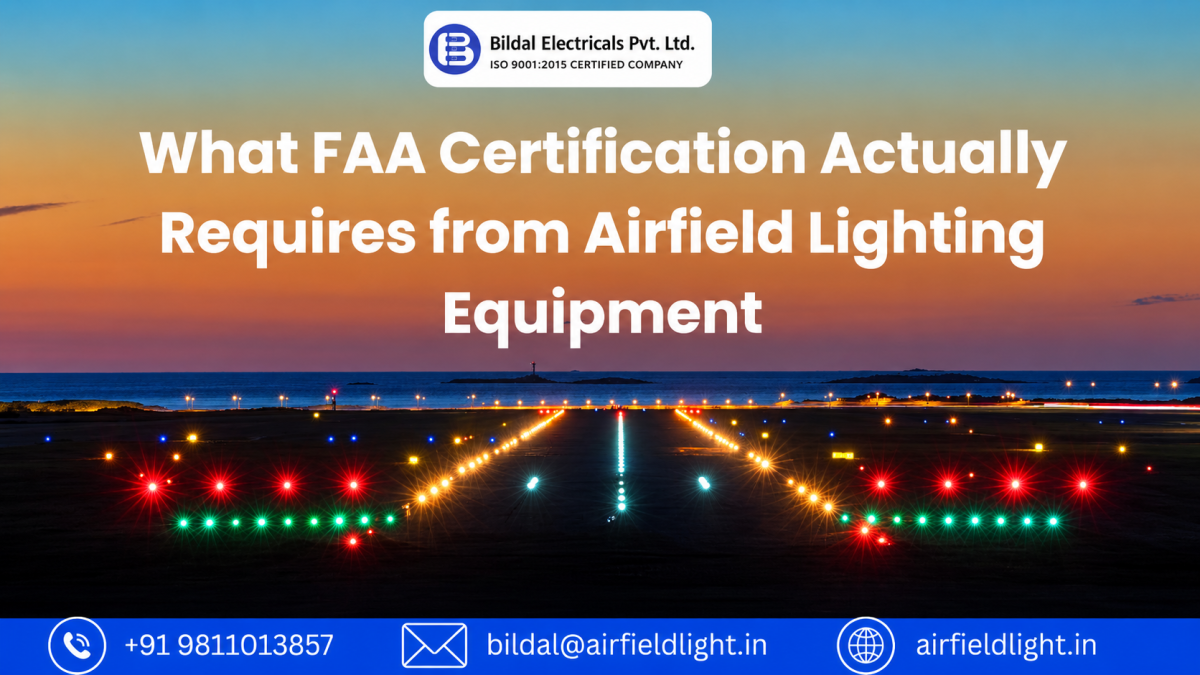
FAA certification for airfield lighting isn’t a single badge stamped on a product. Photometric output gets its own testing. Obstruction marking too. Electrical safety sits in a separate category entirely, with its own standard to clear. Airport runway lights and obstruction beacons might sit on the same field, inspected the same day, but they’re certified against completely different rulebooks.
Obstruction lighting has its own separate rulebook
Towers, cranes, tall structures near an approach path all need marking, and that’s a different category from airport runway lights entirely. FAA obstruction lighting follows AC 70/7460-1, a standard covering flash rate, intensity, and color coding based on structure height. Confusing this with runway lighting certification is a common mistake among smaller manufacturers trying to enter the market.
Red steady-burning lights work for lower structures. Higher structures typically need white strobes instead, visible from farther away during daylight. Getting the wrong type approved for a given height range means a failed inspection down the line, not a paperwork fix.
LED hasn’t fully replaced older technology, despite the marketing
FAA LED lighting adoption has grown steadily, but incandescent and xenon strobe systems still show up on older installations that haven’t hit their replacement cycle yet. Retrofitting isn’t mandatory just because LED exists. It happens when the old system actually fails or when an airfield decides the energy savings justify the upfront cost.
LED runway lighting equipment draws a fraction of the power older systems need, and the bulbs last years longer without filament degradation. That said, FAA-certified airfield lighting equipment still needs to pass the same photometric testing regardless of the light source. Certification doesn’t grade on a curve for newer technology.
Bildal Electricals manufactures both obstruction and runway-edge fixtures tested against current FAA photometric standards, with documentation available per fixture rather than a blanket certificate covering an entire product line. That distinction matters during procurement audits more than most buyers realize.
FAQs
Does FAA-certified airfield lighting equipment need recertification after installation?
Periodic inspection is required, though full recertification typically only happens after a significant fixture change or upgrade.
Is FAA obstruction lighting the same standard used internationally?
No — other countries follow ICAO standards, which overlap in intent but differ in specific technical requirements.
Why hasn’t FAA LED lighting fully replaced older strobe systems?
Cost and replacement cycles, mainly. Functioning older systems often stay in service until they actually fail.
Does LED runway lighting equipment require different maintenance than older systems?
Less frequent bulb replacement, though photometric testing still needs to happen on the same inspection schedule regardless of light source.
Bildal Electricals Pvt. Ltd.