


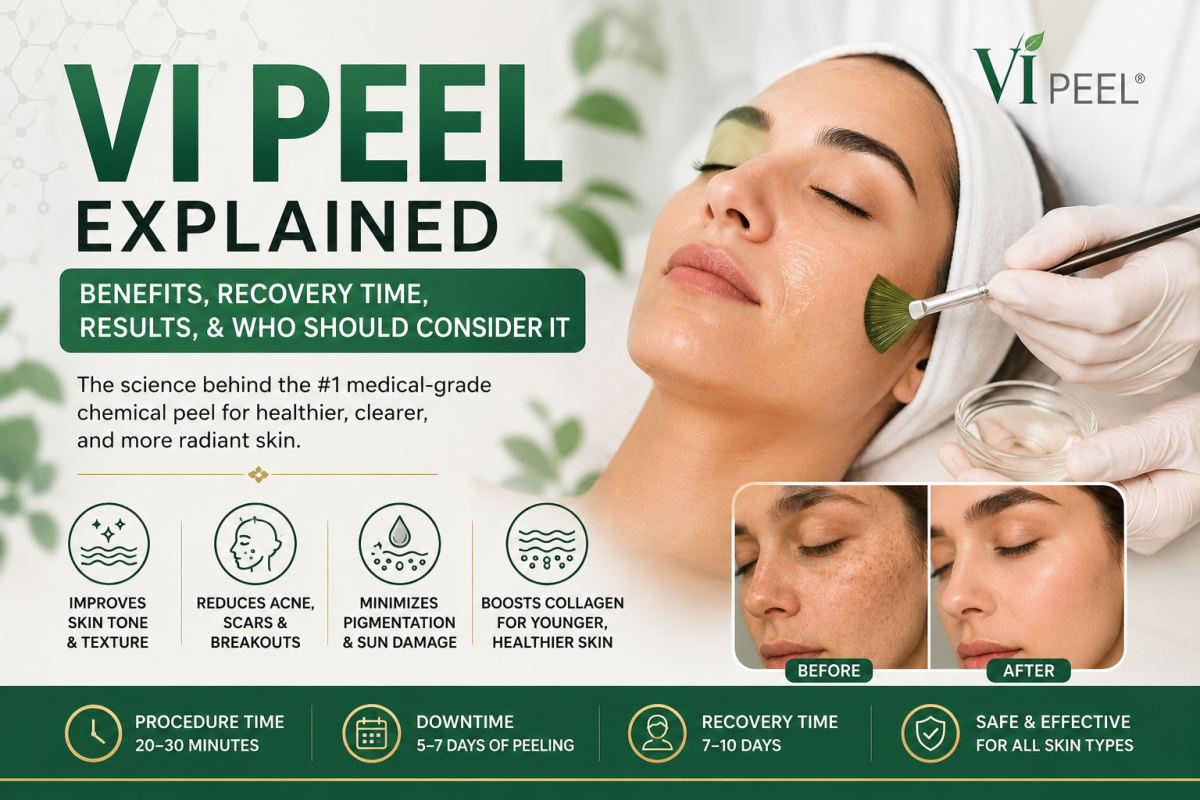
Chemical peels remain among the most widely performed non-surgical skin rejuvenation procedures in aesthetic medicine. Designed to improve skin texture, tone, and overall appearance, these treatments use carefully formulated chemical solutions to remove damaged outer layers of skin and stimulate the natural renewal process.
Among the many peel options available today, the VI Peel has gained significant attention for its ability to address multiple concerns, including acne, hyperpigmentation, uneven skin texture, and visible signs of sun damage. Because it is commonly promoted as a treatment with relatively manageable downtime and suitability for a variety of skin types, many patients seek reliable information before deciding whether it aligns with their skincare goals.
Understanding what a VI Peel is, how the treatment works, expected recovery timelines, potential side effects, and realistic outcomes is essential for making informed decisions. This guide provides a comprehensive, evidence-based overview of the VI chemical peel and explains who may benefit most from the procedure.
What Is a VI Peel?
A VI Peel is a professional chemical peel used in medical aesthetics to improve the appearance of the skin through controlled exfoliation and cellular renewal.
Unlike superficial peels that primarily affect the outermost layer of skin, the VI Peel is generally considered a medium-depth peel. The treatment is designed to promote the shedding of damaged skin cells while encouraging healthier skin regeneration.
VI Peel formulations contain a proprietary blend of ingredients that may vary depending on the specific product selected by the provider. Different formulations are designed to address concerns such as:
- Acne-prone skin
- Hyperpigmentation
- Sun damage
- Uneven skin tone
- Fine lines
- Skin texture irregularities
The treatment is commonly performed in medical spas, dermatology clinics, and aesthetic medicine practices.
Additional information about chemical peels and skin resurfacing procedures is available through the American Academy of Dermatology and the National Library of Medicine Chemical Peel Overview.
How Does a VI Chemical Peel Work?
Chemical peels work by applying controlled chemical exfoliants to the skin.
These ingredients create a controlled injury to the outer layers of skin, triggering the body’s natural repair and renewal mechanisms.
As damaged skin cells are shed, newer skin gradually becomes visible.
This process can help improve:
- Skin texture
- Skin brightness
- Pigmentation irregularities
- Surface-level acne concerns
- Mild signs of photoaging
The degree of improvement depends on several factors, including:
- Individual skin condition
- Skin type
- Severity of concerns being treated
- Number of treatment sessions
- Adherence to aftercare instructions
Results vary among individuals, and no cosmetic procedure can guarantee identical outcomes for all patients.
What Does a VI Peel Do?
Many prospective patients search for answers to the question, “What does a VI Peel do?”
The treatment is intended to improve the overall appearance and quality of the skin through controlled exfoliation and skin renewal.
Potential benefits may include:
- Smoother skin texture
- Improved skin radiance
- More even skin tone
- Reduction in certain forms of discoloration
- Improvement in acne-related pigmentation
- Reduction in skin roughness caused by sun exposure
A VI Peel does not permanently eliminate skin concerns, nor does it stop the natural aging process. Instead, it serves as one component of a broader skincare and skin-maintenance strategy.
VI Peel Benefits
Improvement in Uneven Skin Tone
One of the most common reasons patients seek chemical peels is to improve uneven skin tone.
The exfoliation process may help reduce the appearance of:
- Sun spots
- Post-inflammatory hyperpigmentation
- Mild discoloration
- Uneven pigmentation
Certain pigmentation conditions may require multiple treatments and ongoing maintenance.
Support for Acne-Prone Skin
VI Peel acne treatments are frequently used in patients experiencing:
- Mild to moderate acne
- Congested pores
- Excess oil production
- Post-acne discoloration
While the treatment may help improve acne-related concerns, severe acne often requires a comprehensive treatment plan developed by a qualified healthcare professional.
Enhanced Skin Texture
Many patients report smoother-feeling skin following recovery.
The removal of damaged surface cells may help improve:
- Rough texture
- Dull appearance
- Minor surface irregularities
Improvement in Sun-Damaged Skin
Long-term ultraviolet (UV) exposure contributes to premature skin aging and discoloration.
Chemical peels may help improve the appearance of certain forms of photodamage when combined with consistent sun protection.
Brighter Complexion
As older skin cells are shed, patients often notice a more refreshed appearance.
However, the degree of visible improvement varies among individuals.
VI Peel for Acne and Acne-Related Concerns
Acne remains one of the most common skin conditions treated in aesthetic and dermatology practices.
VI Peel treatments are frequently incorporated into acne-management programs because they may help:
- Reduce pore congestion
- Improve post-inflammatory hyperpigmentation
- Support skin-cell turnover
- Improve overall skin clarity
It is important to note that acne scars can vary significantly.
While some patients may notice improvement in mild textural irregularities and discoloration, moderate to severe acne scars often require additional treatments such as:
- Microneedling
- Laser resurfacing
- Subcision
- Combination therapies
Patients seeking treatment specifically for acne scarring should undergo a professional evaluation to determine the most appropriate treatment plan.
The VI Peel Procedure: What to Expect
Initial Consultation
The process typically begins with a skin assessment.
During this evaluation, providers review:
- Skin concerns
- Medical history
- Current medications
- Previous cosmetic treatments
- Skin sensitivity
This step helps determine whether the treatment is appropriate.
Preparation
The skin is cleansed thoroughly before application.
Any oils, debris, or cosmetic products are removed to allow even penetration of the peel solution.
Application
The peel solution is applied to the treatment area according to established protocols.
Patients may experience:
- Mild tingling
- Temporary warmth
- Slight stinging sensations
These sensations are generally temporary.
Post-Treatment Instructions
Patients receive detailed aftercare guidance, which may include recommendations regarding:
- Sun protection
- Cleansing routines
- Moisturizing products
- Activity restrictions
- Skin healing expectations
Following aftercare instructions plays a critical role in minimizing complications.
VI Peel Recovery Time
One of the most frequently researched topics is VI Peel recovery time.
Although recovery experiences vary, the healing process generally follows a predictable pattern.
Day 1–2
The skin may feel:
- Tight
- Dry
- Slightly sensitive
Visible peeling often has not yet begun.
Day 3–5
Peeling typically begins during this stage.
Many patients notice peeling around:
- The mouth
- Chin
- Nose
- Jawline
Day 5–7
Peeling often becomes more noticeable.
Patients should avoid pulling or picking at peeling skin.
Day 7–10
Most visible peeling gradually subsides.
The skin may appear smoother and brighter as healing progresses.
How Long Does a VI Peel Take to Heal?
For many patients, visible healing occurs within approximately seven to ten days.
However, individual healing timelines vary depending on:
- Skin type
- Treatment intensity
- Aftercare compliance
- Personal healing response
Skin remodeling and renewal continue beyond the initial peeling period.
VI Peel Downtime
Compared with deeper resurfacing procedures, VI Peel downtime is often considered manageable.
Many individuals continue routine daily activities during recovery.
However, visible peeling may affect:
- Professional interactions
- Social events
- Public appearances
Patients planning weddings, vacations, photography sessions, or major events should schedule treatment well in advance.
VI Peel Before and After Results
Many individuals researching a VI Peel are interested in before-and-after outcomes.
Following recovery, some patients may notice improvements in:
- Skin brightness
- Skin smoothness
- Surface texture
- Pigmentation irregularities
- Overall skin appearance
Results depend on multiple variables, including:
- Baseline skin condition
- Number of treatments
- Consistency of skincare
- Sun exposure habits
No cosmetic procedure can guarantee specific results.
Providers typically discuss realistic expectations during consultation.
VI Peel Side Effects
Like all aesthetic procedures, a VI Peel carries potential risks and side effects.
Common temporary side effects include:
- Redness
- Dryness
- Peeling
- Mild swelling
- Skin sensitivity
- Temporary itching
These effects are generally expected parts of the healing process.
Less common complications may include:
- Prolonged irritation
- Post-inflammatory hyperpigmentation
- Infection
- Allergic reactions
- Uneven pigmentation changes
Patients should promptly report unusual symptoms to their provider.
Is VI Peel Safe?
A common question among prospective patients is: “Is VI Peel safe?”
When administered by appropriately trained healthcare professionals and performed according to established protocols, VI Peel treatments are generally considered safe for many skin types.
However, safety depends on several factors:
- Proper patient selection
- Accurate diagnosis
- Medical history review
- Appropriate treatment planning
- Compliance with aftercare instructions
Certain individuals may not be suitable candidates, including those with:
- Active skin infections
- Open wounds
- Certain inflammatory skin conditions
- Specific medication use
- Recent cosmetic procedures
Professional consultation remains essential before treatment.
Who Should Consider a VI Peel?
A VI Peel may be considered by individuals seeking improvement in:
Mild to Moderate Acne
Patients with acne-related skin concerns may benefit from professional evaluation and treatment planning.
Hyperpigmentation
Individuals experiencing uneven skin tone or post-inflammatory discoloration may be suitable candidates.
Sun Damage
Those seeking improvement in visible signs of cumulative sun exposure may benefit from chemical peel treatments.
Rough Skin Texture
Patients concerned about dullness or uneven texture frequently consider medium-depth peels as part of their skincare strategy.
Early Signs of Aging
Some individuals use chemical peels to improve the appearance of:
- Fine lines
- Skin roughness
- Mild photodamage
Individuals interested in professional Peel facial services should undergo a consultation to determine whether a VI Peel aligns with their skin type, goals, and medical history.
Best Practices for Maximizing Results
Experienced providers often recommend the following strategies:
Consistent Sun Protection
Daily broad-spectrum sunscreen use helps protect newly treated skin and supports long-term results.
Gentle Skincare
Aggressive exfoliation should be avoided during recovery.
Hydration
Maintaining adequate skin hydration supports comfort during healing.
Follow Professional Guidance
Patients should adhere closely to provider instructions regarding:
- Product usage
- Cleansing routines
- Activity modifications
- Follow-up appointments
Long-Term Skin Maintenance
Many skin concerns require ongoing maintenance rather than a single treatment session.
Common Misconceptions About VI Peel Treatments
Misconception 1: More Peeling Means Better Results
The amount of visible peeling varies among patients and does not necessarily correlate with treatment success.
Misconception 2: One Treatment Solves Every Skin Concern
Many skin conditions improve gradually and may require multiple treatments or combination therapies.
Misconception 3: VI Peels Eliminate Acne Scars
While some patients may see improvement in discoloration and mild textural concerns, deeper scars often require additional interventions.
Misconception 4: Chemical Peels Are Only for Aging Skin
Chemical peels are used for a variety of concerns, including acne, pigmentation, texture irregularities, and photodamage.
Misconception 5: Results Are Permanent
Skin continues to age and remains susceptible to environmental damage. Ongoing skincare remains important.
Frequently Asked Questions (FAQs)
1. What is a VI Peel?
A VI Peel is a professional chemical peel designed to improve skin tone, texture, pigmentation, and certain acne-related concerns through controlled exfoliation.
2. How long does a VI Peel procedure take?
Most treatments are completed within approximately 20 to 30 minutes, although appointment length varies.
3. When does peeling usually begin?
Peeling commonly begins around the third day following treatment.
4. How long does a VI Peel take to heal?
Visible healing often occurs within seven to ten days, although recovery varies among individuals.
5. Is a VI Peel painful?
Most patients describe mild tingling or warmth rather than significant discomfort.
6. Can a VI Peel help acne?
The treatment may help improve certain acne-related concerns and post-inflammatory pigmentation.
7. Does a VI Peel improve acne scars?
Some patients may notice improvement in mild textural irregularities and discoloration. More significant scars often require additional treatment approaches.
8. Is the VI Peel appropriate for darker skin tones?
Suitability depends on individual skin characteristics and should be evaluated by a qualified provider.
9. What should be avoided after treatment?
Patients are generally advised to avoid excessive sun exposure, manual exfoliation, and unapproved skincare products during healing.
10. How long do results last?
Results vary depending on skincare habits, environmental exposure, treatment goals, and maintenance routines.
11. Does a VI Peel improve hyperpigmentation?
The treatment may help improve certain forms of pigmentation, although results vary based on the underlying cause.
12. Can makeup be worn after a VI Peel?
Patients should follow their provider’s recommendations regarding when cosmetic products can be safely resumed.
Medical Disclaimer
This article is intended for educational and informational purposes only and should not be considered medical advice. Cosmetic procedures should be discussed with a qualified healthcare professional who can evaluate individual skin concerns, medical history, treatment goals, and potential risks.
Conclusion
The VI Peel is a widely recognized chemical peel treatment designed to improve skin texture, tone, and overall appearance through controlled exfoliation and skin renewal. It is commonly used to address concerns such as acne-related discoloration, uneven skin tone, sun damage, and mild textural irregularities.
While many patients experience noticeable improvements following treatment, outcomes vary based on individual factors, treatment plans, and adherence to aftercare recommendations. Understanding the procedure, recovery process, potential side effects, and realistic expectations helps patients make informed decisions about whether a VI Peel is appropriate for their needs.
When performed by qualified professionals and integrated into a comprehensive skincare strategy, a VI Peel can be a valuable option for individuals seeking non-surgical skin rejuvenation and healthier-looking skin.
LifeMed Institute