


United States Spectator Sports Market Size & Forecast (2026–2034)
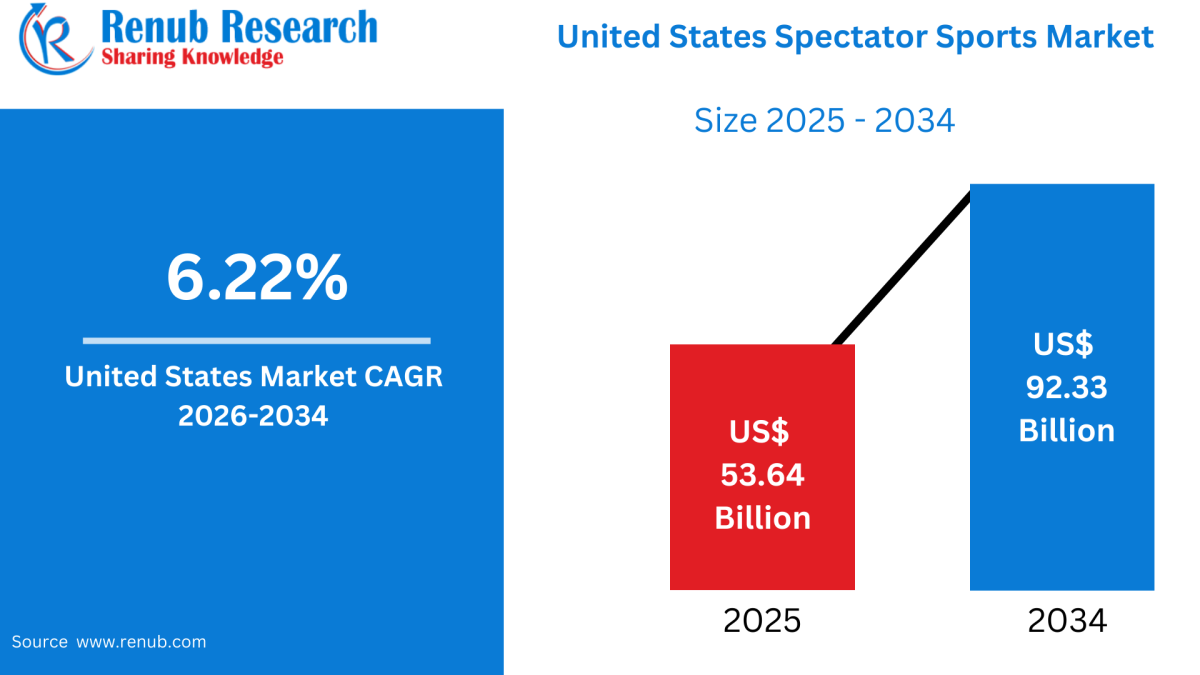
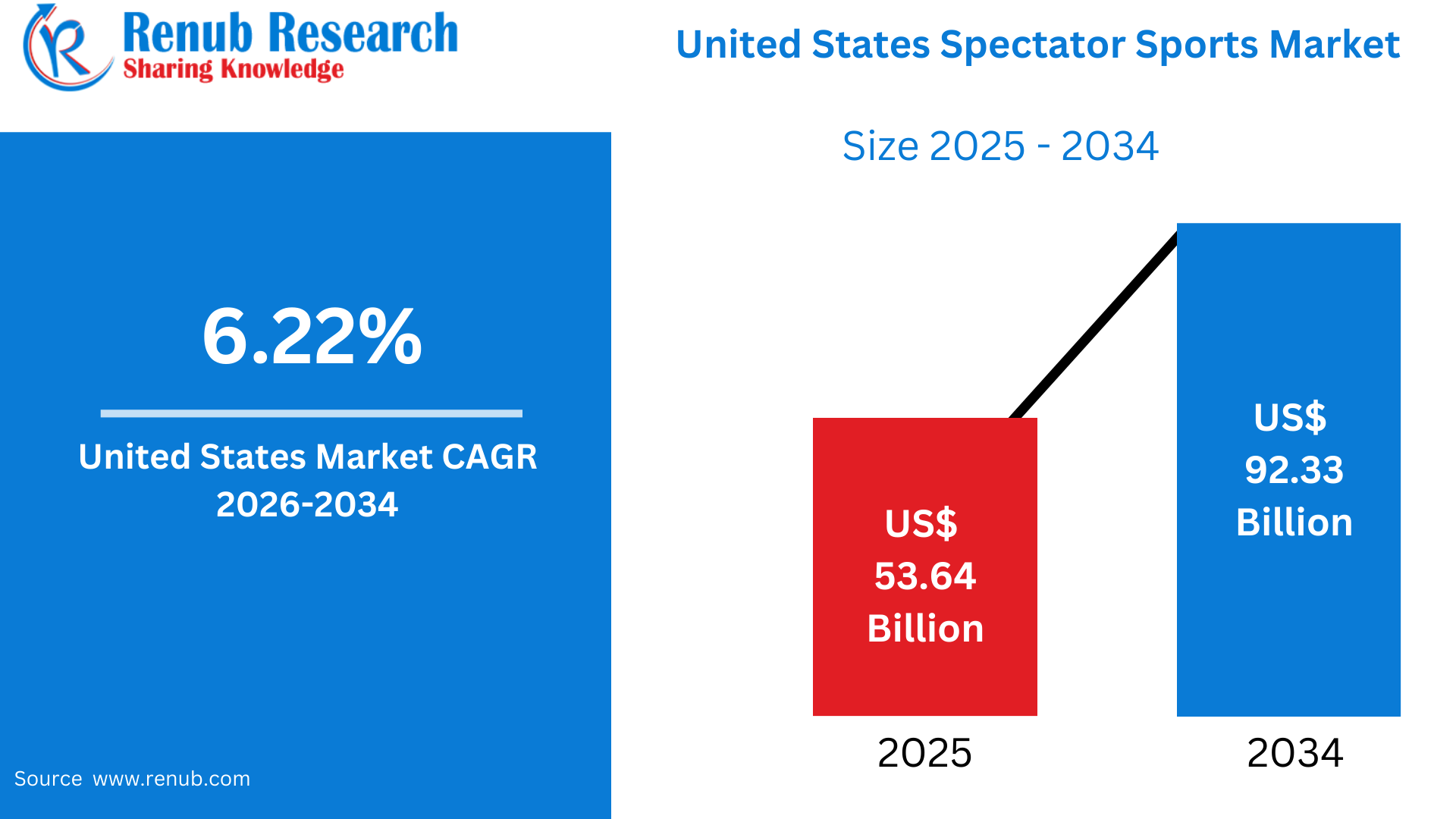
According to Renub Research United States spectator sports market is expected to experience consistent and resilient growth over the forecast period, reflecting its deep cultural roots, commercial maturity, and ability to adapt to changing consumer behaviors. The market is projected to expand from US$ 53.64 billion in 2025 to US$ 92.33 billion by 2034, registering a compound annual growth rate (CAGR) of 6.22% from 2026 to 2034. This growth is supported by rising attendance at live sporting events, escalating media rights valuations, and expanding fan engagement across digital platforms.
Spectator sports in the United States benefit from a highly developed ecosystem that combines professional leagues, collegiate athletics, world-class venues, and advanced media infrastructure. The integration of technology into both live and remote viewing experiences, alongside strong brand partnerships and sponsorship activity, continues to reinforce long-term market expansion across the country.
Download Free Sample Report:https://www.renub.com/request-sample-page.php?gturl=united-states-spectator-sports-market-p.php
United States Spectator Sports Market Outlook
Spectator sports refer to organized sporting events designed primarily for audience consumption, either through in-person attendance at stadiums and arenas or via television, streaming, and digital platforms. Revenue generation in this market is multi-dimensional, encompassing ticket sales, broadcasting and media rights, sponsorships, advertising, merchandising, licensing, and concessions. Major professional leagues, collegiate competitions, and international sporting events collectively form the backbone of the U.S. spectator sports industry.
In the United States, spectator sports occupy a central role in cultural, social, and economic life. Professional leagues command massive national and global followings, while college sports foster intense regional loyalty and tradition. Advances in broadcasting technology, high-definition streaming, mobile access, and social media have significantly expanded the reach of sports content, allowing fans to engage with teams and athletes year-round. Enhanced stadium experiences, fantasy sports ecosystems, and real-time digital interaction have further strengthened emotional connections between fans and sporting properties. As sports entertainment increasingly blends live events with digital engagement, spectator sports remain one of the most enduring and profitable entertainment segments in the U.S.
Growth Drivers in the United States Spectator Sports Market
Rising Fan Engagement Through Digital and Live Experiences
Fan engagement is a primary growth driver shaping the U.S. spectator sports market. Teams, leagues, and venue operators are investing heavily in immersive experiences that extend well beyond the duration of a single game. Live attendance is now supported by mobile applications, in-venue connectivity, interactive screens, real-time statistics, fantasy sports integration, and social media interaction. These innovations deepen fan involvement and transform spectators into active participants in the sports experience.
Stadiums and arenas are also evolving into multi-purpose entertainment destinations. Premium seating, hospitality lounges, interactive fan zones, and upgraded food and beverage offerings enhance the overall value proposition of attending live events. Younger audiences, in particular, seek interactive and shareable moments, which teams monetize through digital content, exclusive merchandise, and loyalty programs. Flexible ticketing options, subscription-based access, and dynamic pricing models further reduce barriers to attendance, supporting sustained growth in fan participation.
Expansion of Media Coverage and Multi-Platform Broadcasting
The rapid expansion of sports media coverage across television, streaming services, and social platforms has dramatically increased the reach and visibility of spectator sports in the United States. Fans can now consume sports content through live broadcasts, on-demand replays, highlights, short-form clips, podcasts, and behind-the-scenes programming. This omnichannel presence attracts casual viewers and nurtures deeper engagement among core fans.
Streaming platforms have become particularly influential by reaching cord-cutters and younger demographics, while social media amplifies real-time interaction and viral moments. Increased accessibility also enhances international exposure for U.S. sports leagues, strengthening global brand value. For leagues and teams, broader media distribution translates into higher advertising revenues, stronger sponsorship demand, and expanded merchandising opportunities. Media rights remain one of the most powerful revenue engines in the U.S. spectator sports market.
Strong Commercialization and Brand Partnerships
Commercial partnerships play a crucial role in sustaining and expanding the U.S. spectator sports market. Brands view sports as a premium platform for mass reach, emotional storytelling, and demographic targeting. Sponsorship agreements extend across jersey branding, venue naming rights, broadcast integrations, digital activations, and experiential marketing campaigns. These partnerships allow brands to align with team identities and fan loyalty, creating powerful associations.
Data-driven marketing and analytics now enable sponsors to measure engagement, audience reach, and return on investment with greater precision. This transparency has increased advertiser confidence and encouraged long-term commitments. Live sports also remain one of the few content categories resistant to ad-skipping, making them particularly valuable to advertisers. As a result, sponsorship and advertising budgets allocated to spectator sports continue to grow steadily.
Challenges in the United States Spectator Sports Market
High Operational Costs and Revenue Volatility
Operating within the U.S. spectator sports market involves significant financial commitments. Teams and event organizers face high costs related to player salaries, coaching staff, venue maintenance, security, logistics, travel, and marketing. These expenses create pressure on profitability, particularly for teams in smaller markets or leagues with less stable revenue streams.
Revenue volatility adds another layer of complexity. Attendance and merchandise sales are often influenced by team performance, economic conditions, and external disruptions. Weather events, labor disputes, and public health concerns can negatively affect live attendance and ancillary revenues. While media rights contracts provide relative stability, reliance on large broadcasting deals also introduces negotiation and renewal risks. Managing cost structures while maintaining competitive performance and fan satisfaction remains a persistent challenge.
Changing Consumer Preferences and Entertainment Competition
The U.S. spectator sports market faces increasing competition from alternative entertainment options, including streaming platforms, esports, video gaming, and social media content. Younger audiences often favor shorter, on-demand formats rather than full-length games, challenging traditional consumption patterns. Rising ticket prices and time commitments can further discourage casual fans.
To address these shifts, sports organizations are experimenting with shorter game formats, enhanced storytelling, interactive broadcasts, and digital-first content strategies. Balancing innovation with tradition is essential to retaining legacy fans while attracting new generations. Failure to adapt to evolving consumer preferences could limit long-term engagement and revenue growth.
United States Baseball Spectator Sports Market
Baseball remains a foundational pillar of the U.S. spectator sports market, supported by a rich history, generational loyalty, and strong regional affiliations. Professional baseball benefits from a long season that generates consistent attendance, media exposure, and advertising inventory. Ballparks emphasize community identity, nostalgia, and family-friendly environments, appealing to a broad demographic base.
Recent innovations such as rule adjustments, enhanced analytics-driven storytelling, and improved broadcast graphics aim to attract younger viewers without alienating traditional fans. The extensive minor league system also strengthens grassroots engagement and talent development. While baseball faces competition from faster-paced sports, its cultural significance, live attendance tradition, and expansive media footprint ensure its continued relevance.
United States Basketball Spectator Sports Market
Basketball represents one of the most dynamic and globally influential segments of the U.S. spectator sports market. Fast-paced gameplay, star-driven narratives, and strong youth participation drive widespread appeal. Indoor arenas allow for consistent year-round scheduling and entertainment-focused presentations that blend sports, music, and interactive fan engagement.
Basketball’s digital-native audience fuels strong social media engagement, highlight culture, and fantasy participation. The sport’s international player base further broadens its global reach, enhancing merchandise sales and overseas media rights. College basketball also plays a vital role, particularly during tournament seasons, reinforcing basketball’s prominence across multiple audience segments.
United States Tennis Spectator Sports Market
Tennis occupies a distinctive position within the U.S. spectator sports landscape, characterized by premium events, global visibility, and strong corporate appeal. Major tournaments attract international audiences, high-value sponsorships, and extensive media coverage. Live tennis offers an intimate and high-quality viewing experience that emphasizes skill, athleticism, and tradition.
While tennis attendance is more event-driven than league-based, strong broadcast distribution and player-centric storytelling sustain engagement. Corporate hospitality, luxury seating, and brand partnerships further enhance revenue potential. Tennis maintains a stable niche, balancing exclusivity with broad recognition in the U.S. market.
United States Spectator Sports Media Rights Market
Media rights form the economic backbone of spectator sports in the United States. Long-term broadcasting agreements across television, streaming, and digital platforms provide predictable revenue streams for leagues and teams. Live sports remain highly valuable to media companies due to real-time viewership and strong advertising demand.
Competition among traditional broadcasters and streaming platforms continues to drive up rights valuations. These revenues support investment in talent acquisition, infrastructure development, and fan engagement initiatives. Media rights income also reduces dependence on ticket sales, making it a critical stabilizing force within the market.
United States Spectator Sports Sponsorship and Advertising Market
Sponsorship and advertising thrive in spectator sports due to high audience engagement and emotional connection. Brands leverage sports properties to achieve visibility through in-game advertising, digital placements, influencer collaborations, and experiential activations. Advanced analytics enable precise targeting and performance measurement, increasing the effectiveness of sponsorship campaigns.
Industries such as automotive, technology, financial services, apparel, and consumer goods are major contributors to sponsorship spending. The ability to align with team values and loyal fan bases makes sports sponsorship one of the most effective marketing channels in the United States.
California Spectator Sports Market
California represents one of the largest and most influential spectator sports markets in the United States. The state hosts numerous professional teams across football, basketball, baseball, hockey, and soccer, supported by large metropolitan populations and diverse demographics. California venues emphasize innovation, premium hospitality, and technology-driven fan experiences, blending sports with entertainment and lifestyle culture.
Strong media presence, celebrity influence, and robust corporate sponsorship from technology and entertainment brands amplify team visibility. California’s leadership in digital engagement and experiential marketing continues to shape national trends within the spectator sports industry.
New York Spectator Sports Market
New York stands as a dominant force in the U.S. spectator sports market, anchored by iconic franchises, historic venues, and unparalleled media reach. Extensive coverage across television, digital platforms, and global media outlets drives year-round fan engagement. Corporate sponsorship is exceptionally strong, supported by financial institutions, global brands, and international tourism.
High population density and a competitive sports culture sustain attendance despite premium pricing. New York’s global influence enhances international merchandising demand and reinforces its position as a centerpiece of the U.S. spectator sports ecosystem.
Washington Spectator Sports Market
Washington’s spectator sports market is defined by strong local loyalty, modern infrastructure, and growing regional engagement. Purpose-built venues emphasize fan comfort, digital integration, and premium amenities. Teams invest heavily in community outreach, youth programs, and inclusive initiatives that strengthen long-term support.
Affordable ticket options, themed events, and interactive experiences help attract diverse audiences. Expanding media coverage and sponsorship activity further enhance market visibility, positioning Washington as a steadily growing contributor to the national spectator sports landscape.
Market Segmentation Overview
The United States spectator sports market is segmented by sports type, revenue stream, and geography. Key sports include football, basketball, baseball, tennis, and cricket. Major revenue streams encompass ticket sales, media rights, sponsorship and advertising, merchandising and licensing, and ancillary services. Leading state-level markets include California, New York, Texas, Florida, and several others, each contributing distinct strengths to overall market growth.
Competitive Landscape and Company Analysis
The competitive landscape of the U.S. spectator sports market includes media conglomerates, league operators, venue owners, and global sports brands. Prominent organizations shaping the ecosystem include The Walt Disney Company, Comcast Corp, Liberty Media Corp, DAZN Group Ltd, Madison Square Garden Sports Corp, Manchester United PLC, Real Madrid CF, FC Barcelona, and Yankees Global Enterprises.
renubresearch