
Choosing the right Type of Insulation Materials will significantly improve the overall performance of your building.
In the following article, you will gain information about different types of Insulation in detail. In addition to that, you will also obtain knowledge regarding what selection criteria you need to consider. So, let’s start our discussion with why the right insulation material is essential
Insulation Materials and Their Cruciality
The right material will not only maintain a desired temperature, but at the same time, it also reduces the overall energy consumption. This will lead to lower energy bills and a comfortable environment.
Also, the performance of your HVAC system is greatly governed by what material you choose. This is because the quality and insulation type will dictate the temperature requirements of a building. Estimators use this information to perform HVAC Estimating Services for selecting an efficient HVAC system.
Now that you have acquired a sense of how critical the insulation material selection process is. Let’s go through the most popular insulation types.
Modern Insulation Materials Types
-
Fiberglass Insulation
Made from glass fibers, this material with an R factor of 3.7 per inch; it is mostly installed in attics, basements, and crawl spaces.
Pros
- It is easier to install and offers fire resistance
- It possesses adequate acoustic traits
Cons
- It has a shorter lifespan than other materials
- For its installation, protective gear is needed.
-
Mineral Wool Insulation
This material is similar to fiberglass but with different performance attributes. It is usually made from basaltic rock.
It is normally applied to roofs, walls, and for soundproofing purposes. The thermal resistance of this material is between 3 to 3.8 per inch.
Pros
- It offers outstanding fire resistance
- It is moisture-resistant and can maintain its properties when wet, unlike fiberglass
Cons
- It is costly than fiberglass with a labour-intensive installation
- In the installation of this insulation, protective equipment is also required
-
Cellulose Insulation
Its manufacturing process includes recycled paper and chemical treatment. This manufacturing process elevates its performance and increases safety.
The most common areas where this insulation is incorporated are enclosed areas, attics, and walls. When it comes to thermal resistance, it is somewhere between 3.2 to 3.83
Pros
- It offers exceptional air sealing
- It is relatively less expensive than other materials
Cons
- It has low moisture resistance
- For its installation, you need to hire professionals
-
Spray Foam Insulation
This insulation, when applied, expands into a solid foam structure. This expansion provides better insulation and, at the same time, excellent air sealing.
This is mostly applied in those areas whose accessibility is compromised. This insulation comes in the form of an open cell, whose thermal resistance is around 3.5 per inch, and a closed cell with a thermal resistance of 6.6 per inch.
Pros
- It offers superior moisture-resistant
- It has a longer lifespan than other insulation materials
Cons
- Once installed, it is extremely difficult to modify or alter
- Professionals are required for its installation, and it is also one of the most expensive insulation materials.
-
Foam Board Insulation
This insulation material comes in three different categories, which are as follows:
- Expanded polystyrene (3.61 to 4)
- Extruded polystyrene (4.8 to 5)
- Polysio (5.6 to 6)
Because of their high thermal resistance, they are applied in foundational walls and in the outer layer of roofs
Pros
- They are easy to handle and install
- They offer excellent moisture-resistant
Cons
- They are more expensive than fiberglass and mineral wool insulation
- They are not at all sustainable
Selection Criteria To Follow
There is a certain criterion that you need to follow before selecting an insulation material. This criterion is discussed below:
Budget
You need to figure out how much you want to spend on materials, because some materials require professional installation services.
To efficiently resolve this issue, you need experienced Insulation Estimating Services.
Building Complexity
Before selecting the material, assess the design complexity of your building. This is because a complex design can greatly influence your material choice.
Thus, hire a professional insulation contractor who will provide you with a thorough evaluation of your design.
Material Takeoff
When you have made your choice, it is crucial to obtain the right quality and quantity.
To ensure that you have acquired the right quality and quantity, you will need expert Material Takeoff Services.
Climate conditions
It is also crucial to consider the climate conditions of your region because each insulation offers different solutions.
End Note
When it comes to types of Insulation Materials, each type has its own traits and capabilities. That is why you need to do your own research first. To help with your research, follow this comprehensively outlined article. This article extensively explains various types along with their pros and cons. Furthermore, if you want someone credible to handle your finances while offering you the most cost-effective solutions, choose Universe Estimating!
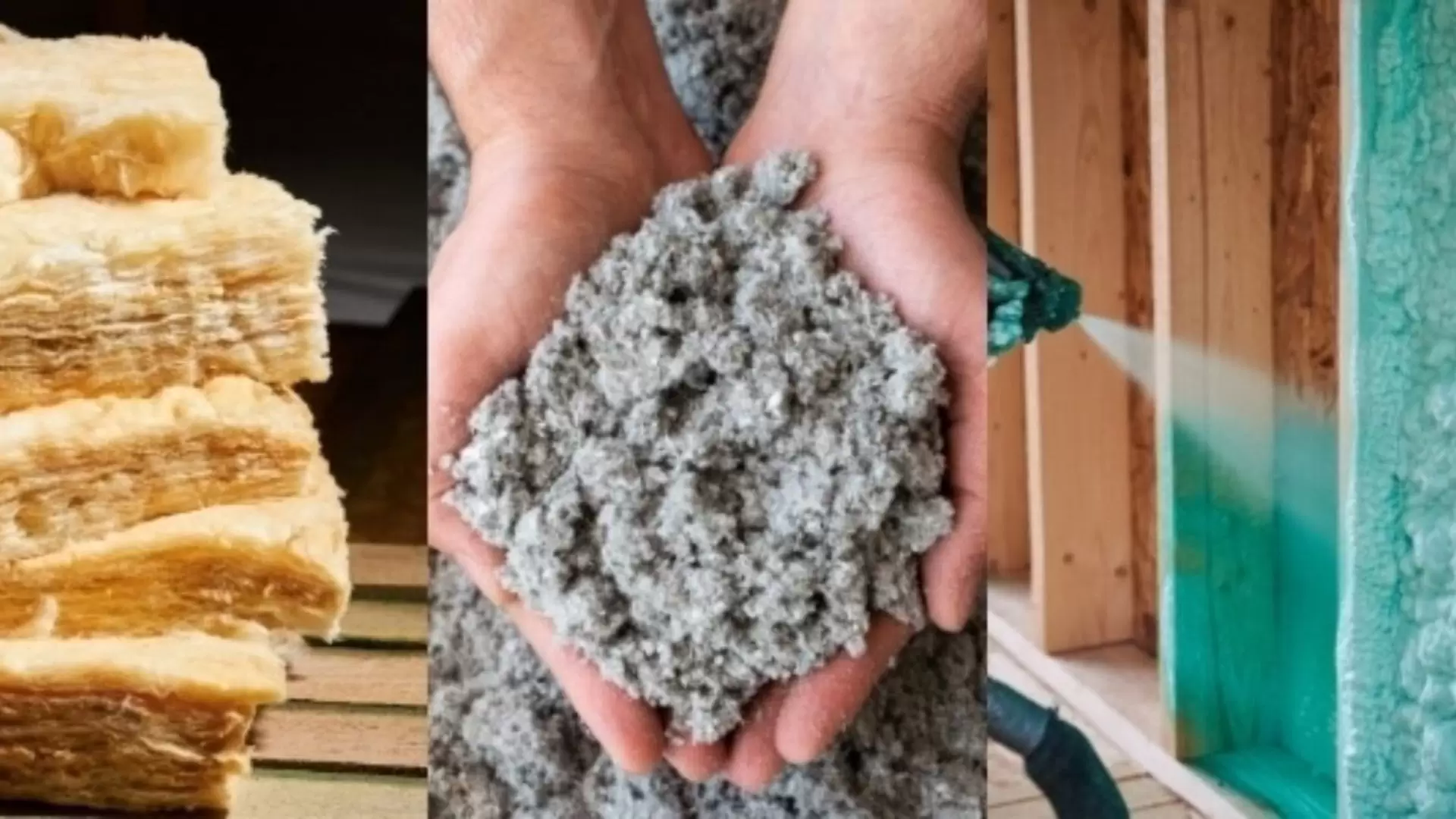
Types of Insulation Materials Used in Modern Buildings