
A standout award design is not created simply by making a trophy look attractive. It has to represent the achievement, fit the identity of the organization or event, work well with the selected materials, and remain practical to manufacture. A good Trophy Design Company Bangalore understands these factors before moving from an initial concept to a finished award.
For corporate awards, sports competitions, film ceremonies, leadership programs, exhibitions, and recognition events, the trophy often becomes a physical representation of the occasion. Its form, proportions, material, finish, branding, and presentation can influence how recipients remember the award long after the ceremony.
What Makes an Award Design Stand Out?
The strongest trophy designs usually have a clear idea behind them. Instead of adding decorative elements simply to make an award look elaborate, designers first identify what the award represents.
For example, a leadership award may use a rising form to communicate progress. A sports trophy might use movement, balance, or an athletic silhouette. A corporate recognition award may be based on the organization’s visual identity or a particular value that the event celebrates.
This gives the trophy a reason to look the way it does.
The design also needs to work at different levels. It should look impressive when displayed on a stage, but it should also hold up when someone sees it closely on a desk or shelf.
1. The Story Behind the Award
The first question should be simple: what is being recognized?
A trophy for employee performance has a different purpose from an award celebrating a sporting achievement or a film performance. The design should reflect that difference.
Design teams may study:
- The purpose of the award
- The history of the organization
- The event theme
- The achievement being recognized
- Brand symbols and visual language
- Cultural references connected to the occasion
This approach can turn a generic award into something with a clear identity.
For instance, one project created for an Indian corporate award program combined the brand identity, event story, form, material, and finish into a single trophy collection. The design process included strategy, design, development, engineering, prototyping, and delivery.
2. Form and Proportion Matter More Than Decoration
A trophy can have expensive materials and still look ordinary if its proportions are poorly considered.
The relationship between the base, body, height, width, and visual centre of gravity needs attention. A trophy that is too tall may become difficult to transport or display. One that is too heavy may create practical problems during an event. A small award with excessive detailing can also lose visual clarity.
Good trophy design considers how the object will be viewed from different distances.
From the audience, the overall silhouette should be recognizable. From a closer distance, the recipient should be able to notice details in the surface, branding, construction, and finish.
This is why industrial design thinking can be valuable in award development.
3. Material Selection Should Support the Concept
Material is not just a production decision. It contributes to the character of the award.
Crystal can communicate transparency and precision. Metal can create a sense of permanence and structure. Acrylic can allow unusual forms and colour effects. Aluminium can provide a lighter structure while supporting a refined surface finish.
The choice depends on the design, budget, quantity, manufacturing method, and expected usage.
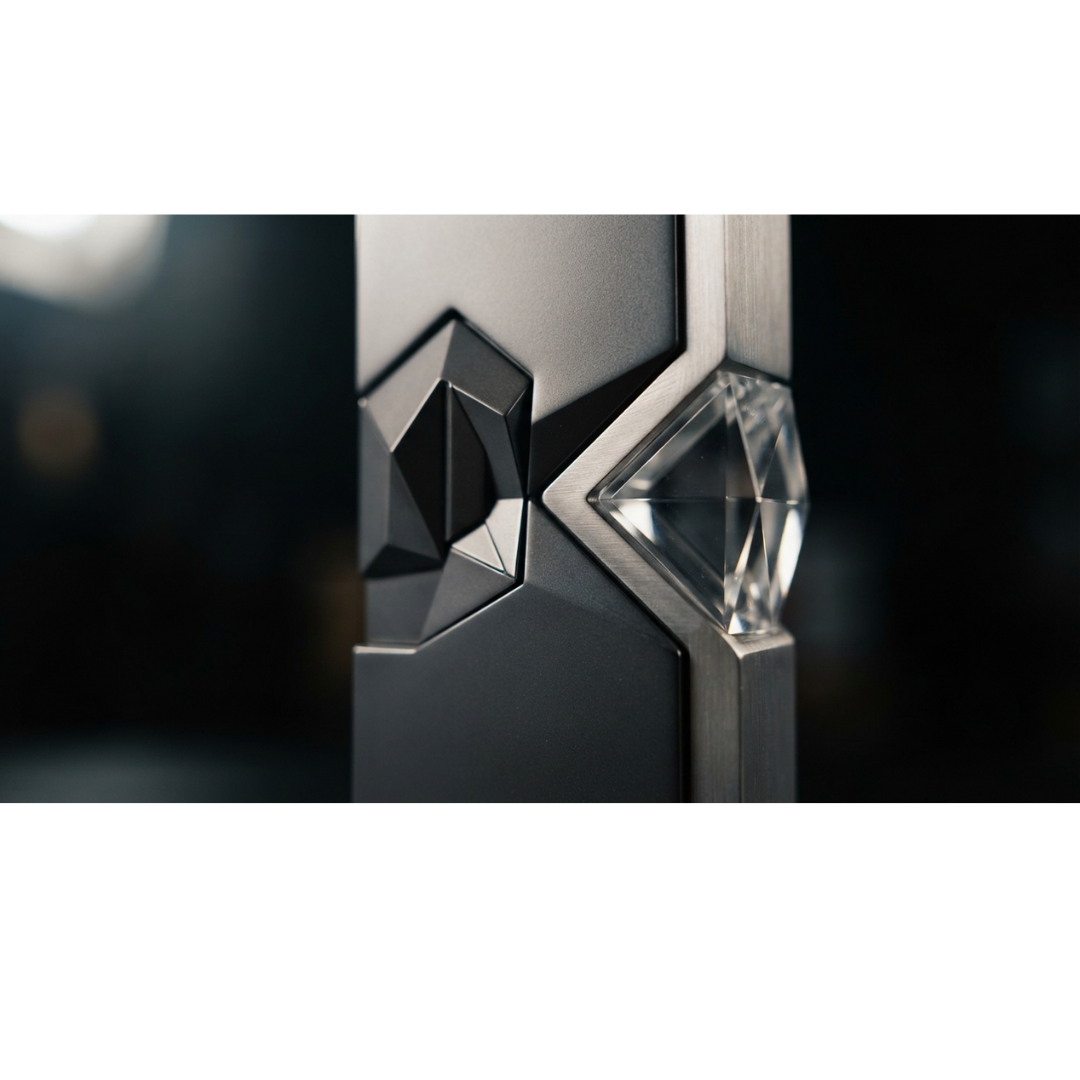
Studio ABD’s trophy work demonstrates the use of materials such as aluminium along with carefully considered finishes. Its Spirit of Lupin trophy, for example, uses aviation grade aluminium, anodised finishes, brand colours, and a sculptural structure based on the organization’s values.
The material should therefore be selected early rather than treated as an afterthought.
4. Brand Identity Should Be Part of the Design
Corporate awards often need to represent two things at the same time: the achievement of the recipient and the identity of the organization.
Simply placing a logo on the front of a trophy is not always enough.
A stronger approach may involve using brand shapes, colours, symbols, proportions, or design principles within the physical form itself. This can make the award feel like it belongs to the organization rather than being a standard trophy with a logo attached.
The IPL Man of the Match trophy is an example where the design concept was connected to company identity. Its form was inspired by the Aircel logo while also communicating the idea of rising above the competition.
5. Engineering Is Part of Good Trophy Design
A concept may look excellent on a computer screen but still fail during production.
This is where engineering becomes important.
Designers need to think about:
- Structural stability
- Material thickness
- Assembly methods
- Weight
- Surface finishing
- Manufacturing limitations
- Packaging requirements
- Production quantities
- Transportation
A Trophy Design Company Bangalore working on serious corporate or institutional projects should therefore understand more than visual design.
Studio ABD describes capabilities covering mockups, working prototypes, material and process knowledge, engineering analysis, production support, and manufacturing supply for trophies.
That connection between design and production can reduce costly changes later in the project.
6. Prototyping Helps Find Problems Early
A prototype gives the design team something physical to evaluate before final production.
This can reveal problems that are difficult to identify through drawings alone. The trophy may feel too heavy, the base may not provide enough stability, the proportions may look different in real life, or a particular finish may not produce the expected visual effect.
Prototyping is particularly useful when the trophy has an unusual shape or contains multiple materials.
For large award programs involving many recipients, resolving these issues before production becomes even more important because a small design problem can become expensive when repeated across hundreds of units.
7. Packaging and Presentation Also Matter
The award experience does not end with the trophy itself.
How the recipient receives and opens it can influence the perceived value of the recognition. A well designed box protects the object while also creating a more considered presentation.
This becomes especially relevant for premium corporate awards where recipients may take the trophy home or display it in an office.
For the Spirit of Lupin trophy, the design included a handcrafted box as part of the overall presentation. This shows how packaging can be treated as part of the award experience rather than simply as protective material.
8. The Design Should Work Within a Real Budget
Creative ideas have to meet commercial realities.
Before finalizing the design, businesses should discuss the approximate budget, number of units, material choices, production method, finishing requirements, packaging, and delivery schedule.
A design that costs too much to reproduce is not practical for a large event. On the other hand, reducing cost by removing important design elements can weaken the award.
The right balance comes from making informed decisions about where detail and material quality actually matter.
Why Bangalore Is Relevant for Trophy Design
Bangalore has a strong ecosystem around product design, engineering, technology, manufacturing, and creative services. This makes it a practical location for businesses looking for custom award development rather than off the shelf trophies.
A local design studio can also make coordination easier when a project requires repeated discussions around prototypes, materials, manufacturing, and finishing.
For organizations planning major award programs, working with a Trophy Design Company Bangalore can be useful when the requirement goes beyond selecting an existing trophy from a catalogue.
The key is to assess the team’s ability to take a concept through design, prototyping, engineering, manufacturing, and delivery.
Why Businesses May Consider Studio ABD
Studio ABD presents itself as a design consultancy working across product, packaging, environment, and trophy design. Its portfolio includes trophy projects connected with corporate awards, sports, entertainment, and other recognition programs.
Its project portfolio includes work such as Aditya Birla Awards, Forbes Philanthropy Award Trophy, Tata Business Excellence Trophy, Taj Awards Trophy, The Golf Trophy, and IPL Man of the Match Trophy.
For a company seeking a custom award, this type of experience can be useful because trophy development often requires coordination between creative thinking and physical production.
Questions to Ask Before Selecting a Trophy Designer
Before starting a project, businesses should ask:
- Can the designer develop a completely custom concept?
- Can the design reflect our brand or event theme?
- What materials can they work with?
- Is prototyping included?
- Can they support engineering and manufacturing?
- Can they produce the required quantity?
- What finishing options are available?
- Can packaging be designed along with the trophy?
- What is the expected development timeline?
- How will production quality be checked?
These questions help separate a design led project from a simple trophy purchasing exercise.
Conclusion
A memorable award depends on much more than its appearance. The strongest designs connect the achievement with a meaningful concept, appropriate materials, practical proportions, brand identity, engineering, finishing, and presentation.
A Trophy Design Company Bangalore can be a suitable partner when an organization needs an award developed from an idea rather than selected from a catalogue. The right design process considers the recipient, event, brand, production requirements, budget, and long term display value from the beginning.
For businesses planning corporate recognition programs or major events, the most useful question is not simply whether a trophy looks impressive. It is whether the object communicates why the award matters.
FAQs
Q.1 What does a trophy design company do?
A trophy design company develops custom award concepts and may handle design, material selection, prototyping, engineering, manufacturing, finishing, and delivery.
Q.2 What materials are commonly used for custom trophies?
Common materials include aluminium, steel, acrylic, crystal, wood, and other engineered or decorative materials. The right choice depends on the concept, budget, weight, finish, and production quantity.
Q.3 Can a corporate trophy include brand identity?
Yes. A trophy can incorporate brand colours, symbols, forms, visual language, or other identity elements instead of simply placing a logo on an existing design.
Q.4 Why is prototyping important for trophy design?
Prototyping allows designers and businesses to check proportions, weight, stability, materials, finishing, and construction before committing to larger production quantities.
Q.5 Can trophies be designed for large corporate events?
Yes. Custom trophies can be developed for corporate award ceremonies, employee recognition programs, leadership awards, sports events, film awards, exhibitions, and other large scale occasions.
Q.6 How should a business choose a Trophy Design Company Bangalore?
Look at the company’s previous trophy projects, design process, material knowledge, prototyping capabilities, engineering support, manufacturing experience, production capacity, and ability to work within the required budget and timeline.
Rita Sharma