
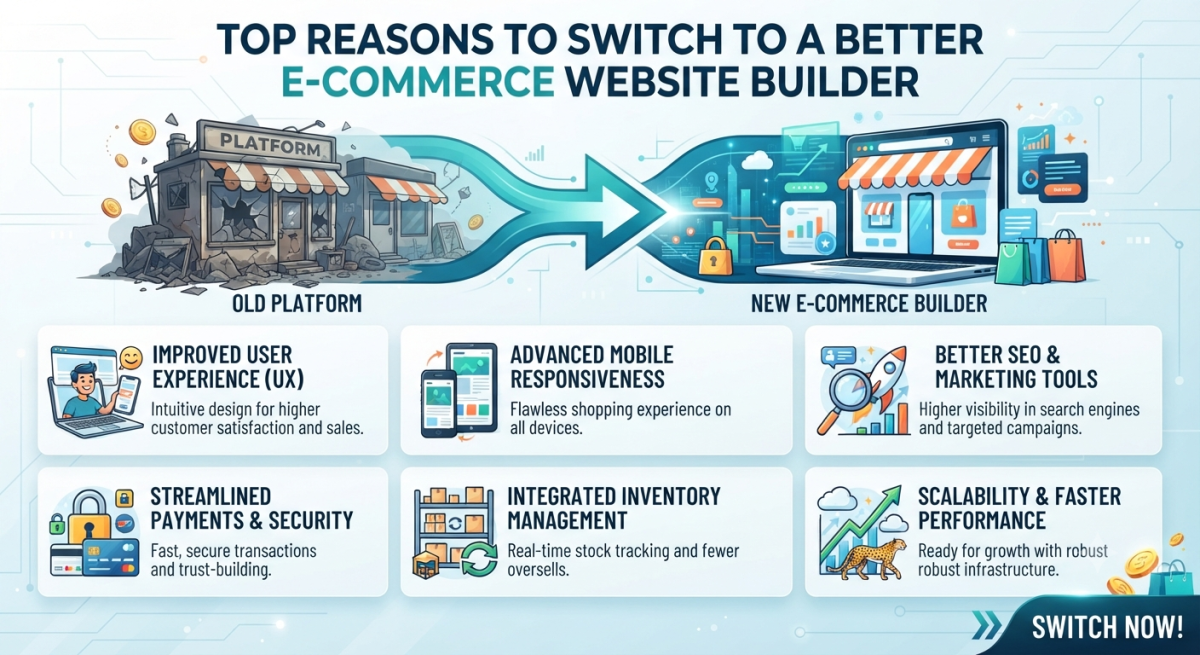
Running an online store is exciting until your website builder starts holding you back.
Slow load times, limited customization, sky-high transaction fees, and poor customer support can quietly drain your business. Many entrepreneurs launch their first store on a popular platform without realizing there are far better options available today.
If you’ve been feeling frustrated with your current setup, you’re not alone. A growing number of sellers are making the switch to platforms that offer more flexibility, smarter tools, and better value for money. Here’s why that decision could be one of the best moves for your business.
1. Your Current Platform Is Costing You More Than You Think
One of the biggest reasons sellers switch is the hidden cost of staying put.
Most mainstream e-commerce platforms charge:
- Monthly subscription fees that scale steeply
- Additional transaction fees per sale (on top of payment gateway charges)
- Paid apps and plugins for features that should be built-in
- Premium charges for removing their branding
When you add it all up, your “affordable” store isn’t so affordable anymore. Switching to a platform that bundles essential features without nickel-and-diming you can dramatically improve your profit margins — especially if you’re scaling.
2. AI-Powered Tools Are Changing the Game
The e-commerce landscape in 2024 has shifted significantly. Platforms built with artificial intelligence at their core are giving smaller businesses capabilities that used to be reserved for enterprise brands.
Tools like the atlas ai store builder are helping sellers automate store setup, generate product descriptions, optimize pricing, and personalize customer experiences — all without hiring a developer or a marketing team.
If your current platform still requires you to manually configure everything or hire expensive freelancers for basic tasks, you’re already behind the curve.
What AI-Powered Store Building Actually Looks Like
- Automated product catalog setup based on your niche
- Smart SEO suggestions that improve your search rankings in real time
- AI-generated content for product pages, banners, and email campaigns
- Personalized storefront experiences for different customer segments
These aren’t luxury features anymore they’re quickly becoming the standard expectation.
3. Limited Design Flexibility Is Hurting Your Brand
Your store’s design is often the first impression a customer has of your brand. If your current builder locks you into rigid templates or charges extra for customization, you’re limiting your ability to compete.
The best ecommerce website builder for your business should offer:
- A wide range of mobile-responsive templates
- Drag-and-drop customization without needing to write code
- Full control over branding — colors, fonts, layouts, and more
- The ability to create custom landing pages for campaigns and promotions
When your store looks and feels professional, customers trust it more. And trust directly translates into conversions.
4. Shopify Isn’t the Only Option Especially in India
Shopify has long dominated the e-commerce builder space, but it comes with a set of challenges that are especially painful for Indian sellers:
- International transaction fees that add up quickly
- Limited support for Indian payment gateways
- App costs that inflate your monthly bill significantly
- USD-based pricing that fluctuates with the exchange rate
This is why more Indian entrepreneurs are actively exploring shopify alternatives india that are better suited to local business needs, pricing structures, and customer behavior.
What Makes a Good Local Alternative?
A strong India-focused e-commerce platform will support popular local payment options like UPI, Razorpay, and Paytm. It will price its plans in INR and offer customer support during Indian business hours.
Beyond payments, it should also understand the unique dynamics of Indian e-commerce including COD (cash on delivery) preferences, regional language support, and integration with popular Indian logistics providers.
5. Scalability Should Never Be an Afterthought
Many sellers start on a basic builder because it’s quick and cheap to set up. But as their business grows, they hit walls — product limits, bandwidth caps, slow page speeds, and poor inventory management.
A platform that can’t grow with you will eventually force a painful and expensive migration.
The smartest approach is to choose a builder that scales with your ambitions from day one. Look for:
- No hard limits on products or categories
- Built-in inventory and order management tools
- Multi-channel selling (social media, marketplaces, and your own store)
- Advanced analytics to track performance and spot opportunities
6. Better Customer Experience Drives More Sales
At the end of the day, your e-commerce platform directly impacts how customers experience your brand. Slow checkout processes, clunky mobile experiences, and limited payment options all create friction — and friction kills conversions.
Switching to a smarter platform can immediately improve:
- Page load speed, which directly affects bounce rates and SEO rankings
- Mobile-first design, ensuring a seamless experience on smartphones
- One-click checkout flows that reduce cart abandonment
- Multiple payment method integrations for customer convenience
Even a small improvement in conversion rate can mean thousands of dollars in additional revenue over the course of a year.
7. Exploring the Best Shopify Alternatives on the Market
If you’ve been loyal to Shopify but are starting to feel the limitations, you’re not alone. Thousands of sellers globally are now evaluating the best shopify alternatives available today.
What sets newer platforms apart isn’t just lower pricing it’s a more modern approach to selling. Features like AI-assisted store building, integrated marketing tools, smarter analytics dashboards, and genuinely responsive support are becoming the differentiators that matter.
When comparing platforms, ask yourself:
- Does it offer the tools I need without expensive add-ons?
- Is the pricing transparent and scalable?
- How responsive is customer support?
- Can I migrate my existing products and data easily?
- Does it support the payment gateways my customers prefer?
The answers will quickly reveal whether it’s time to make a move.
8. Migration Is Easier Than You Think
One of the biggest misconceptions holding sellers back is the fear of migrating their store. The reality is that modern platforms have streamlined the migration process significantly.
Many builders now offer:
- Automated data import tools for products, customers, and orders
- Step-by-step onboarding support
- Dedicated migration assistance from their support teams
- Free trial periods so you can test before committing
The short-term effort of switching is almost always outweighed by the long-term benefits of being on a platform that truly supports your growth.
Conclusion
Your e-commerce platform is the backbone of your online business. Sticking with a tool that’s limiting your growth, draining your budget, or frustrating your customers is a strategic mistake — especially when better alternatives exist.
Whether you’re a first-time seller or an established brand looking to scale, the right platform can make an enormous difference. From AI-powered automation to better pricing models and local payment support, the next generation of e-commerce builders is designed to give you a real competitive advantage.
Don’t wait until the problems become critical. Evaluate your options now, and make the switch that positions your store for sustainable, long-term growth.
Frequently Asked Questions (FAQs)
Q1. How do I know if it’s time to switch my e-commerce platform?
If you’re regularly paying for features that should be included, experiencing slow site performance, struggling with limited design options, or finding that your platform doesn’t support your local payment preferences, it’s a clear sign that a better option might be worth exploring.
Q2. Will I lose my data if I switch e-commerce platforms?
Not necessarily. Most modern platforms offer data migration tools that allow you to transfer your product listings, customer data, and order history. It’s always wise to back up your data before starting any migration process.
Q3. Are there good Shopify alternatives for sellers based in India?
Yes. Several platforms are specifically designed or well-optimized for Indian sellers, offering INR pricing, support for local payment gateways like UPI and Razorpay, COD functionality, and integration with Indian logistics providers.
Q4. What features should I prioritize when choosing a new e-commerce builder?
Focus on ease of use, design flexibility, built-in SEO tools, payment gateway support, scalability, customer support quality, and transparent pricing. AI-powered tools for automation are also increasingly valuable for growing businesses.
Q5. Is an AI-powered store builder suitable for beginners?
Absolutely. AI-powered builders are actually ideal for beginners because they automate the more technical and time-consuming aspects of store setup from generating product descriptions to suggesting SEO improvements making it easier to launch and grow a professional store without technical expertise.
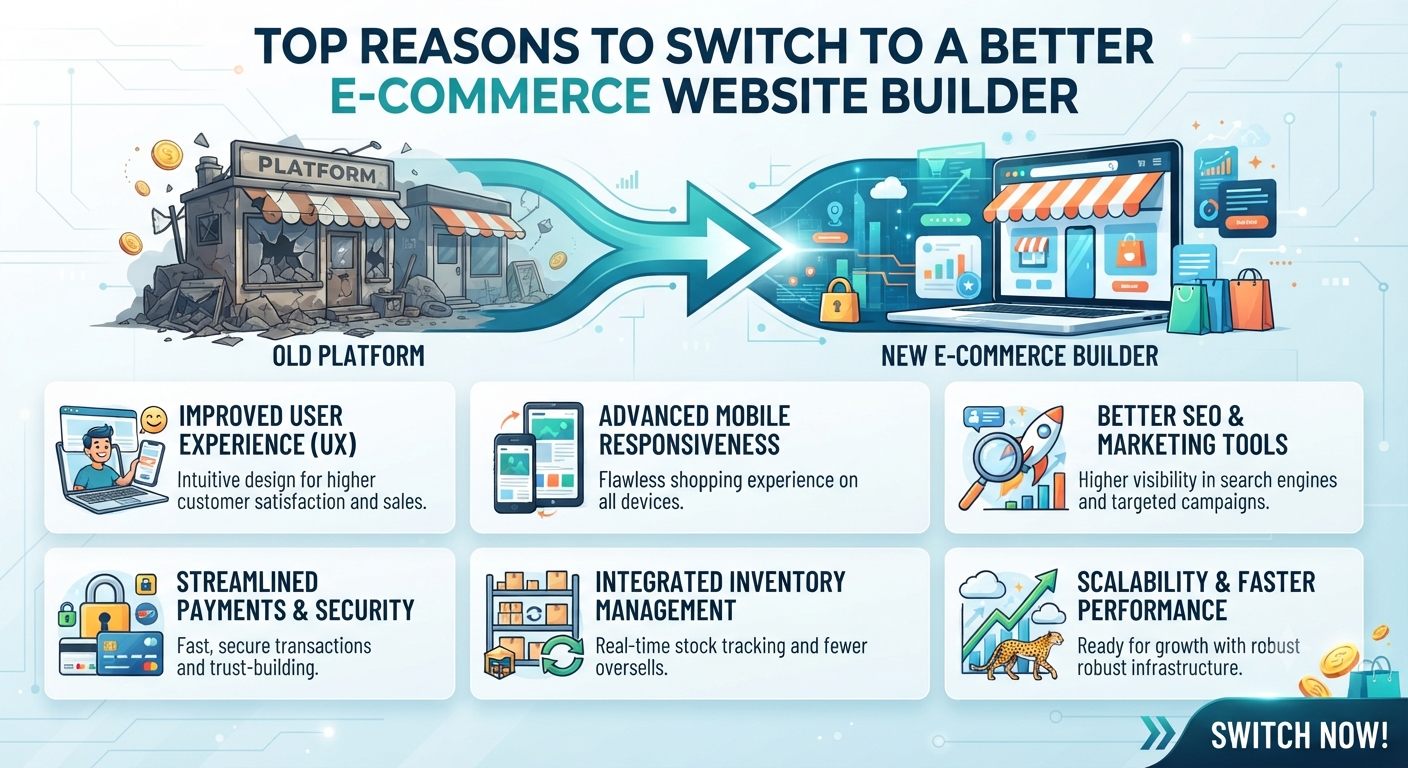
Top Reasons to Switch to a Better E-commerce Website Builder