


Most Range Rover owners don’t think much about their AC system until it stops working the way it should. Then suddenly, it becomes the only thing on your mind — especially on a long drive with the sun beating down. Understanding the real reasons behind Range Rover AC Repair needs, rather than just treating the symptoms, can help you get a fix that actually lasts.
Range Rover air conditioning systems are more than just a compressor and a few vents. These vehicles typically feature multiple climate zones, automatic humidity control, and sensors that constantly adjust output based on cabin conditions. This sophistication is part of what makes the driving experience so refined — but it also means that when something breaks, the cause often isn’t obvious at first glance.
It’s Rarely “Just Low Refrigerant.”
One of the most common misconceptions about AC problems is that they’re always caused by simply running low on refrigerant. In reality, refrigerant doesn’t just disappear on its own — if levels are low, there’s almost always a leak somewhere in the system. A workshop that only tops up refrigerant without finding and fixing the leak is offering a temporary patch, not a genuine repair.
This is why proper Range Rover AC Repair always starts with identifying why refrigerant levels dropped in the first place, whether that’s a worn seal, a damaged hose, or a failing component, rather than jumping straight to a refill.
The Compressor: Often the Real Culprit
The AC compressor is the heart of the system, and it’s also one of the most common points of failure. Because it runs almost continuously in hot climates, it experiences significant wear over time. Signs of a struggling compressor include unusual noises when the AC is switched on, inconsistent cooling, or the system cutting out intermittently.
Diagnosing compressor issues correctly requires more than a visual inspection — it typically involves pressure testing and monitoring compressor cycling behavior under load. This is a core part of what proper Range Rover AC Repair actually involves, distinguishing a legitimate diagnosis from guesswork.
Electronic Faults That Mimic Mechanical Problems
Because Range Rover climate systems are so deeply integrated with the vehicle’s electronics, some AC issues that seem mechanical are actually electronic in nature. A faulty temperature sensor, for example, can cause the system to blow warm air even though the compressor and refrigerant levels are completely fine. Similarly, a malfunctioning actuator can cause air to come from the wrong vents entirely.
This is precisely why a proper Range Rover AC Repair process includes checking sensor data and actuator function, not just physical AC components. Skipping this step often leads to replaced parts that weren’t actually faulty, while the real issue remains unresolved.
What a Comprehensive AC Repair Process Looks Like
A thorough repair typically follows a logical sequence rather than jumping straight to part replacement:
- Diagnostic scan — Reading stored fault codes and live sensor data to understand what the system is reporting.
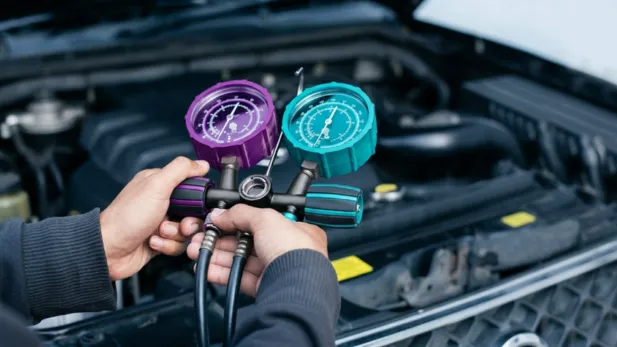
- Pressure and leak testing — Confirming refrigerant pressure and locating any leaks using dye or electronic detection methods.
- Component evaluation — Assessing the compressor, condenser, and expansion valve for wear or damage.
- Sensor and actuator verification — Ensuring climate control components are communicating correctly across all zones.
- System recharge and verification — Refilling refrigerant to the correct specification and running a full test cycle to confirm the repair holds.
Genuine Range Rover AC Repair follows this structured approach rather than skipping steps to save time.
Why Ignoring Early Warning Signs Costs More Later
A slightly weaker airflow or marginally longer cooling time might seem minor, but these are often the earliest indicators of a developing problem. Left unaddressed, a small leak can drain refrigerant completely, and a struggling compressor can eventually fail outright—turning a manageable repair into a much more expensive one.
Addressing these early signs proactively, rather than waiting for a complete breakdown, is one of the simplest ways to keep repair costs manageable over time.
Choosing a Workshop That Diagnoses Properly
Not every garage takes the time to properly diagnose AC issues before jumping to a fix. Before choosing a workshop for Range Rover AC Repair, it’s worth asking:
- Do they perform pressure testing and leak detection, or default to a quick recharge?
- Are technicians trained specifically on Range Rover’s multi-zone climate systems?
- Do they use genuine or trusted OEM-equivalent parts and refrigerant?
- Will they explain the diagnosed issue clearly before starting work?
- Is the repair backed by any kind of warranty?
A workshop confident in answering these questions is far more likely to deliver a lasting fix.
Final Thoughts
AC problems in Range Rover AC Repair are rarely as simple as they first appear, and treating them as such often leads to repeat repairs and wasted money. Understanding the real mechanics behind these failures — refrigerant leaks, compressor wear, and electronic faults — helps you have more informed conversations with your workshop and recognize when a proper diagnosis is actually happening.
Investing in thorough, properly diagnosed Range Rover AC Repair from the start will always cost less in the long run than repeated quick fixes that never address the underlying issue.
Frequently Asked Questions
1. Is a refrigerant recharge alone enough to fix AC problems?
Not usually—if refrigerant is low, there’s almost always an underlying leak that needs to be found and repaired, not just topped up.
2. How do I know if my AC problem is the compressor or something electronic?
A proper diagnostic scan and pressure test can distinguish between mechanical compressor issues and electronic faults like sensor or actuator failures.
3. Why does my Range Rover’s AC blow warm air even though the compressor sounds fine?
This is often caused by a faulty temperature sensor rather than a mechanical issue, which is why electronic checks matter during diagnosis.
4. What are the earliest signs of a developing AC problem?
Slightly weaker airflow or a marginally longer cooling time are often the first indicators, well before a complete failure occurs.
5. How long does a proper AC diagnostic take?
A thorough diagnostic involving pressure testing, leak detection, and sensor checks typically takes longer than a simple recharge, but it prevents recurring issues.
6. Can ignoring small AC issues lead to bigger repairs?
Yes—a small leak or early compressor wear left unaddressed can escalate into a complete system failure, resulting in a significantly more expensive repair.
Metamechanics