
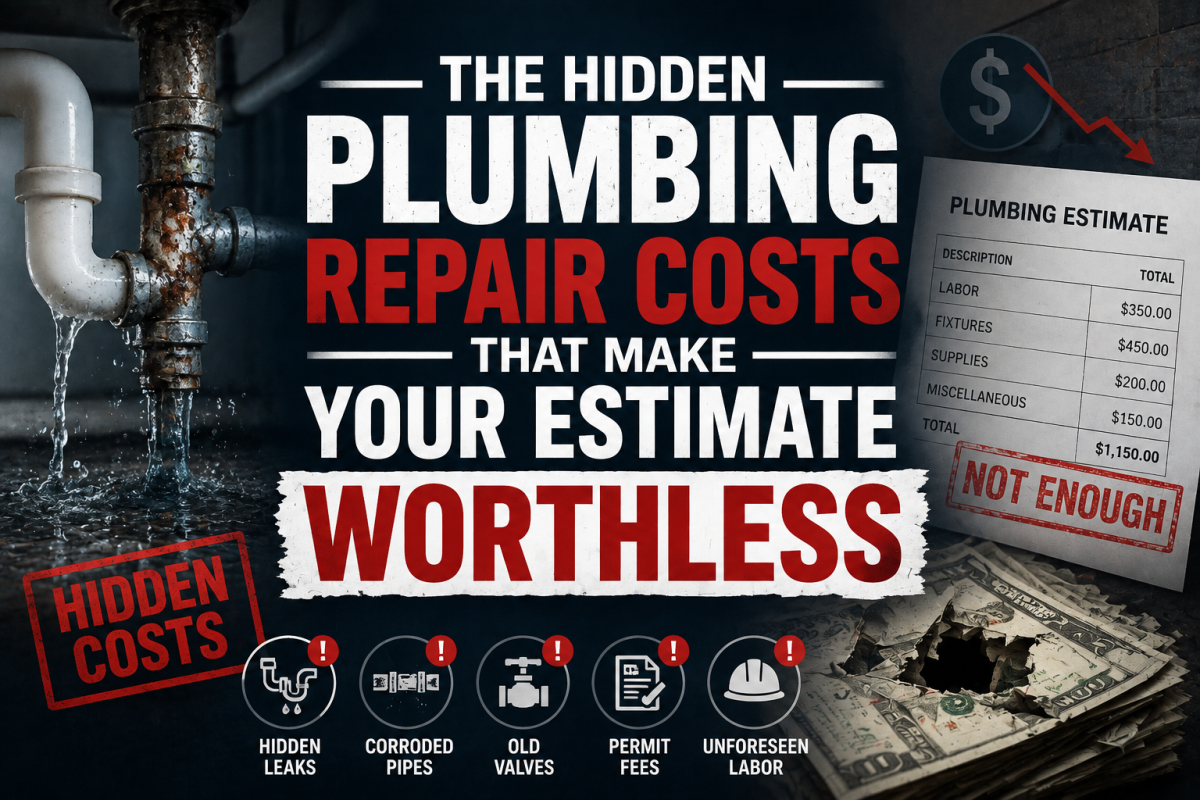
A homeowner calls a plumber about a leaky faucet. The plumber gives a price over the phone. When they arrive and diagnose the problem, the estimate doubles or triples. What seemed like a simple $150 repair becomes a $450+ job once the plumber sees what’s actually required. The homeowner feels blindsided, but the plumber isn’t overcharging; they’re accounting for costs and complexity that couldn’t be identified without an on-site inspection.
This scenario happens frequently because most people have no idea what actually drives plumbing repair costs. They assume a “leak” is a leak, not understanding that the same symptom can have wildly different root causes with wildly different price tags.
Why Initial Estimates Are Often Wrong
Diagnostics reveal hidden problems. A dripping faucet might seem simple. But once the plumber turns off the water and opens the faucet assembly, they might discover corroded internal components that require not just the cartridge but the entire valve body replacement. What looked like a $150 job becomes a $300+ repair because the real problem wasn’t visible from the outside.
Water damage is progressive and invisible. A leak under a sink might have been running for weeks or months before it’s noticed. By the time the plumber is called, there’s mold under the cabinet, the subfloor is compromised, and what started as a pipe repair becomes a full remediation project. The visible leak is just the symptom; the actual damage is far more expensive to address.
Accessibility drives labor cost. A faucet replacement in an accessible bathroom sink costs one amount. The same faucet replacement in a kitchen island with cabinets that need partial removal costs substantially more. A pipe repair in a crawlspace costs more than one in an open basement. An estimate that doesn’t account for how hard the work actually is will be significantly short.
Code compliance creates unexpected costs. Some repairs trigger code upgrades. A simple toilet replacement might reveal that the existing drainage isn’t adequate to code, requiring venting upgrades or drain line modifications. These weren’t anticipated when the estimate was given, but they become required once the work is started.
Material options create price ranges. A failing water heater can be replaced with a basic unit or a high-efficiency unit. A leaking drain line can be patched or replaced. A toilet can be a budget model or a high-end fixture. An initial estimate that doesn’t specify exactly which materials will be used can range dramatically depending on what the customer chooses.
Excavation and digging change everything. A suspected sewer line problem might be localized (simple fix) or extensive (thousands in digging and replacement). A professional video camera inspection reveals the reality, but that diagnosis itself costs money, and once the problem is identified, the scope becomes clear which is often much larger than the original estimate.
The Cost Breakdown Nobody Explains
A plumbing repair bill includes several components that most people don’t think about:
Service call and diagnostics. The plumber’s time to come to your home, assess the problem, and determine what needs to be fixed. This often costs $75-150 and is separate from the actual repair cost. A homeowner who doesn’t know this might be shocked that being told “you need a new water heater” costs money in addition to the water heater cost.
Parts and materials. The actual components being replaced or repaired. This is usually straightforward, but quality tiers exist. A basic faucet costs $40; a premium faucet costs $200.
Labor for the actual work. The plumber’s time to perform the repair, typically charged at hourly rates ($50-150+/hour depending on location and complexity).
Related repairs and code upgrades. Once work starts, additional issues often surface. These create change orders or additional costs beyond the initial estimate.
Emergency or after-hours premiums. Calling a plumber at 10 PM on a Sunday costs significantly more than calling during business hours. Some companies charge 2-3x their normal rate.
Travel time and dispatch fees. Some companies charge travel fees or dispatch fees for coming to your home, separate from work time.
Why Homeowners Keep Getting Surprised
Plumbers often give rough estimates without inspection. A phone estimate is a guess. A plumber who quotes “$200 to fix your leak” without seeing the actual problem is guessing. The actual cost could be $150 or $600 depending on what’s actually wrong.
Simple descriptions hide complex problems. “The toilet is running” could be a $30 flapper replacement. It could also be a damaged fill valve requiring a $200 replacement. The same description, vastly different costs.
Homeowners don’t understand water damage scope. Water damage from plumbing leaks isn’t just about fixing the leak. The water that leaked out caused damage to drywall, flooring, insulation, and structural elements. These secondary damages are often more expensive than the leak repair itself, but homeowners don’t think to budget for them.
Preventative work gets recommended mid-repair. Once a plumber is working on your system, they often identify other problems. The main sewer line has tree root intrusion that isn’t causing problems yet but will soon. The water heater is old and likely to fail. The fixtures are corroded and leaking slowly. These recommendations aren’t upsells; they’re genuine warnings about problems that will require expensive emergency repairs if not addressed proactively.
Managing Plumbing Repair Costs
For homeowners dealing with plumbing repairs, several approaches reduce surprise costs:
Get a detailed written estimate. Don’t rely on phone quotes. Have the plumber inspect the problem and provide a written estimate specifying exactly what will be done, what materials will be used, and what the cost will be.
Understand the diagnostic cost. Ask upfront if there’s a diagnostic or service call fee, and whether that fee will be credited toward the actual repair cost if you proceed.
Ask what could change the estimate. “What might I discover once you open this up that would change the cost?” Knowing possibilities prevents shock when they occur.
Budget for discovery. When repairs start, problems often surface. Budget 10-20% contingency for unexpected issues rather than being shocked when they appear.
Get insurance implications explained. Some plumbing repairs are covered by homeowner’s insurance; others aren’t. Understanding what your insurance covers helps with financial planning.
Prioritize preventative maintenance. Regular inspections and maintenance prevent the expensive emergency repairs that happen when problems are ignored until they become critical.
For anyone wanting to understand plumbing repair costs thoroughly from why estimates vary so much to what factors actually drive costs this comprehensive guide to plumbing repair costs breaks down actual cost ranges for common repairs, explains what factors affect pricing, and helps homeowners understand what they should expect to pay for different types of plumbing work.
The Bottom Line
Plumbing repair costs vary wildly not because plumbers are overcharging, but because “plumbing repair” encompasses enormous variation in actual work required. A leaky faucet could be a $150 fix or a $500 fix depending on what’s actually wrong. Understanding this variability, getting detailed estimates, and budgeting for discovery prevents the sticker shock that makes people feel deceived when the final bill exceeds the initial quote. The plumber who gives the lowest phone estimate isn’t necessarily the best deal they’re just guessing. The plumber who charges for a diagnostic and provides a detailed written estimate after inspection is being professional, not overcharging.
raaihajannat