


Among the many tools used in construction, carpentry, and renovation, the claw hammer remains one of the most essential. Despite the rise of power tools and specialized equipment, professionals across trades still rely on a well-designed claw hammer for precision, control, and versatility. However, not all claw hammers are created equal. Understanding the anatomy of a high-quality claw hammer can make a significant difference in performance, safety, and long-term comfort.
This article explores the key components that define the perfect claw hammer and what professionals should look for when choosing one for daily use.
The Hammer Head: Balance, Weight, and Material
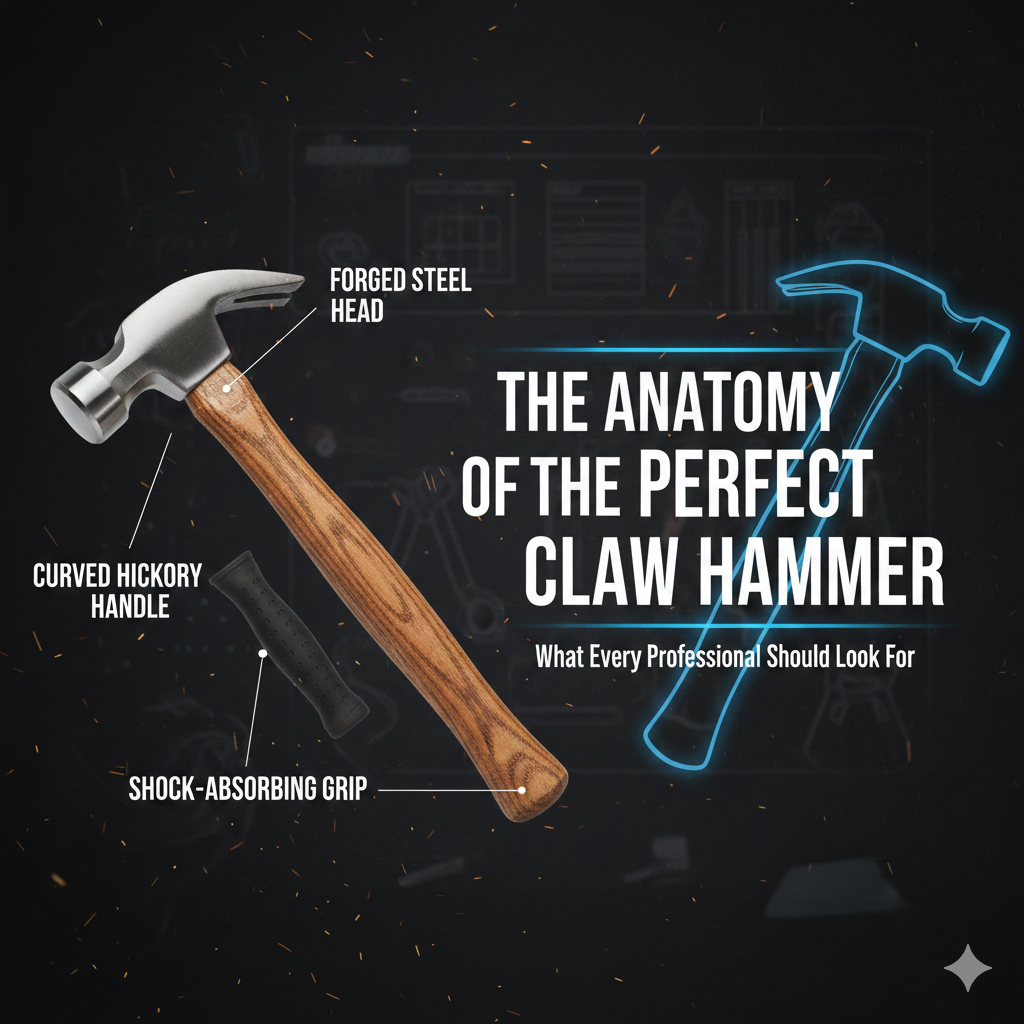
The head of a claw hammer is its most critical component. A professional-grade hammer head is typically forged from high-carbon or alloy steel, providing durability and resistance to deformation. Inferior materials may chip or lose shape over time, compromising both accuracy and safety.
Weight plays a crucial role as well. Most professionals prefer hammer heads ranging between 450 and 570 grams, depending on the task. A heavier head delivers more driving force with less effort, while a lighter head offers better control for delicate work. Balance is equally important—an evenly distributed hammer reduces strain and improves striking accuracy.
The striking face should be slightly convex rather than flat. This subtle curvature helps prevent glancing blows and improves contact with nail heads, especially during repetitive work.
The Claw: Function Beyond Nail Removal
The claw is more than just a nail-pulling feature—it’s a defining characteristic of the tool. There are two primary types of claws: curved and straight. Curved claws are commonly used in general carpentry and finishing work, offering leverage for removing nails without damaging surrounding materials. Straight claws, often favored in framing and demolition, provide additional prying power.
A well-designed claw should have smooth inner edges to grip nails securely without slipping. Poorly machined claws can damage nail heads or require excessive force, increasing fatigue and the risk of injury.
Handle Design: Comfort Meets Control
The handle is where ergonomics truly matter. Professionals who use a claw hammer for extended periods know that handle comfort directly affects productivity and hand health. Handles are commonly made from wood, fiberglass, or steel, each offering distinct advantages.
Wooden handles, especially hickory, are valued for their natural shock absorption and classic feel. Fiberglass handles provide excellent vibration dampening and are more resistant to environmental damage. Steel handles offer maximum durability but require rubberized grips to reduce vibration and improve comfort.
Grip texture and shape are equally important. A contoured handle with a non-slip grip ensures control even in sweaty or dusty conditions. The length of the handle should complement the hammer head, providing optimal leverage without sacrificing precision.
Shock Absorption and Fatigue Reduction
Repeated impact can take a toll on hands, wrists, and elbows. High-quality claw hammers are designed with shock-absorbing features that reduce vibration transfer. Fiberglass cores, rubber grips, and engineered handle materials all contribute to minimizing strain.
For professionals working long hours, reduced vibration isn’t just about comfort—it’s about preventing long-term injuries such as tendonitis or carpal tunnel syndrome. Investing in a hammer that prioritizes shock absorption can significantly improve work longevity.
Durability and Build Quality
A professional claw hammer must withstand daily use in demanding environments. One-piece forged construction, where the head and handle are integrated or securely bonded, enhances strength and durability. Loose heads or weak joints are not only inefficient but dangerous.
Corrosion resistance is another factor to consider, especially for outdoor or damp environments. Protective coatings on the hammer head help prevent rust and extend the tool’s lifespan.
Professionals sourcing reliable tools often look for a range of well-balanced, durable claw hammers designed for both precision and heavy-duty applications. Choosing the right hammer ensures consistent performance across various tasks.
Precision and Control in Real-World Applications
A claw hammer is not just about power—it’s about control. Whether driving finish nails, adjusting fittings, or removing fasteners, precision matters. A well-designed hammer allows for accurate strikes with minimal effort, reducing errors and material damage.
Professionals often test a hammer by swinging it lightly before purchase. The right hammer feels like an extension of the arm, offering natural balance and responsiveness. Poor balance can lead to missed strikes, fatigue, and inefficiency.
Safety Considerations
Safety should never be overlooked when selecting hand tools. A secure grip, reliable construction, and proper balance all contribute to safer operation. Loose handles, slippery grips, or chipped faces increase the risk of accidents.
Some professional claw hammers also feature magnetic nail starters, allowing users to position nails safely with one hand. While not essential, such features can improve efficiency and reduce the risk of finger injuries.
Choosing the Right Hammer for Your Trade
Different trades place different demands on a claw hammer. Carpenters, framers, electricians, and general contractors may all prioritize different features. Understanding your primary applications helps narrow down the ideal specifications.
For example, finish carpenters may prefer lighter hammers with superior control, while framers often choose heavier models with straight claws for prying power. Selecting the right tool for your trade ensures better results and less physical strain.
The Role of Quality Tools in Professional Performance
A claw hammer may seem like a simple tool, but its design and quality have a direct impact on work efficiency and outcome. Professionals understand that reliable tools are an investment, not an expense. High-quality tools reduce downtime, improve accuracy, and contribute to a safer work environment.
As construction and renovation standards continue to evolve, the importance of well-engineered hand tools remains constant. The perfect claw hammer combines strength, balance, comfort, and durability in a single, dependable tool.
Conclusion
The anatomy of the perfect claw hammer is defined by thoughtful design and professional-grade materials. From the forged steel head to the ergonomic handle, every component plays a role in performance and safety. For professionals, choosing the right claw hammer means greater efficiency, reduced fatigue, and consistent results on the job.
In a trade where precision and reliability matter, the right claw hammer is not just a tool—it’s a trusted partner in daily work.
Combipower bv