


Digital systems are no longer limited to processing text or numbers. Today, they are learning to interpret images, videos, and real-world environments with remarkable accuracy. Computer vision development sits at the center of this shift, enabling machines to observe, analyze, and respond to visual data in ways that were once only possible for humans.
As cameras, sensors, and visual data sources continue to grow, organizations are discovering that visual intelligence is not a futuristic add-on—it is becoming a core capability for efficiency, safety, and innovation.
From Pixels to Intelligence
At its core, computer vision development transforms raw pixels into meaningful insights. Images and video frames are converted into data that algorithms can process, allowing systems to detect objects, recognize patterns, interpret movement, and understand context.
Unlike traditional image processing, modern computer vision systems rely heavily on deep learning models trained on vast datasets. These models learn from examples, gradually improving their ability to distinguish between objects, interpret scenes, and adapt to new environments. Over time, this learning-based approach allows vision systems to perform reliably even in complex, real-world conditions.
Where Computer Vision Is Creating Real Impact?
The influence of computer vision is already visible across industries, reshaping how organizations operate and make decisions.
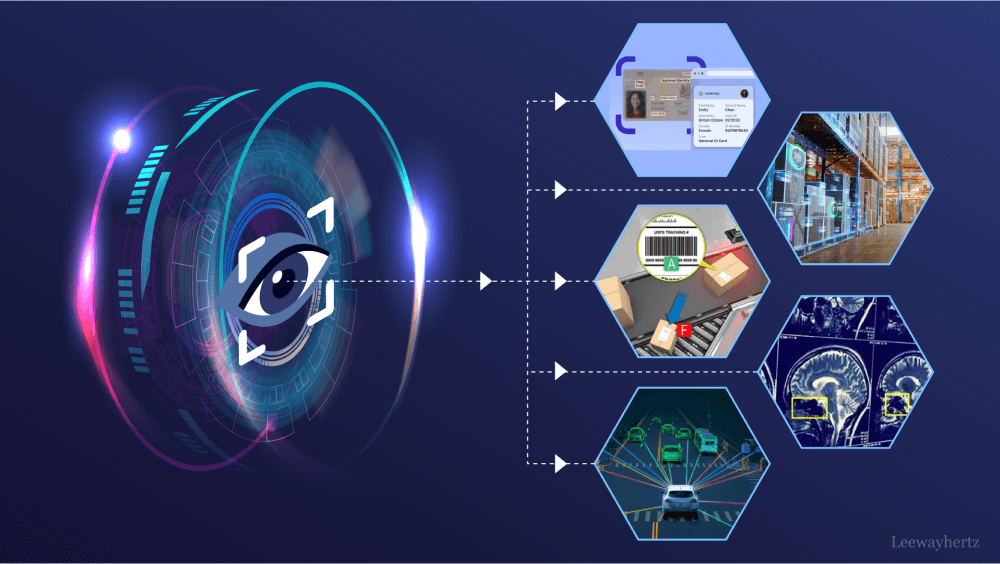
In manufacturing, visual inspection systems identify defects at speeds and accuracy levels far beyond manual checks. In healthcare, image-based diagnostics support clinicians by highlighting anomalies in scans and medical imagery. Retailers use visual analytics to understand customer behavior, optimize store layouts, and manage inventory more effectively.
Transportation and logistics benefit from vision-enabled monitoring, helping track assets, improve safety, and support autonomous navigation. Meanwhile, agriculture leverages vision models to assess crop health, detect disease, and optimize yields using drone and satellite imagery.
Technical Foundations Behind Vision Systems
Developing effective computer vision systems requires more than just powerful algorithms. High-quality datasets play a critical role. Models must be trained on diverse and representative data to ensure consistent performance across lighting conditions, angles, and environments.
Equally important is model optimization. Vision systems often need to operate in real time, sometimes on edge devices with limited computing power. Efficient architectures, compression techniques, and hardware-aware tuning ensure that performance remains strong without sacrificing speed.
For organizations looking to move from experimentation to production, computer vision development services help bridge the gap by tailoring models, managing data pipelines, and deploying scalable solutions aligned with real business needs.
Overcoming Real-World Challenges
While computer vision offers enormous potential, it also presents practical challenges. Variations in lighting, motion blur, occlusion, and background noise can affect accuracy. Models must be resilient enough to perform consistently outside controlled environments.
Bias and data imbalance are additional concerns. If training data lacks diversity, models may perform poorly in certain scenarios. Responsible development requires careful dataset design, ongoing evaluation, and continuous improvement.
Privacy and ethics also play a role, especially in applications involving facial recognition or surveillance. Clear governance, transparency, and compliance with regulations are essential to building trust and ensuring responsible use.
Integrating Vision into Broader AI Systems
Computer vision rarely operates in isolation. Its true value emerges when combined with other AI capabilities such as natural language processing, predictive analytics, and decision intelligence.
For example, vision systems can detect an event, while analytics engines predict outcomes and automation tools trigger actions. In smart factories, cameras identify issues, AI models assess impact, and control systems respond instantly. This integration transforms visual data into actionable intelligence rather than static insights.
Future of Computer Vision Development
The next phase of computer vision development is moving toward multimodal intelligence. Systems are increasingly designed to combine visual data with text, audio, and sensor inputs, enabling richer understanding and more nuanced decision-making.
Advances in self-supervised learning and foundation models are also reducing reliance on labeled data, making development faster and more flexible. At the same time, edge computing is pushing vision capabilities closer to where data is generated, improving speed and reducing latency.
As these trends continue, computer vision will evolve from a specialized capability into a foundational technology embedded across digital ecosystems.
Conclusion
Computer vision development is redefining how machines interact with the world around them. By enabling systems to see, interpret, and act on visual information, it unlocks new levels of automation, insight, and efficiency across industries.
Organizations that invest in robust, scalable vision solutions today are positioning themselves for smarter operations and stronger competitive advantage tomorrow. As visual data becomes one of the most valuable digital assets, the ability to harness it effectively will shape the future of intelligent systems.
Sohana Kumar