

The restaurant industry is entering 2026 with renewed optimism and clear transformation signals. With foodservice sales projected to reach $1.5 trillion in the United States alone and global foodservice exceeding $4 trillion, restaurants face both unprecedented opportunities and significant challenges. Understanding the trends shaping this evolution isn’t just helpful—it’s essential for survival and growth.
Let’s explore the key trends that will define restaurant success in 2026.
The Rise of Comfort with a Twist
Nostalgia is the new luxury. Diners are gravitating toward familiar, comforting dishes that remind them of simpler times. But there’s a catch—they want these classics elevated with creative flair.
The National Restaurant Association reports that consumers seek meals delivering “joy and familiarity without breaking the bank.” This has sparked a renaissance of comfort food reimagined with global influences and premium touches.
Think smashed burgers transformed into tacos, traditional mashed potatoes served alongside wagyu hot dogs, or childhood favorites plated with restaurant-quality finesse. One industry survey found “spicy” is now the most prolific word on menus after vegetable and fruit, showing how restaurants add excitement to familiar fare.
The trend extends beyond food to the entire dining experience. Restaurants are bringing back bread courses—once considered passé—but elevating them with homemade rolls, wood-fired baking, and artisanal dips. These touches justify pricing while creating memorable moments that keep guests returning.
Technology Reshapes Every Touchpoint
Approximately one-third of restaurant operators now use AI technologies, with nearly half planning adoption soon. Artificial intelligence isn’t just a buzzword—it’s becoming operational reality.
From inventory management to personalized menu recommendations, technology is helping restaurants operate more efficiently while delivering better customer experiences. AI-driven platforms help optimize staffing schedules, predict demand patterns, and reduce food waste—all critical for maintaining razor-thin profit margins.
The digital ordering revolution continues accelerating. Nearly 99% of restaurants now offer at least one digital ordering platform, and 50% of U.S. adults used food delivery apps in the past year. The online food delivery market alone is projected to reach $429.95 billion by the end of 2025, representing a 21.7% revenue surge.
But technology adoption goes deeper. Contactless ordering, cashierless dining, and app-based payments are becoming standard expectations rather than innovative features. Restaurants leveraging data analytics to understand customer preferences and adjust menus accordingly gain significant competitive advantages.
Jeremy Theisen, chief revenue officer of Hang (an AI-driven customer data platform), emphasizes that winning technology “won’t be the flashiest—it will be the most effective at cutting complexity, streamlining labor, and quietly driving more business.”
The GLP-1 Effect and Portion Innovation
A surprising trend emerged from the wellness world: GLP-1 medications are fundamentally changing how people eat. With fewer bites and smaller appetites, every dish needs to deliver maximum flavor and visual impact.
Restaurants are responding by packing more intensity into smaller portions. Expect to see:
- Half-portion menu options becoming standard
- Shareable appetizers designed as complete meals
- Inventive sides that can stand alone
- Creative small plates with bold flavors
This shift aligns perfectly with economic pressures. Consumers want value without compromising quality, and restaurants are finding creative ways to deliver satisfaction in more accessible formats.
Regional Cuisines Take Center Stage
Next-generation Indian cuisine, Eastern European specialties, and Southern Asian influences are diversifying American restaurant landscapes. Diners are moving beyond broad ethnic categories toward regional authenticity.
Keralan cafes are popping up across the United States, featuring coastal Indian flavors and spice blends unique to southwestern India. Traditional English pub fare, Polish pierogis, and new-wave Japanese concepts are gaining traction beyond major metropolitan areas.
This trend reflects America’s evolving demographics and increasingly adventurous palates. Brett Schulman, CEO of Cava, notes that “as the country has gotten more diverse, people’s palates have shifted. They’re seeking bolder, more adventurous, spicier food.”
Mediterranean cuisine particularly benefits from this shift, offering flexibility to meet various dietary preferences—spicy, mild, plant-based, or protein-rich—all within one culinary framework.
Workforce Investment Becomes Non-Negotiable
Seventy percent of operators struggle to fill positions, with turnover rates hovering between 75-80% annually. This staffing crisis forces restaurants to fundamentally rethink their approach to employees.
Successful restaurants are prioritizing:
- Reasonable schedules and work-life balance
- Ergonomic workstations to reduce physical strain
- Clear growth pathways for career development
- Competitive wages—median hourly rates for servers reached $14.92 in 2024
- Team education and communication programs
The industry is projected to add 200,000 jobs by the end of 2025, bringing total employment to 15.9 million Americans. But quantity won’t solve quality issues. Restaurants creating healthy workplace cultures with intentional training and employee wellbeing see dramatically lower turnover and better customer experiences.
James Beard Award semifinalist Lordfer Lalicon emphasizes that success requires “constant education, effective communication, and growing intentionally with focus.”
Sustainability Moves from Buzzword to Business Model
Ninety-one percent of consumers prefer businesses actively reducing food waste. Sustainability is no longer optional—it’s a competitive differentiator and operational necessity.
Restaurants are implementing:
- Zero-waste initiatives and upcycling programs
- Seasonal, locally-sourced ingredients
- Transparent supply chain communication
- Paperless systems and digital workflows
- Full ingredient utilization techniques
One creative example: restaurants converting leftover bread into craft beer or breadcrumbs for future dishes. These initiatives simultaneously reduce costs, minimize environmental impact, and resonate with values-conscious consumers.
Forty-two percent of restaurants now use software solutions to track and minimize waste, demonstrating how sustainability and technology intersect for operational improvement.
Experience Trumps Everything
With economic uncertainty lingering, restaurants must justify every dollar spent. This means creating experiences that transcend simple meals.
Sixty-four percent of full-service customers say dining experience matters more than price. This preference opens opportunities for restaurants willing to invest in ambiance, service quality, and memorable moments.
Interactive elements are gaining popularity—from modern dinner theater to hands-on cooking demonstrations. Restaurants are transforming from simple food providers into entertainment destinations and community gathering spaces.
The key is authenticity. Diners are tired of overly conceptual experiences optimized for Instagram. They want genuine hospitality, real food, and actual moments of connection. As one industry expert notes, “Let’s get back to real hospitality, real food, real moments.”
Navigating 2026’s Economic Landscape
Despite inflation pressures and tariff uncertainties, consumer spending on restaurants continues edging upward. However, spending patterns are shifting significantly.
Bank of America data reveals an interesting reversal: casual dining traffic is growing while quick-service restaurant visits decline. As QSR prices climbed, casual dining became perceived as better value—offering higher quality food at comparable price points.
To maintain competitiveness, restaurants are:
- Adding new discounts, deals, and value promotions (47% of operators)
- Prioritizing on-premises experiences (90% of fine dining, 87% of casual dining operators)
- Leveraging loyalty programs tied to digital platforms
- Creating flexible pricing strategies that respond to market conditions
The industry faces cautious optimism. While challenges persist—inflation, labor costs, potential tariffs—the fundamentals remain strong. Nine in ten adults say they enjoy going to restaurants, viewing them as places to enjoy flavors and experiences they can’t replicate at home.
Practical Steps for Restaurant Success in 2026
Based on these trends, here are actionable strategies for restaurant operators:
Embrace technology strategically. Don’t chase every innovation—focus on tools that genuinely improve operations and customer experiences.
Invest in your team. Your people create experiences that keep customers returning. Competitive wages, growth opportunities, and workplace culture aren’t expenses—they’re investments.
Tell your story authentically. Whether it’s ingredient sourcing, waste reduction, or cultural heritage, transparency builds trust and loyalty.
Design flexible menus. Offer portion options, shareable plates, and dishes that accommodate various dietary preferences and budgets.
Create memorable experiences. Focus on genuine hospitality and meaningful moments rather than Instagram-optimized concepts.
Stay data-informed. Use analytics to understand customer preferences, optimize pricing, and make evidence-based decisions.
The Road Ahead
The restaurant industry in 2026 stands at a fascinating crossroads. Economic pressures demand efficiency and value, while consumer expectations demand quality and experience. Technology offers solutions but requires thoughtful implementation. Workforce challenges persist but also present opportunities to build stronger, more resilient teams.
Success belongs to restaurants that balance these competing demands—leveraging technology without losing human touch, offering value without compromising quality, and creating experiences that justify every dollar spent.
As Chad Moutray, chief economist for the National Restaurant Association, observes: “The 2026 forecast highlights a restaurant industry that continues to adapt to changing tastes and economic realities.”
That adaptability, combined with authentic hospitality and operational excellence, will define winners in the year ahead.
For additional insights on restaurant industry trends and best practices, explore resources from the National Restaurant Association and the James Beard Foundation.
Frequently Asked Questions (FAQ)
Q: What is the biggest challenge facing restaurants in 2026?
A: Labor shortages remain the most pressing challenge, with 70% of operators struggling to fill positions and turnover rates between 75-80% annually. Coupled with economic uncertainty and rising costs, workforce management defines restaurant success.
Q: How are restaurants using AI and technology in 2026?
A: Approximately one-third of restaurants currently use AI for inventory management, demand forecasting, staffing optimization, and personalized customer experiences. Nearly 99% offer digital ordering platforms, and technology increasingly drives operational efficiency while reducing labor complexity.
Q: Are profit margins improving for restaurants in 2026?
A: Average net profit margins in Q4 2024 reached 12.36%, up from 12.13% in Q1—showing modest improvement. Quick-service restaurants typically see 4-6% margins, while full-service establishments average 2-4%. Efficient operations and technology adoption help maintain profitability despite rising costs.
Q: What food trends are most popular in 2026?
A: Nostalgia-driven comfort food with global twists leads trends, alongside regional cuisines (especially next-generation Indian and Eastern European), smaller portions with intense flavors, sustainable and locally-sourced ingredients, and interactive dining experiences that prioritize authenticity over Instagram appeal.
Q: How much is the restaurant industry worth in 2026?
A: U.S. foodservice sales are projected to reach $1.5 trillion in 2025-2026, while global foodservice exceeds $4 trillion. The online food delivery market alone is projected at $429.95 billion, demonstrating the industry’s massive economic impact and growth potential.
Q: What should restaurants prioritize to succeed in 2026?
A: Focus on employee investment (reasonable schedules, growth paths, competitive wages), strategic technology adoption, authentic guest experiences, flexible menu options, transparent sustainability practices, and data-driven decision-making. Balance efficiency with hospitality to create value that justifies pricing.
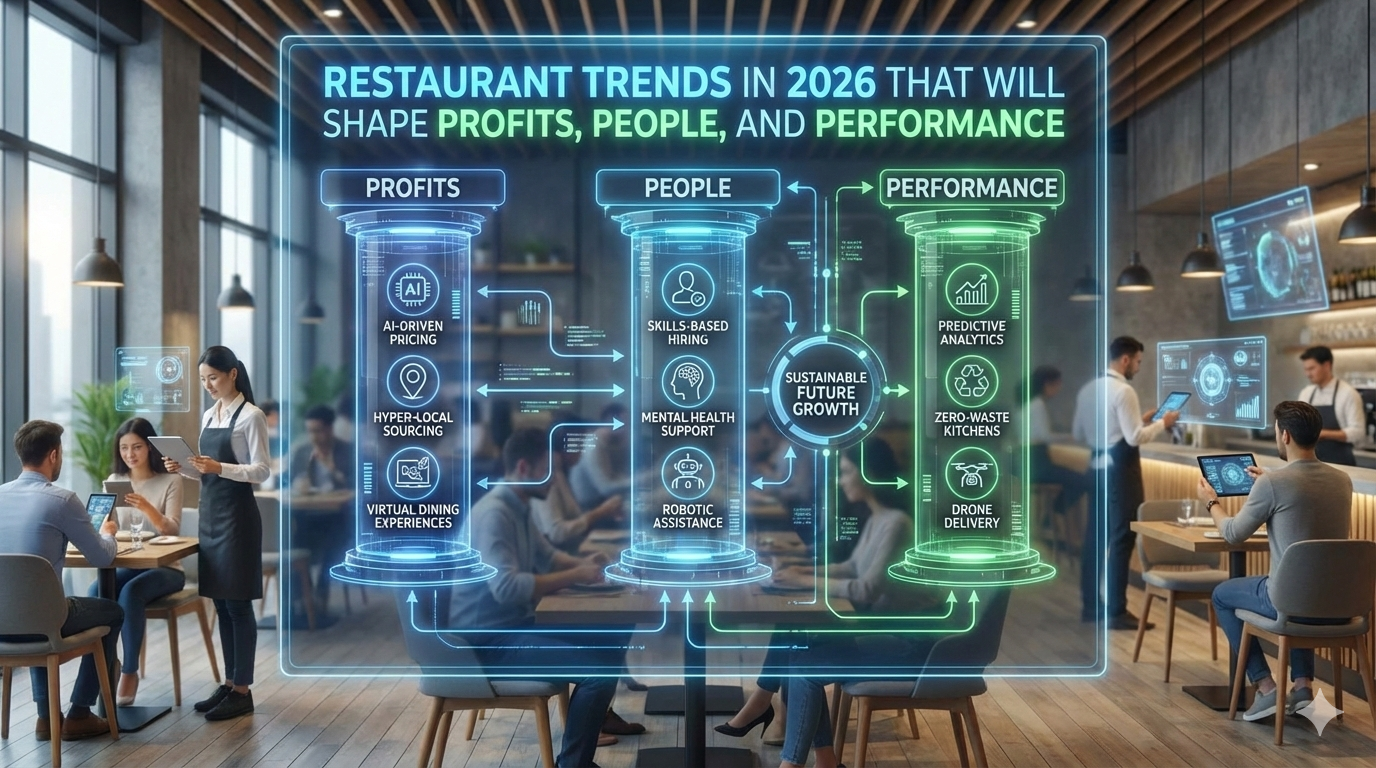
Restaurant Trends in 2026 That Will Shape Profits, People, and Performance