
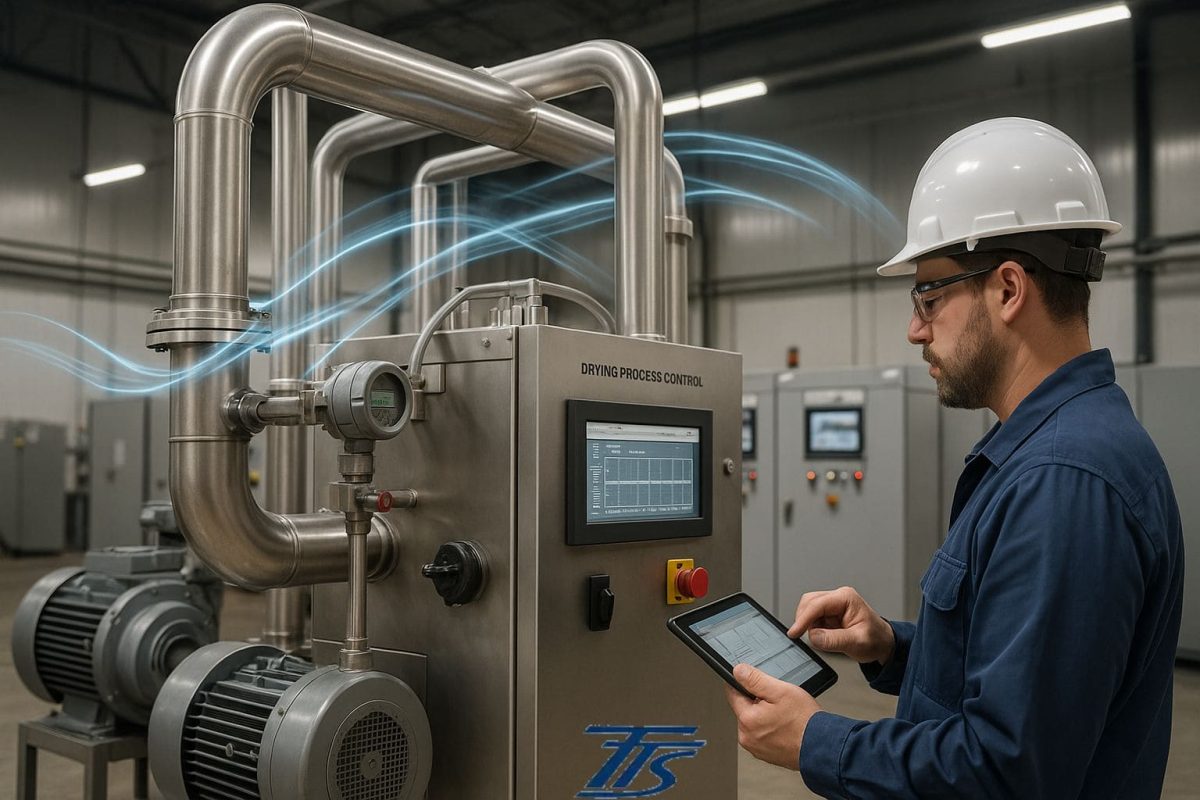
Pressure measurement is one of the most critical elements in industrial process control. Whether monitoring pipelines, controlling reactors, managing boilers, or regulating flow systems, pressure directly affects safety, efficiency, and product quality. Even minor pressure deviations can indicate leaks, blockages, equipment wear, or unstable process conditions.
To ensure reliable and continuous pressure monitoring, industries rely on pressure transmitters. These instruments are designed to measure pressure accurately and convert it into a standardized electrical signal that can be used by control systems. With advances in sensor technology and digital communication, modern pressure transmitters have become highly accurate, stable, and intelligent devices essential to industrial automation.
What Is a Pressure Transmitter?
A pressure transmitter is an industrial instrument that measures the pressure of gases, liquids, or vapors and converts that measurement into an electrical output signal. This signal is typically transmitted as 4–20 mA, HART®, Modbus®, Profibus, or Fieldbus™ to a PLC, DCS, or SCADA system for monitoring and control.
Pressure transmitters are used not only to measure pressure but also to support:
-
Flow measurement (using differential pressure)
-
Level measurement (hydrostatic pressure)
-
Equipment protection and safety systems
-
Process automation and optimization
Because of their versatility and reliability, pressure transmitters are among the most widely used instruments in industrial environments.
Why Pressure Measurement Is Important
Accurate pressure measurement plays a vital role in industrial operations for several reasons:
Safety
Excessive pressure can lead to equipment failure, leaks, or hazardous situations. Pressure transmitters help trigger alarms and shutdown systems before conditions become dangerous.
Process Stability
Many industrial processes depend on maintaining pressure within a specific range to ensure consistent operation and product quality.
Equipment Protection
Monitoring pressure helps prevent pump cavitation, compressor damage, pipeline rupture, and valve failure.
Energy Efficiency
Proper pressure control reduces unnecessary energy consumption in pumps, compressors, and heating systems.
Regulatory Compliance
Industries operating under strict safety and environmental regulations depend on reliable pressure monitoring to meet compliance standards.
How Pressure Transmitters Work
While designs vary, most pressure transmitters operate using a similar principle:
-
Process pressure is applied to a sensing element, typically through a diaphragm.
-
The pressure causes the diaphragm to deflect.
-
This deflection is detected by a sensing technology such as:
-
Piezoresistive sensors
-
Strain gauges
-
Capacitive sensors
-
MEMS-based sensors
-
-
Internal electronics convert the mechanical movement into an electrical signal.
-
The signal is amplified, linearized, temperature-compensated, and transmitted to the control system.
Modern pressure transmitters also include diagnostics to detect sensor drift, impulse line blockage, or abnormal process conditions.
Types of Pressure Transmitters
1. Gauge Pressure Transmitters
Measure pressure relative to atmospheric pressure.
Applications: Pumps, compressors, hydraulic systems, filtration units.
2. Absolute Pressure Transmitters
Measure pressure relative to a vacuum reference.
Applications: Vacuum systems, distillation columns, evaporation processes, altitude-sensitive measurements.
3. Differential Pressure (DP) Transmitters
Measure the difference between two pressure points.
Applications:
-
Flow measurement using orifice plates or venturi tubes
-
Level measurement in pressurized tanks
-
Filter and heat exchanger monitoring
4. Multivariable Pressure Transmitters
Measure differential pressure, static pressure, and temperature simultaneously.
Applications: Gas and steam flow measurement, energy management systems.
5. Pressure Transmitters with Remote Seals
Use diaphragm seals to isolate the transmitter from aggressive or high-temperature media.
Applications: Corrosive fluids, viscous liquids, sanitary processes.
Industries That Use Pressure Transmitters
Oil & Gas
-
Pipeline pressure monitoring
-
Wellhead pressure measurement
-
Separator and scrubber control
-
Flow measurement systems
Chemical & Petrochemical
-
Reactor pressure control
-
Corrosive fluid handling
-
Distillation column monitoring
Power Generation
-
Boiler pressure
-
Steam systems
-
Condenser vacuum measurement
Water & Wastewater
-
Pump discharge pressure
-
Filtration systems
-
Distribution network monitoring
Food & Beverage
-
Sanitary process monitoring
-
Beverage filling systems
-
CIP and SIP operations
Pharmaceuticals
-
Sterile process control
-
Bioreactors
-
High-purity fluid systems
General Manufacturing
-
Hydraulic and pneumatic systems
-
Compressed air networks
-
HVAC systems
Advantages of Modern Pressure Transmitters
-
High accuracy and repeatability
-
Long-term measurement stability
-
Wide pressure ranges from vacuum to high-pressure systems
-
Resistance to harsh environments
-
Advanced diagnostics for predictive maintenance
-
Compatibility with digital communication protocols
-
Explosion-proof and intrinsically safe options
These features allow pressure transmitters to perform reliably even in demanding industrial conditions.
How to Choose the Right Pressure Transmitter
Selecting the correct pressure transmitter requires evaluating:
-
Type of pressure (gauge, absolute, differential)
-
Pressure range and overload capability
-
Process temperature
-
Chemical compatibility of wetted materials
-
Required accuracy and response time
-
Mounting configuration
-
Output signal and communication protocol
-
Hazardous-area certification requirements
Proper selection ensures accurate measurement, longer service life, and reduced maintenance costs.
Maintenance and Best Practices
To maintain reliable performance:
-
Install transmitters correctly with proper impulse line routing
-
Avoid operating beyond rated pressure limits
-
Periodically inspect seals and connections
-
Perform calibration checks as required
-
Use full-open or full-close operation where applicable
Modern transmitters with built-in diagnostics simplify maintenance and help detect issues early.
Conclusion
Pressure transmitters are essential instruments for safe, efficient, and automated industrial operations. By providing accurate and continuous pressure measurement, they help protect equipment, stabilize processes, improve energy efficiency, and support regulatory compliance. From basic pressure monitoring to complex flow and level measurement, pressure transmitters play a central role in modern process control.
When selected and applied correctly, pressure transmitters deliver long-term reliability, reduced downtime, and dependable performance across a wide range of industrial applications.
transmittershop