


Microgrid Market Size and Forecast 2025–2033
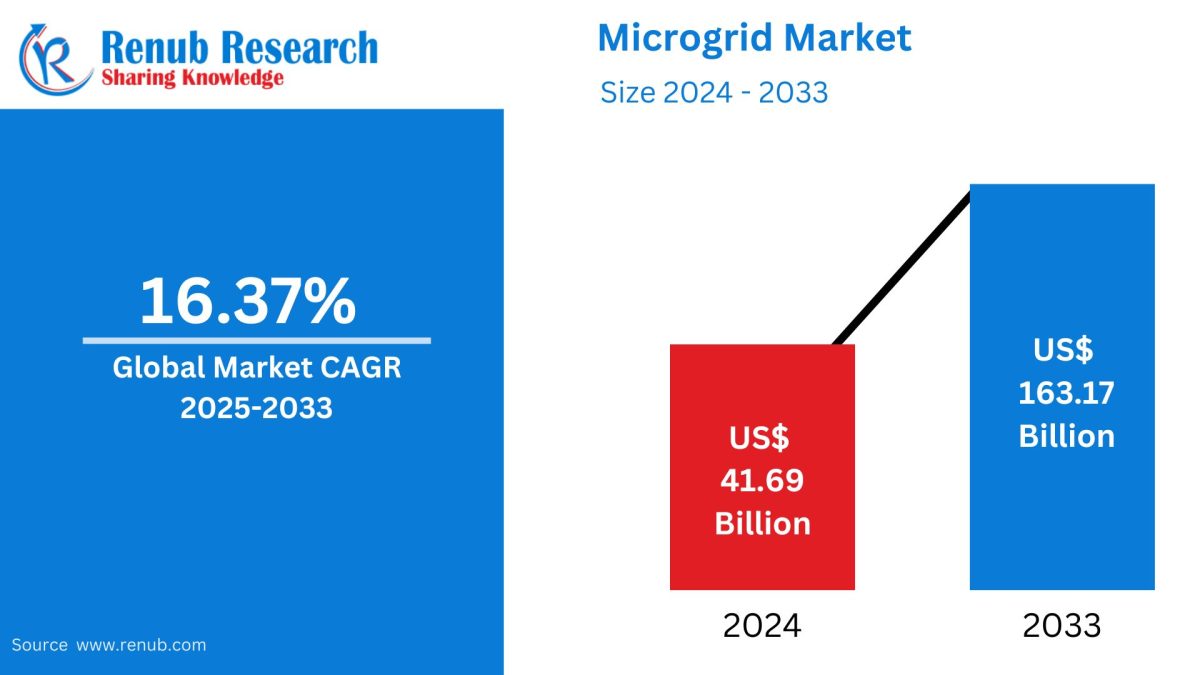
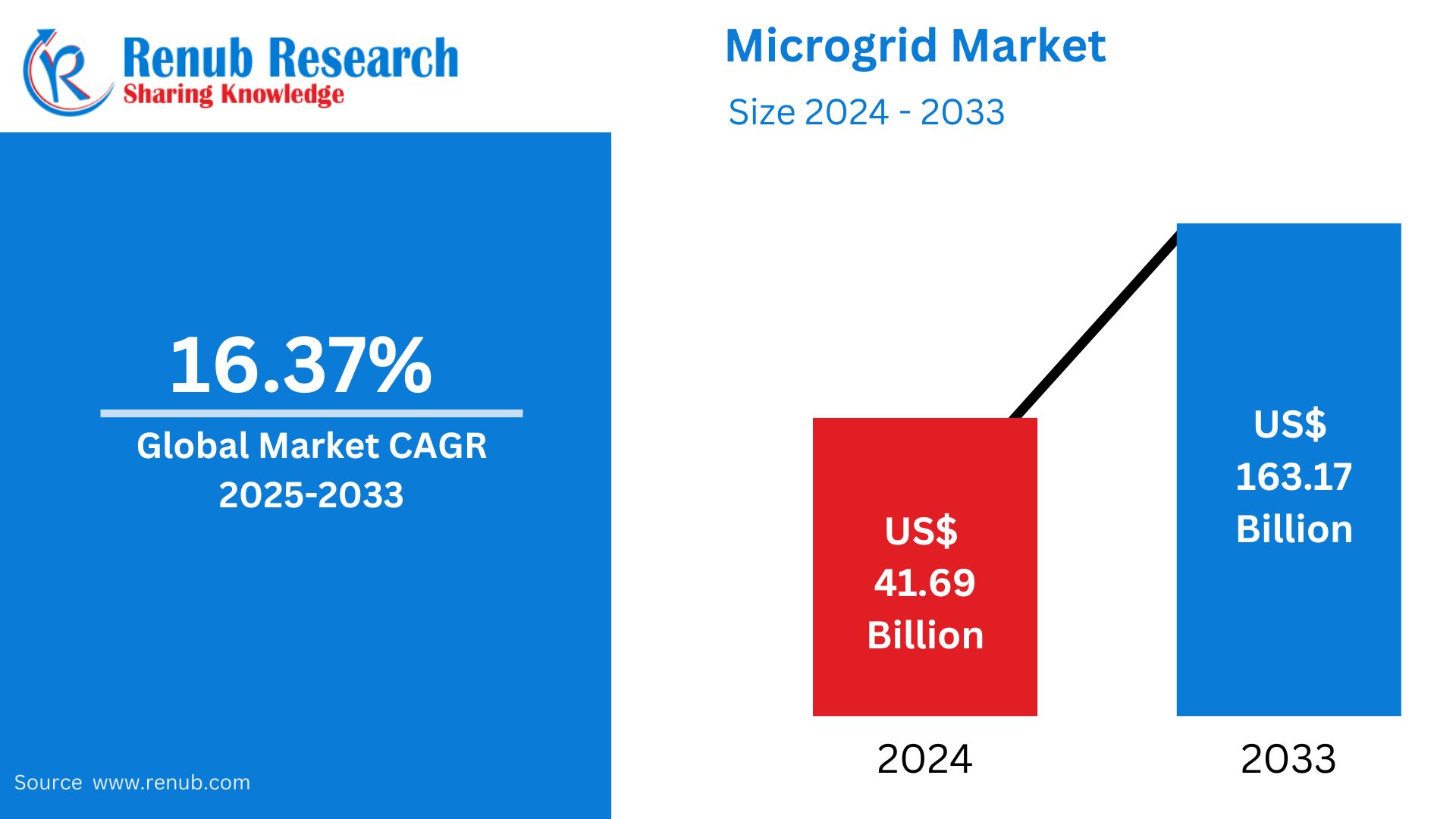
According to Renub Research Global Microgrid Market is set for remarkable expansion over the next decade, increasing from US$ 41.69 billion in 2024 to US$ 163.17 billion by 2033, registering a strong CAGR of 16.37% from 2025 to 2033. This accelerated growth is primarily driven by the rising need for reliable, independent, and resilient power systems—especially in remote regions, industrial zones, and communities vulnerable to grid instability. Increasing integration of renewable energy sources, advancements in energy storage systems, electrification initiatives in developing nations, and growing emphasis on sustainability and climate resilience are further propelling global microgrid deployment.
Download Free Sample Report:https://www.renub.com/request-sample-page.php?gturl=microgrid-market-company-analysis-p.php
Microgrid Industry Overview
A microgrid is a localized, self-sufficient energy system capable of generating, storing, and distributing electricity independently or in synchronization with the main power grid. It brings together diverse power sources such as solar photovoltaic systems, wind turbines, diesel generators, and battery storage units. Operating in two key modes—grid-connected and islanded—microgrids ensure uninterrupted power supply even during outages and disruptions. This dual functionality enhances energy security, reduces dependency on centralized grids, optimizes energy consumption, and minimizes transmission losses.
Rising demand for energy reliability, rapid renewable energy adoption, and escalating concerns over climate change have significantly boosted microgrid deployment worldwide. North America, Europe, and Asia-Pacific are leading adopters, while developing regions are increasingly using microgrids to electrify remote and off-grid communities. Supportive government policies, technological advancements in battery energy storage systems (BESS), and decreasing renewable energy costs continue to strengthen the market outlook.
Key Growth Drivers for the Microgrid Market
Rising Demand for Energy Reliability and Resilience
Frequent grid failures, natural disasters, cyber threats, and infrastructure limitations highlight the need for dependable power supply systems. Microgrids provide resilient energy solutions capable of operating autonomously during grid disturbances, making them essential for hospitals, military bases, industrial plants, data centers, educational institutions, and critical infrastructure facilities.
Growing Renewable Energy Integration
Microgrids play a vital role in accelerating the global transition toward renewable energy. They facilitate efficient integration of solar, wind, and hybrid renewable sources while utilizing advanced battery storage technologies to ensure supply stability. Increasing global focus on decarbonization and emission reduction continues to encourage microgrid adoption.
Electrification of Remote and Rural Regions
In many developing countries, extending centralized power infrastructure is costly and complex. Microgrids offer a cost-effective, scalable alternative to rural electrification—empowering remote villages, islands, mining sites, and agricultural communities with reliable electricity access. This enhances local development, healthcare, education, and industrial productivity.
Technological Advancements in Energy Storage and Smart Control
Innovations in lithium-ion batteries, hybrid storage systems, artificial intelligence-driven energy management platforms, and digital monitoring technologies are making microgrids smarter, more efficient, and easier to manage. These advancements significantly enhance performance reliability and economic feasibility.
Market Challenges
High Initial Capital and Implementation Costs
Despite long-term cost benefits, microgrid deployment requires substantial upfront investment in design, infrastructure, renewable integration, and storage technologies, posing challenges for developing regions and small-scale users.
Complex System Integration and Regulatory Barriers
Microgrids involve complex system engineering, regulatory approvals, interconnection standards, and operational coordination, which may hinder widespread deployment in certain regions.
Regional Market Outlook
United States Microgrid Market
The U.S. leads globally due to strong government support, advanced technology ecosystems, high renewable integration, and increasing demand for resilient power infrastructure across military, healthcare, and industrial sectors.
Germany Microgrid Market
Germany’s emphasis on clean energy transition, decentralized power systems, and smart grid innovation drives strong microgrid adoption. Advanced energy policies and sustainability commitments reinforce growth prospects.
China Microgrid Market
China is rapidly expanding microgrid installations due to massive renewable capacity additions, industrial modernization, electrification projects, and growing investment in distributed energy resources.
Saudi Arabia Microgrid Market
Saudi Arabia increasingly relies on microgrids to support energy diversification under Vision 2030, enhance power reliability in remote regions, and reduce dependence on conventional fossil-fuel-based power generation.
Leading Companies in the Global Microgrid Market
Prominent manufacturers and solution providers include:
- ABB – global innovator in power automation and electrification solutions
- Siemens AG – leader in distributed energy systems and grid intelligence
- General Electric – strong expertise in power infrastructure and hybrid energy solutions
- Eaton Corporation – specializing in intelligent power management systems
- Exelon Corp. – major utility provider with expanding microgrid initiatives
Other key players shaping the market landscape include Honeywell, Schneider Electric, Hitachi Energy, Toshiba Corporation, Engie EPS, Tesla, Ameresco, Caterpillar, Wärtsilä, S&C Electric, PowerSecure, Standard Microgrid, EnSync, Bloom Energy, and AutoGrid Systems.
Product Launches and Innovations
Global manufacturers are investing in advanced microgrid platforms, high-capacity battery energy storage technologies, flexible power architectures, and utility-scale distributed generation solutions. New launches emphasize improved efficiency, modularity, scalability, cybersecurity, and renewable integration to enhance microgrid functionality and economic performance.
SWOT Highlights of Major Companies
Companies such as Engie EPS SA and Tesla, Inc. demonstrate strong technological leadership in energy storage, renewable integration, and digital energy management capabilities. With strong brand credibility, global reach, and sustainability-driven innovation, these companies maintain competitive dominance in the evolving microgrid ecosystem.
Sustainability and ESG Initiatives
Organizations including Ameresco Inc. and Caterpillar Inc. are actively incorporating sustainability goals into microgrid development strategies. Their initiatives focus on renewable power adoption, emissions reduction, hybrid energy systems, energy efficiency improvement, and long-term resilience enhancements aligned with global clean-energy transition objectives.
Microgrid Market Segmentation
By Type: Grid-Connected, Islanded/Off-Grid, Hybrid
By Offering: Hardware, Software, Services
By Power Source: Diesel Generators, Solar PV, Wind, Combined Heat & Power, Fuel Cells, Energy Storage Systems
By End User: Commercial & Industrial, Utilities, Military, Healthcare, Education, Remote Communities, Government & Municipalities
By Region: North America, Europe, Asia-Pacific, Latin America, Middle East & Africa
Competitive Landscape and Strategic Outlook
The microgrid market is highly competitive, with companies focusing on technological innovation, mergers and acquisitions, strategic partnerships, capacity expansion, sustainability initiatives, and digital platform integration. Increasing investment in AI-powered grid management, IoT-enabled controls, and enhanced storage capabilities is reshaping the industry’s future direction.
Conclusion
The Global Microgrid Market is entering a transformative growth phase driven by energy reliability needs, renewable adoption, technological innovation, and sustainability imperatives. As nations, industries, and communities increasingly prioritize resilient, low-carbon, and localized power solutions, microgrids will play a pivotal role in shaping the future of global energy infrastructure through 2033 and beyond.
renubresearch