


Choosing the right flooring for children’s play areas is essential for comfort, convenience, and everyday safety. Parents, schools, and daycare centers often compare kids Eva flooring with traditional floor mats to determine which option best suits their needs. Both options can provide a more comfortable surface than bare, hard flooring, but they differ in design, installation, flexibility, and practical use.
What Is Kids EVA Flooring?
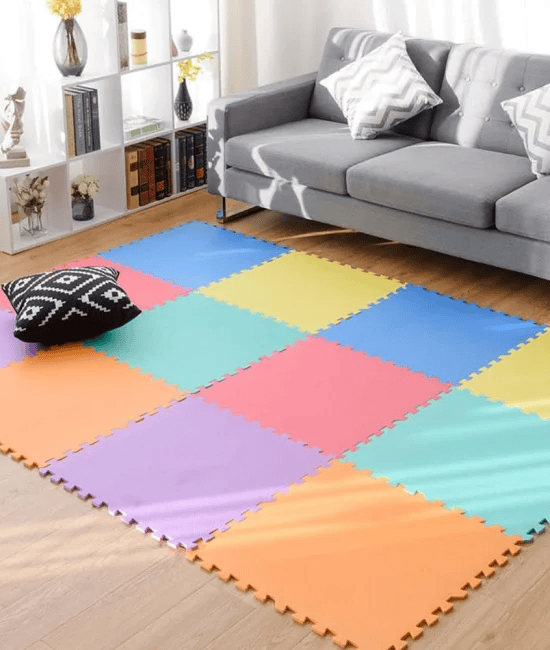
Kids EVA flooring is made from ethylene-vinyl acetate, a lightweight and flexible foam material. It is commonly available in interlocking tiles that fit together to cover a designated area.
These tiles are popular in children’s bedrooms, playrooms, nurseries, classrooms, and indoor activity spaces. Their cushioned construction provides a softer surface for crawling, sitting, and playing.
What Are Traditional Floor Mats?
Traditional floor mats come in various materials, including fabric, rubber, PVC, and foam. They are generally available as individual mats or larger pieces that can be placed on the floor without necessarily connecting to other mats.
Their suitability depends on the material, thickness, surface texture, and intended application. Some traditional mats are designed primarily for decoration, while others provide cushioning or protection for specific activities.
Key Differences Between Kids EVA Flooring and Traditional Floor Mats
1. Comfort and Cushioning
One major advantage of kids Eva flooring is its cushioned foam construction. It creates a softer surface for children who spend considerable time playing on the floor.
Traditional floor mats can also provide cushioning, but the level of comfort depends on their material and thickness. Buyers should compare individual products rather than assume that one category always offers better cushioning.
2. Installation and Coverage
Kids EVA flooring often features an interlocking design, allowing users to connect multiple tiles to cover a room or play area. This makes it convenient to customize the flooring according to the available space.
Traditional floor mats are usually placed individually. They can be practical for smaller spaces, but multiple separate mats may shift or leave gaps if they are not designed to connect.
3. Flexibility and Replacement
Interlocking EVA tiles offer flexibility because users can often rearrange the layout or replace individual damaged pieces. This can be helpful in playrooms and daycare centers where flooring needs may change.
Traditional mats are also easy to move, particularly when they are lightweight. However, replacing a damaged section may require purchasing another complete mat, depending on the product design.
4. Cleaning and Maintenance
Both flooring options require regular cleaning to remove dust, dirt, and everyday spills.
Many EVA tiles can be wiped clean using suitable products and methods recommended by the manufacturer. Traditional floor mats may require different cleaning methods depending on whether they are made from fabric, rubber, foam, or plastic.
Before buying, check the manufacturer’s maintenance instructions to ensure the flooring suits your cleaning routine.
5. Design and Appearance
Kids EVA flooring is available in a variety of colors, patterns, and tile designs. This makes it easy to create a colorful playroom or define a dedicated children’s activity area.
Traditional floor mats also come in different designs, including decorative patterns and neutral colors. The best choice depends on the room’s interior design and the preferences of parents or facility managers.
6. Durability and Long-Term Value
The durability of both options depends on material quality, frequency of use, installation, and maintenance.
For busy playrooms, interlocking EVA tiles may offer practical replacement options because individual pieces can often be changed when damaged. Traditional mats can also last a long time when selected for the correct purpose and maintained properly.
Compare product specifications, expected usage, and replacement costs before making a decision.
Kids EVA Flooring vs Traditional Floor Mats: Which Should You Choose?
Kids EVA flooring may be a suitable choice when you need to cover a larger indoor area, customize the layout, or replace individual tiles as necessary. Traditional floor mats may be more convenient for small spaces, temporary use, or situations where a single portable mat is sufficient.
The right option depends on the children’s ages, the activities taking place, the size of the area, and the desired level of cushioning.
It is also important to remember that cushioned flooring cannot eliminate the risk of injury. Proper supervision, suitable installation, and age-appropriate play equipment remain essential.
Kids EVA Flooring in Karachi
Families, schools, nurseries, and daycare operators looking for cushioned flooring can consider kids Eva flooring in Karachi for a range of indoor applications.
When comparing kids Eva flooring in Karachi with traditional floor mats, buyers should evaluate thickness, material quality, surface grip, tile dimensions, cleaning requirements, and overall cost. Choosing a suitable product from a reliable supplier can help ensure that the flooring meets the needs of the intended space.
For busy classrooms or playrooms, measuring the area before purchasing can help you determine how many tiles or mats you need and avoid unnecessary expenses.
Tips for Choosing the Right Flooring for Children
Before purchasing either option, consider the following factors:
- Age group: Choose flooring appropriate for the children’s developmental stage.
- Cushioning: Compare thickness and product specifications for the intended activities.
- Surface grip: Look for suitable traction and a stable installation.
- Material quality: Check product information and suitability for children’s spaces.
- Maintenance: Choose flooring that fits your cleaning routine.
- Safety: Avoid loose edges, damaged tiles, and small detachable pieces that could present choking hazards to young children.
Following the manufacturer’s installation and maintenance instructions can help keep the play area in good condition.
Conclusion
Both kids EVA flooring and traditional floor mats offer practical benefits for children’s spaces. EVA flooring is particularly useful when modular coverage, customizable layouts, and individual tile replacement are priorities. Traditional mats can be a convenient alternative for smaller or temporary applications.
For families and businesses, kids Eva flooring in Karachi is worth considering when planning comfortable indoor play areas. By comparing material quality, cushioning, maintenance, and intended use, buyers can select a flooring solution that best fits their requirements.
Muhammad Usman