
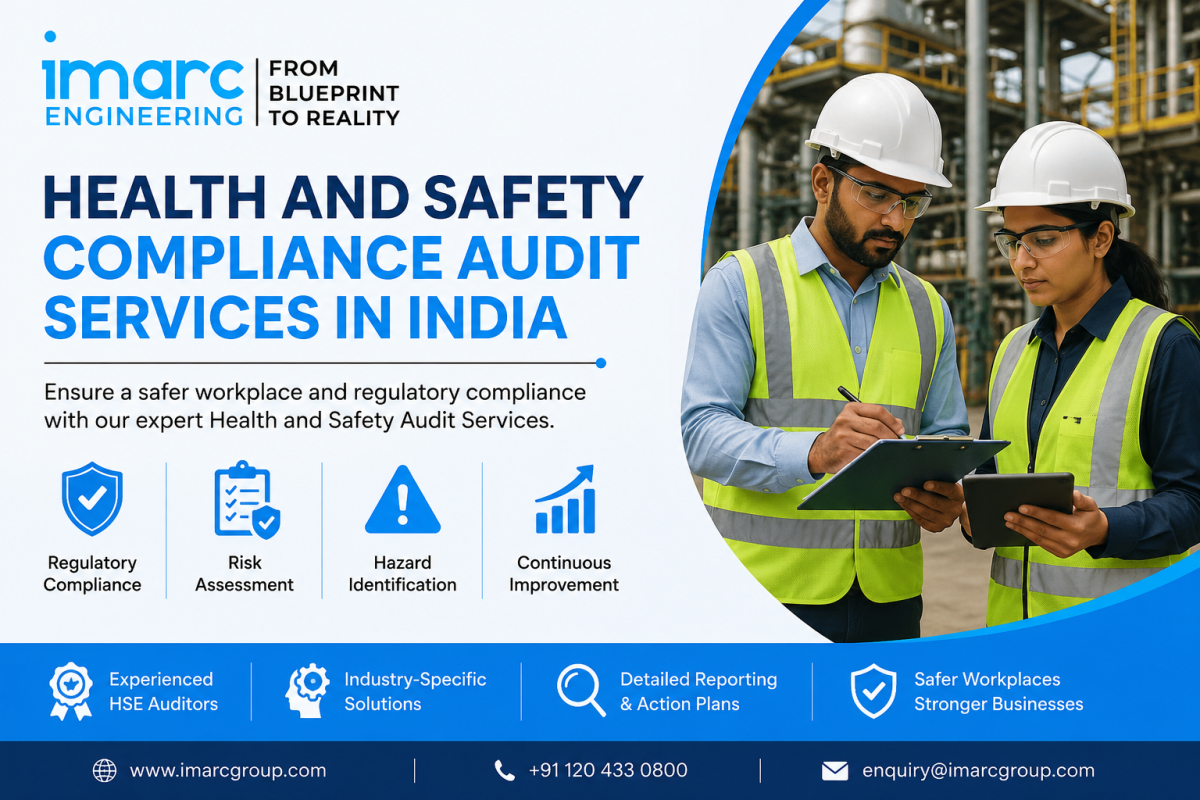
A useful audit goes beyond checking documents. It compares legal and internal requirements with workplace conditions, employee practices, equipment safeguards, training, emergency arrangements, and corrective-action performance.
For Indian manufacturing facilities, the audit may also need to consider applicable requirements under the Occupational Safety, Health and Working Conditions framework, relevant state requirements, sector-specific obligations, and management-system requirements such as ISO 45001. The exact requirements depend on the plant, processes, workforce, location, and hazards involved.
A health and safety compliance audit in a manufacturing plant should answer a practical question: Are the systems intended to protect workers actually working under real operating conditions?
What Is a Health and Safety Compliance Audit?
A health and safety compliance audit is a structured, evidence-based examination of whether a workplace meets defined safety requirements and whether its controls are functioning effectively.
It normally evaluates three connected areas:
- Compliance: Are applicable legal, regulatory and internal requirements identified and addressed?
- Implementation: Are procedures, risk controls and training actually being applied?
- Effectiveness: Are those controls reducing or preventing exposure to workplace hazards?
This distinction is important. A plant may have a documented machine-safety procedure, for example, but an audit should establish whether guards are installed, maintained and used during actual production.
ILO guidance recommends periodic audits that assess whether occupational safety and health systems are in place, adequate and effective. Its audit guidance also covers worker participation, competence, prevention and control, emergency preparedness, contracting, performance monitoring, incident investigation, corrective action and continual improvement.
Health and Safety Compliance Audit vs. Safety Inspection
These activities overlap, but they serve different purposes.
A safety inspection generally focuses on identifying unsafe conditions or practices during a particular workplace visit.
A compliance audit goes further by asking:
- What requirement applies?
- What evidence demonstrates compliance?
- Is the requirement implemented consistently?
- Is the control effective?
- What happened when the requirement was not met?
- Were previous findings corrected?
A strong manufacturing audit therefore connects requirements, evidence, workplace observations and corrective action rather than producing a list of isolated observations.
How to Conduct a Health and Safety Compliance Audit
1. Define the Audit Scope and Criteria
Start by deciding exactly what the audit will cover.
The scope may include:
- Production areas
- Warehouses and material-handling areas
- Utilities and maintenance
- Laboratories
- Chemical storage
- Electrical installations
- Contractor activities
- Offices and welfare areas
- Emergency systems
- Specific shifts or processes
Then establish the audit criteria. These can include applicable legislation, internal procedures, contractual requirements, customer requirements and ISO 45001 requirements where relevant.
ISO 45001 specifies requirements for an occupational health and safety management system, while ISO 19011:2026 provides current guidance for management-system auditing, including audit principles, programmes, methods and auditor competence.
2. Build a Compliance and Evidence Register
Before visiting the shop floor, identify the requirements that apply to the facility.
A practical register can include:
| Area | Evidence to review |
| Legal compliance | Licences, registrations and statutory records |
| Machinery | Guarding, inspection and maintenance records |
| Electrical safety | Testing, inspection and isolation records |
| Chemicals | SDS, labels, storage and handling controls |
| Fire safety | Fire systems, inspections and drill records |
| Emergency response | Plans, training and drill outcomes |
| Worker competence | Training and competency records |
| PPE | Hazard assessment, issue and replacement records |
| Contractors | Induction, permits and competency records |
| Incidents | Incident, near-miss and investigation records |
| Occupational health | Exposure monitoring and applicable health surveillance |
| Corrective actions | Open, closed and effectiveness-verification records |
For Indian facilities, the applicable legal register should be tailored to the establishment rather than copied from a generic online checklist. The OSH Code, for example, addresses workplace health, safety and working conditions including cleanliness, ventilation, contaminants, drinking water, lighting, sanitation and waste or effluent arrangements.
3. Review Documents Before the Site Visit
Document review helps the auditor understand where significant risks may exist before entering the plant.
Review:
- OH&S policy and objectives
- Risk assessments
- SOPs and work instructions
- Permit-to-work procedures
- Lockout/tagout procedures
- Emergency plans
- Training matrices
- Previous audit reports
- Incident and near-miss investigations
- Maintenance records
- Inspection certificates
- Contractor records
- Occupational exposure measurements
- Corrective-action registers
Look for inconsistencies.
For example, if a risk assessment identifies chemical exposure as significant but there is no evidence of exposure monitoring, engineering control evaluation or appropriate worker training, the gap is not simply “missing paperwork.” It may indicate that the risk-control process is incomplete.
ILO guidance recommends monitoring both proactive and reactive indicators rather than relying only on injury and incident statistics.
4. Conduct the Opening Meeting
The opening meeting should establish:
- Audit objectives
- Scope
- Criteria
- Areas to be inspected
- People who may be interviewed
- Evidence required
- Audit timetable
- Safety requirements for auditors
- Process for escalating serious hazards
It is also useful to explain that the audit is evidence-based. The objective is not to find fault with individual workers; it is to determine whether the plant’s safety arrangements are designed, implemented and maintained effectively.
5. Inspect the Manufacturing Plant
The shop-floor inspection is where documented controls are tested against reality.
Machinery and Equipment
Check:
- Machine guards
- Interlocks
- Emergency stops
- Moving and rotating parts
- Access to hazardous zones
- Maintenance isolation
- Warning signs
- Operator controls
- Automated and robotic equipment
Machine hazards can include caught-in, crushing, amputation, burns and other contact injuries. NIOSH emphasizes effective safeguarding and control of hazardous machine exposure.
Electrical Safety
Review:
- Electrical panels
- Earthing
- Cable condition
- Temporary connections
- Panel accessibility
- Isolation arrangements
- Electrical-room controls
- Inspection and testing records
The auditor should compare the physical installation with documented requirements instead of treating the existence of an inspection certificate as proof that current conditions remain satisfactory.
Chemical Safety
Inspect:
- Containers and labels
- Safety Data Sheets
- Chemical segregation
- Storage conditions
- Spill-control arrangements
- Ventilation
- Transfer operations
- PPE
- Emergency response equipment
Pay particular attention to actual handling practices. A chemical may be correctly labelled in storage but still be poorly controlled during transfer or dispensing.
Fire and Emergency Preparedness
Check:
- Emergency exits
- Escape routes
- Fire extinguishers
- Fire detection and alarm systems
- Emergency lighting
- Fire doors
- Assembly points
- First-aid arrangements
- Drill records
Do not stop at asking whether an emergency system exists. Ask whether workers can access it, understand it and use it when required.
Workplace Conditions and Ergonomics
Observe:
- Housekeeping
- Walkways
- Material stacking
- Lighting
- Ventilation
- Dust and fumes
- Noise
- Manual handling
- Repetitive work
- Awkward postures
- Workplace congestion
These observations can reveal risks that may not appear in formal incident statistics.
6. Interview Workers and Supervisors
Worker interviews are one of the most valuable ways to test whether the safety system works in practice.
Ask workers:
- What are the main hazards in your job?
- What do you do if equipment becomes unsafe?
- How do you report a near miss?
- What PPE is required?
- What happens during an emergency?
- What procedure applies before maintenance?
- When did you last receive relevant training?
- What safety problem should management address?
If workers cannot explain a critical procedure that applies to their work, the issue may involve training, communication, supervision or procedure design rather than simply worker behaviour.
ILO guidance emphasizes worker participation and competent training as important components of effective OSH management.
7. Record Findings With Evidence
Avoid vague findings such as:
“Machine safety needs improvement.”
A stronger finding identifies:
Requirement: A guard must prevent access to a hazardous moving component.
Evidence: During the production observation, the identified machine was operating with the specified guard absent or ineffective.
Risk: Workers may be exposed to moving components.
Corrective action: Restore an effective safeguard and verify its operation before normal use, following the plant’s control procedure.
This format makes findings easier to understand, assign and verify.
8. Prioritize Corrective Actions
Not every finding carries the same level of risk.
A plant can categorize findings according to its own approved methodology, considering factors such as:
- Severity of potential harm
- Likelihood of occurrence
- Frequency or duration of exposure
- Number of workers exposed
- Existing controls
- Legal significance
- History of recurrence
The objective is to prevent a long list of findings from becoming an administrative exercise. High-consequence hazards should receive appropriate attention based on their actual risk.
Use the Hierarchy of Controls
Corrective actions should not automatically default to PPE.
The NIOSH hierarchy of controls places controls in this order:
- Elimination
- Substitution
- Engineering controls
- Administrative controls
- Personal protective equipment
Higher-level controls generally provide more reliable protection because they reduce dependence on individual worker behaviour.
For example, if workers are exposed to airborne contaminants, the audit recommendation should not simply say “provide masks.” The investigation should first consider whether the hazard can be eliminated, substituted or controlled through engineering measures such as containment or ventilation.
Close the Audit Through Effectiveness Verification
An audit should not end when the report is issued.
Use a cycle such as:
Finding → Root cause → Corrective action → Implementation → Verification → Closure
Consider a recurring PPE non-use finding. Training may be necessary, but the underlying reason could be uncomfortable PPE, poor availability, unsuitable selection, inadequate supervision or an ineffective hazard assessment.
ILO guidance recommends investigating underlying causes and checking whether corrective actions are effective.
Practical Health and Safety Audit Checklist
Before closing an audit, verify:
- Applicable requirements identified
- Risk assessments reviewed
- Machinery safeguards inspected
- Electrical controls verified
- Chemical controls assessed
- Fire and emergency systems checked
- PPE practices observed
- Worker interviews completed
- Contractor controls reviewed
- Previous findings checked
- Findings supported by evidence
- Corrective actions assigned
- Root causes evaluated
- High-risk findings prioritized
- Effectiveness verified before closure
How IMARC Engineering Can Help
IMARC Engineering supports manufacturing and industrial facilities with health and safety compliance audit activities focused on identifying practical gaps between documented requirements and site conditions. Its approach can cover document review, workplace observations, compliance-gap identification, risk prioritization, corrective-action planning and follow-up verification. For plants undergoing expansion, modernization or operational changes, the assessment can also help identify safety-control gaps associated with new equipment, modified processes, contractors and altered plant conditions.
Consult With An Expert: https://www.imarcengineering.com/contact?service=health-safety-compliance-audit
Conclusion
A health and safety compliance audit is most valuable when it moves beyond documentation and establishes whether safety controls work under actual operating conditions. The strongest approach combines regulatory review, document assessment, shop-floor observation, worker participation, evidence-based findings and corrective-action verification. By treating audit findings as opportunities to strengthen the underlying control system, manufacturers can build safer and more resilient operations rather than simply preparing for the next inspection.
Contact Us:
IMARC Engineering
Phone: +91-120-433-0800
Email: sales@imarcengineering.com
India: C-130, Sector 2, Noida, Uttar Pradesh 201301
LinkedIn: https://www.linkedin.com/showcase/imarc-engineering/
IMARC Engineering