
Choosing the right design partner for your SaaS product comes down to three things: their understanding of SaaS workflows, their process for turning complex features into simple interfaces, and their ability to think beyond screens. A design agency that has worked on SaaS products will approach your project very differently from one that mostly builds marketing websites or mobile apps.
That distinction matters more than most founders realize. The wrong design partner can cost you months of rework, confused users, and a product that looks good in a demo but fails during real use.
Let us break down what actually matters when making this decision.
Start With Their SaaS Experience, Not Their Portfolio Size
A large portfolio does not mean much if none of those projects involved multi-user dashboards, recurring workflows, or subscription based products. SaaS design is a specific skill set. Your design team needs to understand things like onboarding flows, role based access, data heavy screens, and user retention patterns.
Ask potential agencies directly:
- How many SaaS products have you designed from scratch?
- Can you walk me through one project where you improved user activation or reduced churn through design?
- Have you worked with product teams that run agile sprints?
These questions separate generalist agencies from those who actually know what SaaS demands.
Evaluate Their Design Process, Not Just Deliverables
Many agencies will show you beautiful screens. But the real question is what happened before those screens were designed. A strong process typically includes:
- User research or stakeholder interviews before any wireframe
- Information architecture planning for complex feature sets
- Iterative prototyping with feedback loops
- Usability testing before final handoff
If an agency jumps straight to high fidelity mockups without understanding your users, that is a red flag. Good SaaS design starts with understanding the problem deeply, not decorating the interface.
Look for Product Thinking, Not Just Visual Design
SaaS products are not static. They grow, add features, onboard different user types, and scale across teams. Your design partner should think about how the product evolves over time, not just how version one looks.
Ask how they approach:
- Scalable design systems and component libraries
- Feature prioritization from a UX perspective
- Collaboration with your engineering team during development
A design agency with product thinking will challenge your assumptions, suggest removing unnecessary features, and focus on what makes users successful inside the product.
Geography and Communication Style Matter
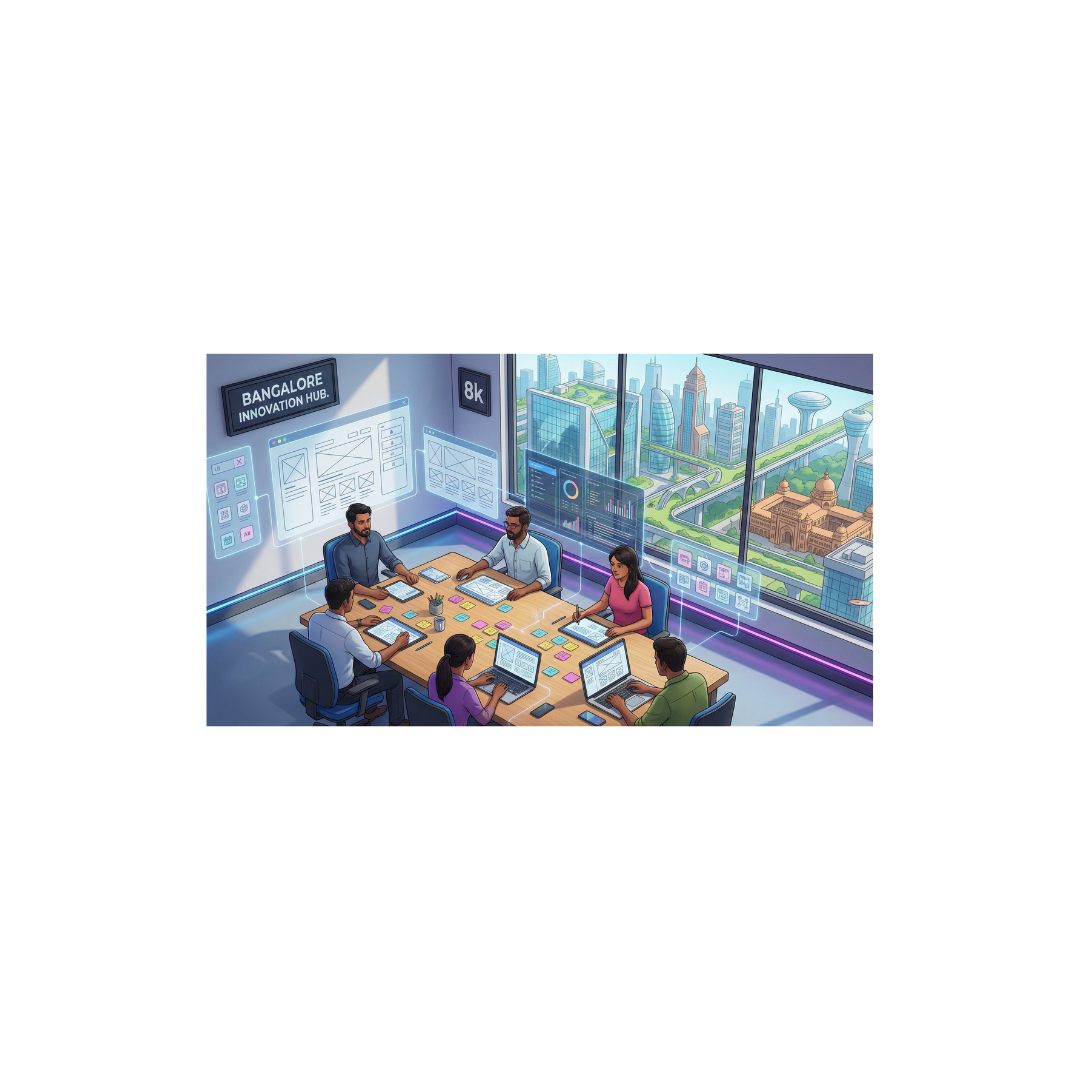
Working with a team in a similar time zone or at least with overlapping working hours reduces friction significantly. If your development team or product managers are based in India, hiring a ui ux company in Bangalore gives you the advantage of real time collaboration, face to face workshops when needed, and faster iteration cycles.
Bangalore specifically has a deep pool of designers who have worked with SaaS startups and enterprise software companies. The city’s tech ecosystem means most design teams here are already familiar with tools like Figma, working within sprint cycles, and collaborating closely with developers.
Check How They Handle Developer Handoff
Design that looks perfect in Figma but falls apart during development is a common problem. Your design partner should deliver well organized files, clear specs, and a system that developers can implement without guessing.
Ask about:
- Their handoff tools and processes
- Whether they provide responsive behavior guidelines
- If they create interaction specs for micro animations and transitions
This step alone can save your engineering team weeks of back and forth.
Pricing Models and What They Tell You
Agencies typically work on fixed price, hourly, or retainer models. Each has its place, but for SaaS products, a retainer or sprint based model often works best because SaaS design is ongoing. You will need design support for new features, user feedback iterations, and quarterly improvements.
Be cautious of agencies that offer very low fixed prices for an entire product design. SaaS products are complex, and underpriced projects often lead to rushed work and missing edge cases.
Ask for References From SaaS Clients
Client testimonials on a website are curated. Instead, ask the agency to connect you with a past SaaS client. Speaking to someone who has gone through the full engagement gives you a real picture of how the agency communicates, handles feedback, meets deadlines, and deals with scope changes.
If you are searching for a ui ux company in Bangalore, many agencies here are open to intro calls with past clients because the market is competitive and trust plays a big role in winning long term projects.
Conclusion
The right design partner for your SaaS product is one who understands SaaS users, follows a research backed process, thinks in systems, and collaborates well with product and engineering teams. A strong portfolio helps, but it is their process, communication, and SaaS experience that will determine whether the engagement actually works.
Focus less on who has the flashiest website and more on who asks the smartest questions about your product during the first call. That tells you more than any case study ever will.
Frequently Asked Questions
Q.1 What should I look for in a design agency for my SaaS product?
Ans: Look for SaaS specific experience, a research driven design process, familiarity with design systems, and a clear developer handoff workflow. Avoid agencies that treat every project the same regardless of product type.
Q.2 How much does it cost to hire a UI UX agency for a SaaS product?
Ans: Costs vary based on scope, but a typical SaaS product design engagement ranges from INR 5 lakhs to INR 25 lakhs depending on the number of modules, user types, and complexity of workflows involved.
Q.3 Should I hire freelancers or an agency for SaaS design?
Ans: For early stage MVPs, a skilled freelancer can work well. But once your product has multiple user roles, complex data flows, and needs ongoing design iteration, an agency with a structured team is a better fit.
Q.4 How long does it take to design a SaaS product from scratch?
Ans: A typical timeline ranges from 8 to 16 weeks for the first version, depending on the number of features and the depth of user research involved. Ongoing design work continues after launch.
Q.5 Why do SaaS startups prefer working with Bangalore based design teams?
Ans: Bangalore has a mature tech and startup ecosystem. Design teams here are familiar with SaaS business models, agile workflows, and modern tools, which reduces the learning curve and speeds up collaboration.
Manish