
The right dermatologist for you is the one who specializes in your specific concern, communicates clearly, avoids pushing unnecessary treatments, and has verifiable credentials from a recognized medical board. That sounds simple, but in a city like Dubai where hundreds of clinics compete for attention with flashy marketing, finding someone who genuinely fits your needs takes a bit more effort than just picking the first name on Google.
Most people walk into a clinic based on an Instagram ad or a friend’s recommendation. Neither is inherently wrong, but neither guarantees you will get the right care for your particular skin issue. A doctor who is excellent at cosmetic procedures may not be the best fit for someone dealing with chronic eczema or psoriasis. This distinction matters more than most people realize.
Understand What Kind of Skin Doctor You Actually Need
Before you start comparing clinics, get clear on what you are looking for. Dermatology is a broad field, and not every skin specialist handles every condition with the same level of depth.
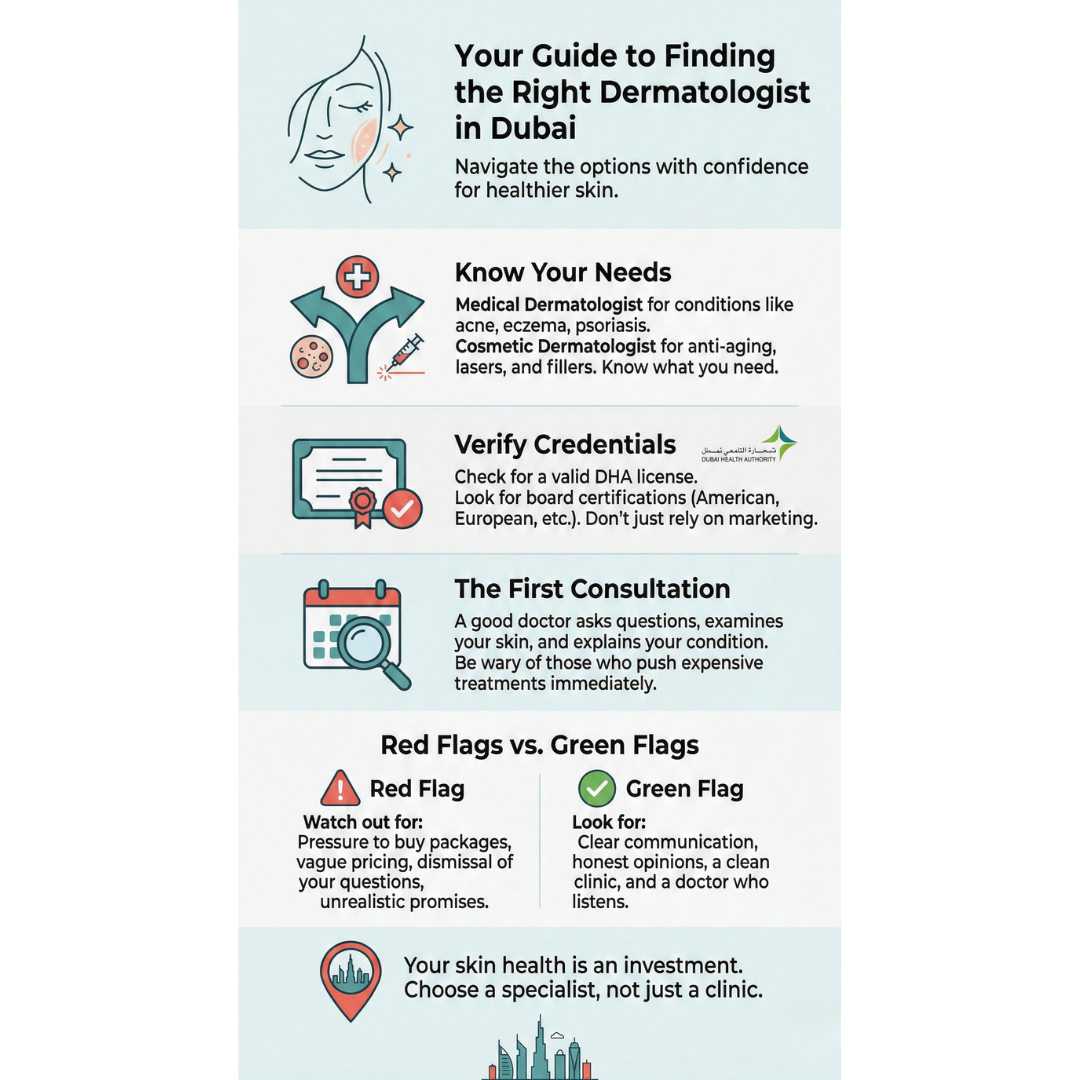
If you are dealing with medical skin conditions like acne, rosacea, fungal infections, pigmentation disorders, or hair loss, you need a medical dermatologist. These doctors focus on diagnosing and treating skin diseases, and they typically spend years training specifically in clinical dermatology.
If your concern is more about anti-aging treatments, laser work, fillers, or skin rejuvenation, you are looking at the cosmetic side. Many dermatologists do both, but some lean heavily in one direction. Knowing what you need helps you filter faster.
There are also pediatric dermatology cases, especially for parents dealing with children who have eczema or allergic skin reactions. Not all practitioners are comfortable or experienced with younger patients, so it is worth asking upfront.
Check Board Certification and Licensing in the UAE
Dubai has strict healthcare regulations through the Dubai Health Authority (DHA). Every practicing doctor must hold a valid DHA license. This is non-negotiable and should be the first thing you verify.
Beyond the local license, look at where the doctor trained and whether they hold board certification from a recognized body. Common credible certifications include those from the American Board of Dermatology, the European Board, or equivalent bodies in the UK or Australia.
A doctor who completed residency training specifically in dermatology is very different from a general practitioner who later took short cosmetic courses. This is a reality in Dubai’s competitive aesthetics market, where some clinics employ doctors with minimal dermatology training but heavy marketing budgets. The DHA license confirms they are legally allowed to practice, but your own research confirms they are actually qualified for the specific treatment you want.
Do Not Rely Solely on Online Reviews
Online reviews can give you a general sense of patient satisfaction, but they have serious limitations. Many clinics in Dubai actively manage their online reputation. Some encourage happy patients to post reviews. Some go further than that.
A more reliable approach is to look for patterns rather than individual opinions. If multiple reviewers mention that the doctor spent very little time with them, that is worth noting. If several people praise the doctor’s diagnostic accuracy, that carries weight.
Google reviews, Trustpilot, and health-specific platforms like Practo or Zocdoc (where available) can all offer some perspective. But treat them as one data point, not the deciding factor.
Word of mouth from people you trust, especially those who had a similar skin condition, remains one of the most useful filters.
Evaluate the First Consultation Carefully
The consultation tells you almost everything you need to know. Pay attention to how the doctor interacts with you during this visit.
A good skin specialist will ask about your medical history, current medications, lifestyle, and how long you have been experiencing the issue. They will examine your skin properly, not just glance at it and immediately suggest a procedure.
Be cautious if the doctor jumps straight into recommending expensive treatments without a clear diagnosis. This happens more often than it should, particularly in cosmetic settings where revenue is tied to procedures.
A competent dermatologist in Dubai will explain your condition in plain language, outline realistic options, and give you time to decide. If you feel rushed or pressured, that is a red flag worth acting on.
Ask About Treatment Approach and Philosophy
Different doctors approach the same condition differently, and this matters a lot for your outcome. Some prefer conservative treatment first, starting with topical solutions or lifestyle changes before escalating. Others jump straight to advanced procedures.
Neither approach is automatically wrong, but the right one for you depends on the severity of your condition, your budget, and your comfort level. A doctor who explains the reasoning behind their chosen path earns more trust than one who just prescribes without context.
For example, someone dealing with adult acne might benefit from a structured skincare routine and prescription medication before considering chemical peels or laser therapy. If the first suggestion is a series of expensive laser sessions, it is worth asking why the simpler options are being skipped.
Consider the Clinic Environment and Support Staff
The clinic itself says a lot about the practice. Cleanliness, organization, and professionalism of the support staff are baseline expectations. But also consider the technology and equipment available.
A well-equipped dermatology clinic in Dubai will typically have diagnostic tools like dermatoscopes, a Wood’s lamp for pigmentation assessment, and modern laser systems for those who need procedural care. This does not mean the fanciest-looking clinic is the best, but proper diagnostic equipment is essential for accurate assessment.
Also, notice how the front desk and nursing staff treat you. If the overall environment feels transactional and sales-driven, the clinical care often reflects the same culture.
Location and Accessibility Are Practical Factors
Skin treatments often require follow-up visits. If you choose a clinic on the other side of the city from where you live or work, the chances of skipping appointments increase.
Dubai’s traffic and distances are real considerations. A clinic in Business Bay works well if you are based in Downtown or along Sheikh Zayed Road, but it might be inconvenient if you live in Jumeirah Village or Arabian Ranches. Think about parking, metro access, and appointment flexibility.
Many clinics now offer evening and weekend appointments, which helps for working professionals. Some also provide teleconsultation for follow-ups, which can save significant time for routine check-ins.
Understand the Cost Structure Before You Commit
Dermatology costs in Dubai vary widely. A consultation can range from 300 AED to over 1,000 AED, depending on the doctor’s experience and the clinic’s positioning. Treatments like laser therapy, PRP for hair loss, or advanced facials can run into thousands per session.
Ask for a clear breakdown of costs before starting any treatment plan. Understand how many sessions are expected, what the total estimated cost will be, and whether there are any hidden charges for follow-ups or products.
Insurance coverage for dermatology in the UAE depends heavily on your plan. Medical conditions like eczema, psoriasis, or skin infections are more likely to be covered than cosmetic concerns. Always check with your insurance provider before assuming coverage.
A transparent pricing conversation early on prevents frustration later. If a clinic is vague about costs or only reveals the full price after you have already committed, reconsider.
Specialization Matters More Than General Reputation
A dermatologist in Dubai who is well known for cosmetic injectables may not be the right choice for someone with a suspicious mole that needs evaluation. Reputation in one area does not automatically transfer to another.
If you have a specific condition, look for doctors who have published research, presented at conferences, or have demonstrable experience in that particular area. Skin cancer screening, autoimmune skin disorders, and complex hair loss conditions all require focused expertise.
Dubai attracts doctors from all over the world, which means you have access to practitioners trained in diverse medical systems. This is genuinely an advantage if you take the time to match the right specialist to your specific concern.
Red Flags to Watch For
Certain patterns should make you cautious when evaluating a skin care doctor or clinic.
- The doctor recommends multiple expensive procedures during the first visit without a proper diagnosis.
- The clinic pressures you to book treatment packages on the spot with limited-time offers.
- There is no clear explanation of risks, side effects, or expected recovery time.
- The doctor dismisses your questions or seems irritated by them.
- Before and after photos on their website look heavily edited or are sourced from stock image libraries.
- The doctor does not have a verifiable DHA license or a clear dermatology training background.
Any one of these on its own might not be a dealbreaker, but a combination should push you to look elsewhere.
What a Good Dermatology Experience Looks Like
When you find the right doctor, the experience is noticeably different. You feel heard. The diagnosis makes sense. The treatment plan is explained with honesty about timelines and realistic outcomes.
Good doctors also tell you when something is not necessary. If your skin concern can resolve with basic care, a trustworthy practitioner will say so rather than upselling a procedure you do not need.
Follow-up matters too. A doctor who checks in on your progress, adjusts the plan if needed, and is available for questions between visits is providing genuine care, not just transactional service.
Conclusion
Choosing the right skin doctor in Dubai comes down to matching your specific concern with the right expertise, verifying credentials beyond just a clinic’s marketing, and paying close attention to how you are treated during the first consultation. Do not let flashy advertising replace actual due diligence. Check DHA licensing, ask about the doctor’s training and specialization, get clear on costs, and trust your instincts when something feels off. A good dermatology experience is built on accurate diagnosis, honest communication, and a treatment plan that respects both your health and your budget.
Frequently Asked Questions
How do I verify if a skin doctor is licensed in Dubai?
You can check the Dubai Health Authority’s online portal where all licensed healthcare professionals are listed. Search by the doctor’s name to confirm their active license status and specialty.
Is it better to visit a hospital dermatology department or a private clinic?
Both can be excellent. Hospitals often have more structured protocols and access to multidisciplinary teams, while private clinics may offer more flexible scheduling and personalized attention. Your choice depends on the complexity of your condition and your personal preference.
How much does a dermatology consultation typically cost in Dubai?
Most consultations range between 300 AED and 1,000 AED. Some premium practitioners charge more. Always confirm the fee when booking to avoid surprises.
Can I use my health insurance for skin treatments?
Medical dermatology conditions like infections, eczema, or psoriasis are often covered depending on your plan. Cosmetic treatments are almost never covered. Contact your insurer directly to confirm what falls under your policy.
How many visits does it usually take to see results for acne treatment?
Most acne treatment plans require consistent care over 8 to 12 weeks before visible improvement. Some cases take longer depending on severity. Be cautious of anyone promising overnight results.
Should I see a dermatologist or an aesthetician for pigmentation issues?
Start with a qualified dermatologist who can properly diagnose the type and cause of your pigmentation. Aestheticians can support with maintenance treatments afterward, but the initial assessment and treatment plan should come from a medical professional.
Rita Sharma