


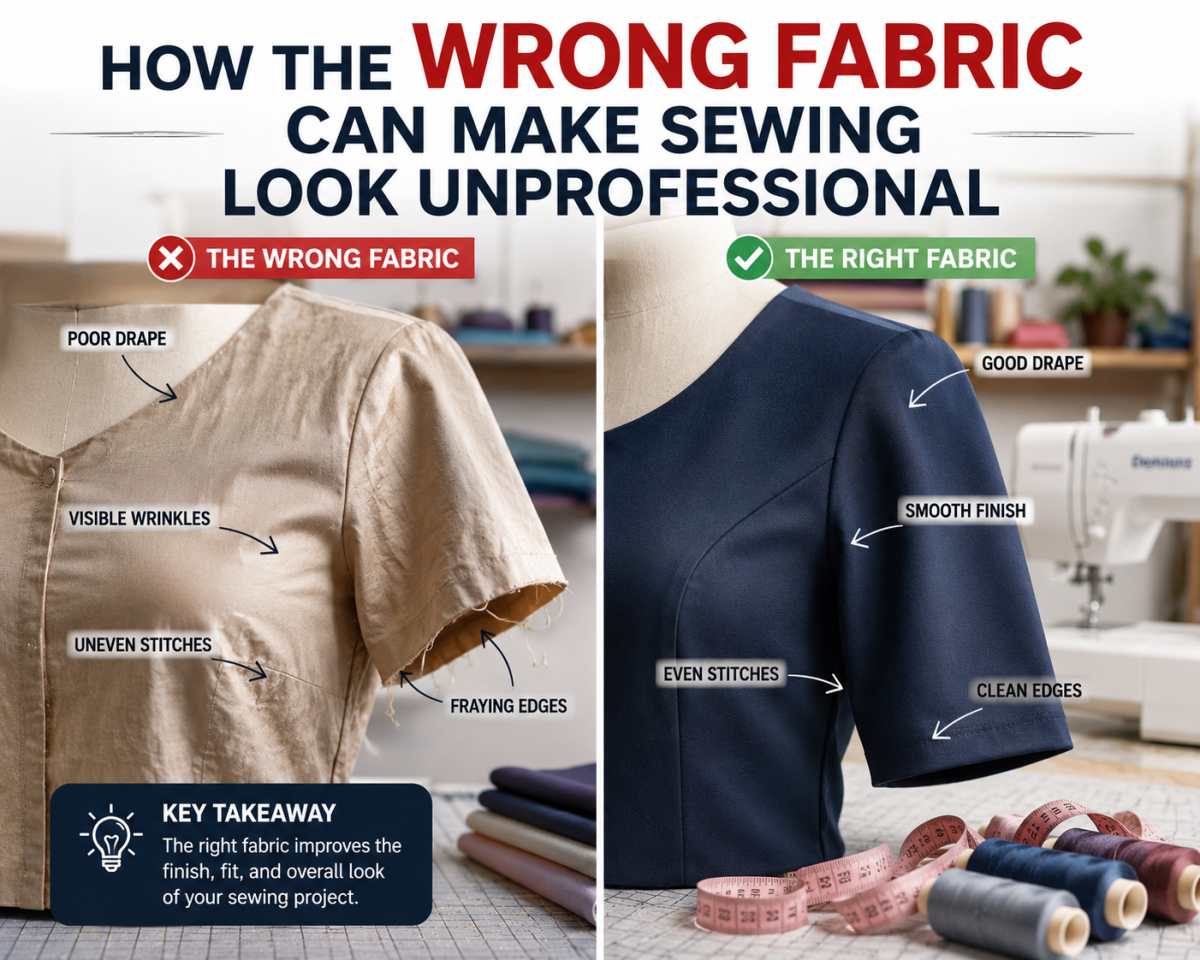
How the Wrong Fabric Can Make Even Perfect Sewing Look Unprofessional
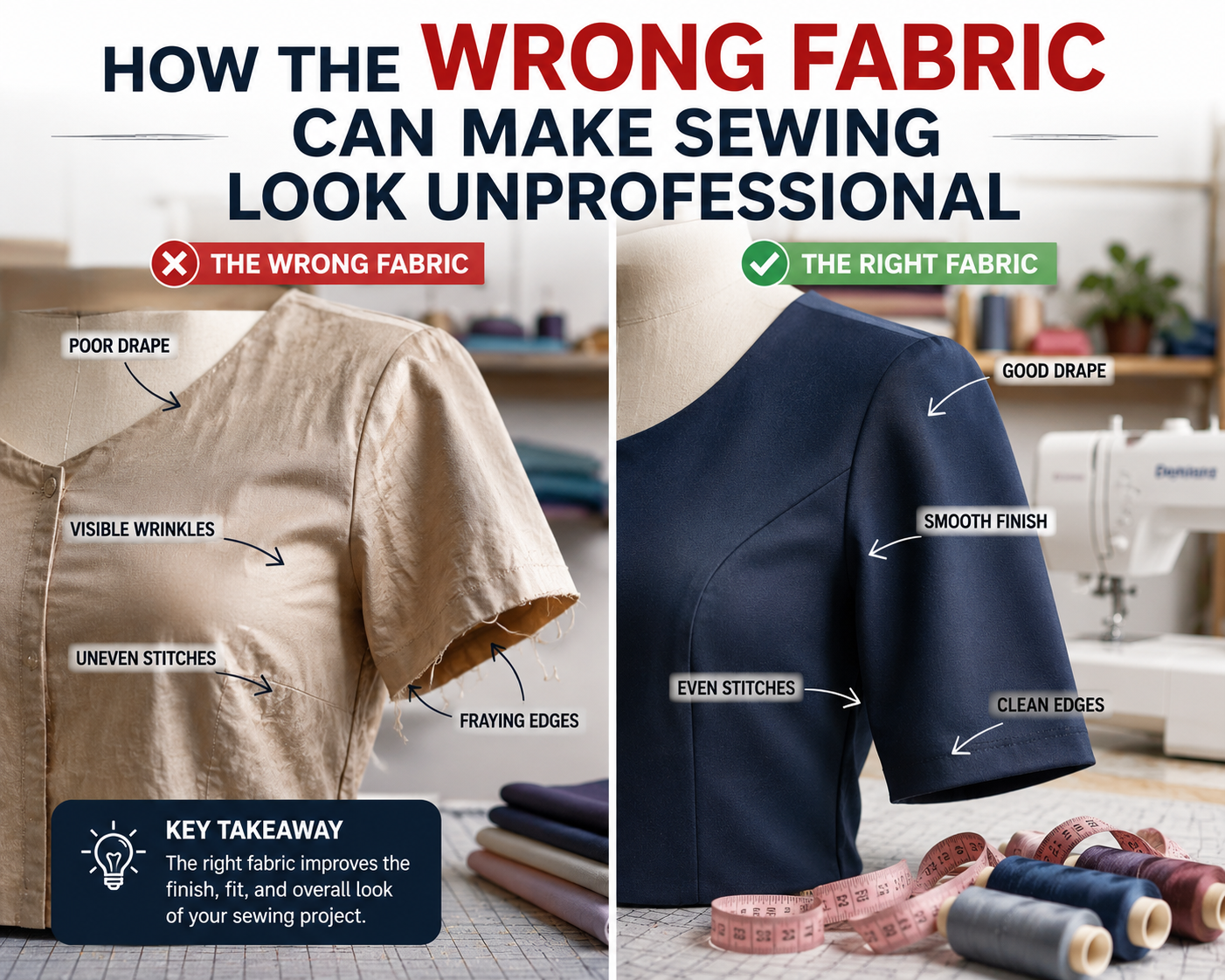
Good sewing technique is important, but even perfect stitching cannot always rescue the wrong fabric. A garment may have accurate seams, careful pressing, and precise construction, yet still look disappointing because the material does not suit the pattern.
Fabric controls how a garment hangs, moves, fits, and responds to washing. Its weight, drape, stretch, texture, and stability all influence the final appearance.
Experienced sewists understand that fabric selection is part of the construction process, not simply a design decision. Choosing the right material before cutting can make sewing easier and help create clothing that looks polished, comfortable, and professionally finished.
Why Fabric Choice Can Make or Break a Well-Sewn Garment
When Good Construction Cannot Compensate for Poor Fabric Selection
A skilled sewist can produce technically accurate seams, but unsuitable fabric can still create problems.
The wrong material may cause:
- Poor garment shape.
- Uneven draping.
- Excessive stretching.
- Bulky seams.
- Uncomfortable movement.
- Premature wear.
This is why fabric selection deserves the same attention as pattern selection and sewing technique.
How Fabric Behaviour Changes the Final Appearance
Every fabric behaves differently during cutting, stitching, pressing, and wearing.
A lightweight fabric may create a soft silhouette, while a structured material can produce a tailored shape. Stretch fabric requires different handling from a stable woven fabric.
Understanding these differences helps you predict how the finished garment will look.
5 Fabric Problems That Make Finished Clothes Look Unprofessional
Wrong Fabric Weight for the Pattern
Fabric weight affects structure, comfort, and drape.
Using fabric that is too heavy can make a garment look bulky. Fabric that is too light may fail to provide enough structure.
Always compare the fabric weight with the pattern’s recommendations before cutting.
Poor Drape and Unwanted Stiffness
Drape determines how naturally fabric falls around the body.
A pattern designed for flowing fabric may look stiff when made from a rigid material. Likewise, a structured pattern may lose its intended shape when made from fabric that is too soft.
Matching drape to design creates a more balanced silhouette.
Incorrect Stretch and Recovery
Stretch fabrics need appropriate recovery to maintain their shape.
Poor recovery can cause:
- Stretched necklines.
- Baggy areas.
- Loose waistbands.
- Misshapen sleeves.
Test the fabric before cutting to understand how much it stretches and whether it returns to its original shape.
Fabric That Loses Its Shape After Washing
A garment can look excellent when first completed but change significantly after laundering.
Poor-quality or unprepared fabric may shrink, twist, stretch, or lose its structure.
Pre-washing suitable fabrics helps identify potential shrinkage before construction.
Uneven Texture, Sheen, or Surface Finish
Fabric inconsistencies can become more noticeable once the garment is assembled.
Uneven colour, texture, sheen, or weave can make an otherwise carefully sewn garment look less refined.
Inspect the entire fabric before cutting and avoid sections with significant defects.
How the Wrong Fabric Affects the Sewing Process
Difficult Cutting and Pattern Matching
Some fabrics shift, stretch, or distort during cutting.
This can make accurate pattern placement more difficult and may result in pieces that do not align correctly.
Stable fabric is generally easier to cut accurately.
Uneven Seams and Poor Edge Control
Fabric that frays excessively or stretches during stitching can make seam finishing more challenging.
The result may include:
- Uneven seam allowances.
- Wavy edges.
- Puckering.
- Difficulty pressing seams flat.
Selecting a fabric suitable for your sewing experience can make construction much smoother.
Unwanted Pulling, Puckering, or Distortion
Incorrect fabric tension can create visible problems around seams and darts.
Fabric that does not respond well to the pattern may pull or distort when the garment is worn.
Testing a small sample before construction can help identify these issues.
Difficulty Achieving a Clean Professional Finish
Professional results depend on more than stitching.
Fabric must respond well to:
- Pressing.
- Seam finishing.
- Topstitching.
- Interfacing.
- Hemming.
Choosing suitable fabric makes these finishing techniques easier and more effective.
How Experienced Sewists Match Fabric to a Pattern
Checking Fibre Composition and Fabric Structure
Start by checking the fiber content and construction.
Consider whether the material provides the required:
- Strength.
- Breathability.
- Flexibility.
- Stability.
- Texture.
The right fiber can make a significant difference to comfort and durability.
Testing Drape, Stretch, and Recovery
Before cutting, hold the fabric up and observe how it falls.
For stretch fabrics, gently stretch the material and see how quickly it returns to its original shape.
These simple tests provide useful information about how the finished garment may behave.
Considering Garment Shape and Intended Use
Think about where and how the garment will be worn.
For example:
- Everyday trousers need durability.
- Summer dresses often benefit from breathable fabrics.
- Jackets require structure.
- Fitted garments may require controlled stretch.
Matching fabric characteristics with the garment’s purpose produces better results.
Pre-Washing Before Cutting
Pre-washing can prevent unexpected changes after the garment is completed.
Depending on the fabric, it may help:
- Reduce shrinkage surprises.
- Stabilise the material.
- Remove manufacturing finishes.
- Reveal colourfastness issues.
Always follow appropriate care instructions for the fabric.
The Fabric Checks to Complete Before Making the First Cut
Test the Fabric’s Behaviour
Check drape, stretch, recovery, thickness, and how easily it wrinkles.
Check Shrinkage and Colourfastness
Wash a small sample when appropriate to see how the material responds.
Examine the Grain and Surface
Make sure the grain is consistent and inspect the surface for flaws.
Compare Fabric Weight with the Pattern Requirements
Confirm that the material has the structure and weight required by the design.
Why Better Fabric Selection Creates a More Professional Final Garment
Professional-looking clothing begins with thoughtful preparation.
The right fabric supports accurate construction, improves fit, creates better drape, and helps the garment maintain its appearance after repeated wear.
It also makes sewing easier by providing predictable behaviour during cutting, stitching, pressing, and finishing.
For sewists looking for quality materials and sewing inspiration, Maaidesign can be a useful destination when selecting fabrics for carefully crafted garments.
Conclusion
The quality of sewing and the quality of fabric work together. Even excellent construction can look unprofessional when the material is too heavy, too stiff, poorly structured, or unsuitable for the pattern.
By checking fabric weight, drape, stretch, recovery, grain, surface quality, and shrinkage before cutting, sewists can avoid many common problems. Taking extra time to select and test fabric often produces a much better final garment.
The right material doesn’t simply make sewing easier—it allows good sewing skills to truly show.
FAQs
1. How can the wrong fabric affect a sewing project?
The wrong fabric can affect fit, drape, comfort, construction, durability, and the overall appearance of the finished garment.
2. Why is fabric weight important when choosing fabric for a pattern?
Fabric weight influences structure and drape. Choosing a weight that does not match the pattern can result in a garment that looks too bulky, too loose, or poorly structured.
3. How does fabric drape affect the finished garment?
Drape determines how fabric falls and moves around the body. Matching the fabric’s drape with the pattern helps create the intended silhouette.
4. Can poor-quality fabric make professional sewing look unprofessional?
Yes. Poor-quality fabric may fade, stretch, pill, shrink, or lose its shape, even when the garment has been constructed accurately.
5. Why should fabric be tested before cutting?
Testing reveals important characteristics such as stretch, recovery, shrinkage, colourfastness, drape, and stability before they can affect the finished garment.
6. How do experienced sewists choose fabric for a pattern?
They consider fiber composition, weight, structure, drape, stretch, recovery, care requirements, garment purpose, and the pattern’s recommended fabric types.
7. What should you check before cutting fabric for a sewing project?
Check the fabric grain, weight, drape, stretch, recovery, surface quality, colourfastness, shrinkage, and compatibility with the selected pattern.
Maaidesign