


A floor can look impressive in a photograph and still feel wrong for the room where you install it. Reflective patterns may compete with furniture, while a textured finish may require a different cleaning routine than you expected. Choosing well means looking beyond the sample and imagining the space in everyday use. For homeowners and small business owners in Woodland Park, New Jersey, this decision often involves several competing needs. A basement recreation room may need a coordinated interior finish. A garage workshop may place more importance on traction and equipment movement. A customer-facing space may need both an attractive appearance and a manageable cleaning routine. Metallic and quartz epoxy finishes offer different decorative approaches. Understanding how they interact with lighting, room layout, and daily activities can help you decide which direction to explore.
Let the Room’s Purpose Guide the Design
Before choosing a color, identify the main purpose of the room. Then consider the activities that happen around it. For example, a basement may function as a quiet seating area during the evening and a playroom during the day. Similarly, a garage may hold a vehicle while also providing space for repairs and household storage. These overlapping uses matter because a floor must support more than its most attractive moment.
Ask yourself:
- Will people mostly walk, sit, work, or move equipment here?
- Could water, grit, or other substances reach the surface?
- Should the floor attract attention or provide a quieter background?
- How often can the space be cleaned?
- Will the room’s furniture or layout change later?
Your answers create a practical starting point for discussing the flooring system with an installer.
Understand the Difference Between Metallic and Quartz Finishes
Metallic and quartz epoxy floors achieve their appearance through different materials. Metallic epoxy uses pigments to create flowing patterns and visual depth. Quartz systems incorporate quartz aggregate into a resin-based floor, producing a granular decorative appearance. Epoxy Shine describes both approaches on its Woodland Park service pages. However, the decorative material does not determine every performance characteristic. Surface preparation, resin selection, installation, and the protective topcoat also influence the finished floor. A useful comparison therefore considers two questions together: How will the floor look, and how will the specified system support the room’s activities?
Explore Metallic Finishes When the Floor Has a Visual Role
Some rooms benefit from a floor that becomes part of the design. Examples include a display area, an open recreation room, or an interior with relatively simple furnishings. In these settings, metallic epoxy floor designs provide an opportunity to explore flowing color and decorative depth. The key is controlling how much visual movement the room needs.
Coordinate Patterns With the Interior
A strong floor pattern may work well beside plain walls and simple cabinetry. However, the same design can feel crowded beneath patterned furniture, decorative wall finishes, and numerous accessories. Consider choosing one main visual feature. If the floor will provide that feature, keep nearby finishes coordinated. Also remember that a sample represents a general design direction. A hand-worked metallic installation will have variations, so discuss the acceptable range of movement and color rather than expecting an exact copy of a photograph.
Consider How Much Floor Remains Visible
A large decorative pattern needs enough exposed floor to be appreciated. Heavy furniture, closely spaced displays, or storage cabinets may hide much of the design. Before selecting a finish, sketch the room’s layout. This can help you decide whether an elaborate pattern will contribute to the completed space or mostly disappear beneath belongings.
Explore Quartz Finishes When Texture Is Part of the Brief
Other rooms call for a more consistent decorative pattern, with particular attention to the finished surface texture. When reviewing quartz epoxy flooring options, discuss the aggregate blend, protective layers, and texture of the completed system. Quartz aggregate can form part of a textured finish, but the installer should explain how the chosen specification balances traction and cleaning.
Look Beyond the Color Blend
Two samples with similar colors may feel different because of aggregate size, application, and topcoat coverage. Ask to inspect a completed sample. Looking at loose quartz particles alone will not show how the final floor feels or cleans. If the room contains rolling carts, tool cabinets, or other equipment, explain that use during the consultation. The completed system should suit those movements as well as foot traffic.
Match Texture to Your Cleaning Routine
A more pronounced texture can require additional attention when removing dirt. Therefore, discuss cleaning tools and methods before choosing the finish. For a household utility area, think about the cleaning you can realistically manage each week. For a commercial room, consider the equipment and time available to staff. The most practical specification fits both the expected exposure and the maintenance routine.
Test Samples Under the Room’s Actual Lighting
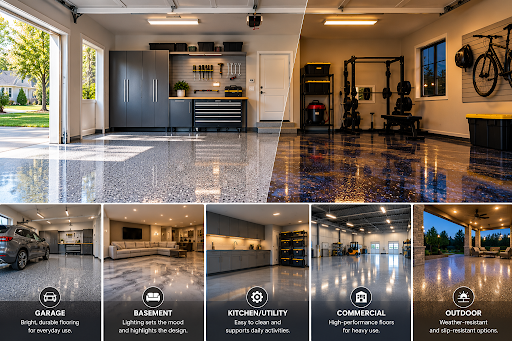
Lighting can change your perception of color, sheen, and pattern. A finish viewed under showroom lights may appear different in a basement or beside a garage door.
For Woodland Park properties, check samples under several everyday conditions:
| Lighting condition | What to observe |
| Daylight near windows or an open door | Color changes, reflections, and visible pattern |
| Evening ceiling lights | Glare and the overall appearance of the room |
| Task lighting over a work area | Visibility of small objects and surface marks |
| Dim corners | Whether the color looks heavier or less distinct |
Place samples beside the wall color and furnishings that will remain in the room. If a reflective finish creates distracting glare, discuss another sheen or design approach. Confirm that any proposed adjustment remains compatible with the specified system.
Map the Areas That Receive the Most Wear
Traffic rarely spreads evenly across a room. Doorways, routes between equipment, and areas beside storage often receive more repeated use. Walk through the space and identify these paths. Then consider what happens there. For example, a garage entrance may receive wet shoes and grit. A workshop route may carry rolling equipment. A small showroom may experience concentrated foot traffic around a popular display. Share these observations with the installer. Ask how the proposed topcoat and texture suit those conditions. Neither a metallic appearance nor a quartz blend provides a complete answer about durability. Compare the products and system intended for the actual exposure.
Check the Slab Before Finalizing the Look
Even a carefully selected design depends on suitable concrete underneath. The assessment should address existing coatings, contamination, damaged areas, cracks, and moisture concerns. These issues can affect preparation and may influence the proposed installation. In a basement, investigate recurring dampness before committing to a decorative finish. In a garage, consider water entry and drainage around the doorway. Also discuss how the installer will treat movement joints and transitions. A decorative coating should not be expected to correct structural movement or eliminate the source of water intrusion. Resolving these details early gives you a clearer picture of the work and helps avoid designing around an unsuitable starting surface.
Plan Transitions Between Different Areas
A property does not always need the same decorative finish everywhere. A display room and an adjoining utility space may benefit from different approaches.
If you choose different systems, plan the transition deliberately.
Discuss:
- Where the finishes will meet.
- Whether the installed heights will differ.
- How edges and door thresholds will be finished.
- Whether colors should coordinate.
- How cleaning instructions differ between areas.
A coordinated transition can make separate spaces feel connected without forcing every room to use the same specification.
Make the Final Decision With a Sample and a Written Specification
Before approving the project, confirm both the design and the work behind it. The finished sample should help establish color, pattern direction, sheen, and texture. The written proposal should identify preparation, repairs, products, included surfaces, and return-to-use instructions. Also request maintenance guidance and clear warranty terms. These details allow you to compare proposals fairly and understand what the completed project includes. For Woodland Park homeowners and businesses, the most useful choice begins with the room itself. Observe its lighting, map its activities, and assess the concrete. Then select a decorative epoxy approach that supports those conditions while creating the appearance you want.
smiths