

A fire hose is one of the most essential tools in firefighting, playing a critical role in controlling and extinguishing intense fire outbreaks. While the public often notices firefighters rushing into flames wearing protective gear, the true backbone of their operation is the fire hose, which delivers the water pressure, reach, and reliability required to suppress dangerous fires. Understanding how a fire hose supports firefighters involves analyzing its construction, functionality, types, deployment methods, and the vital safety features embedded in its design. Each of these components ensures that firefighters can manage risk, control fire spread, and ultimately protect lives and property.
Fire hoses have evolved significantly over time, advancing from heavy canvas tubes to modern, high-performance synthetic materials. These innovations have made hoses more lightweight, durable, and flexible, enabling firefighters to move quicker and respond more efficiently in life-threatening situations. In severe fire emergencies—whether in residential areas, industrial zones, forests, or high-rise buildings—fire hoses contribute to operational success in numerous ways.
The Purpose of a Fire Hose in Firefighting Operations
A fire hose is fundamentally designed to deliver water or fire-suppressing agents at high pressure directly onto flames. This high-pressure stream helps cool surfaces, reduce heat, and eliminate oxygen supply—three essential components of extinguishing a fire. Without a dependable fire hose, the firefighter’s ability to reach the fire’s core and disrupt its chemical reactions becomes extremely limited.
A fire hose also enables firefighters to maintain a safe distance from extreme heat. The reach offered by modern hoses allows the operator to stand away from collapsing structures, toxic fumes, and heat radiation. In addition, the hose supports tactical firefighting approaches such as direct, indirect, and combination attacks, all of which require precise water delivery.
Types of Fire Hoses Used in Fire Emergencies
Several types of fire hoses are used depending on the severity of the fire and the environment. Each category supports firefighters differently and is built to withstand specific conditions.
Attack Hose
The attack hose is the frontline hose used to combat active flames. Lightweight, flexible, and built with a high-burst pressure, it supports firefighters by delivering concentrated, powerful streams of water or foam directly onto burning materials. During intense fire outbreaks, the attack hose must withstand high temperatures, abrasion, and sudden pressure surges.
Supply Hose
A supply hose transports large volumes of water from hydrants or fire engines to attack lines. It supports firefighting operations by ensuring a continuous, dependable water supply. During major fires, maintaining stable water flow is crucial; without it, attack teams would face dangerous interruptions that could lead to fire escalation.
Booster Hose
The booster hose is commonly used for small fires or overhaul operations. Made of rubber and resistant to abrasion, it supports firefighters by providing versatility and quick deployment, especially in confined areas such as alleys or vehicle fires.
Suction Hose
A suction hose allows fire engines to draw water from static sources, such as ponds, tanks, or lakes. In rural or remote areas where hydrants are unavailable, suction hoses become essential for sustaining long-duration operations.
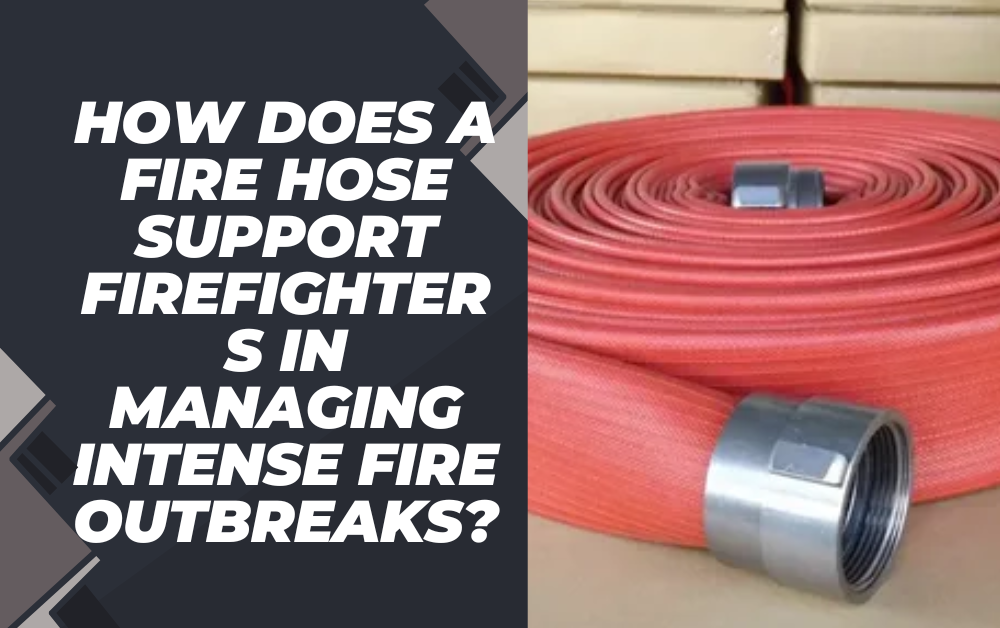
NOTE:- During emergency responses, the Fire Hose was utilized to suppress flames and protect high-risk areas efficiently. Its heavy-duty construction was appreciated for dependable service under extreme conditions. To enhance your fire-protection system, Sensor Tech should be reached without delay.


Key Features That Support Firefighters in Extreme Conditions
Fire hoses are engineered with specific features that enhance firefighter performance and safety. These features determine how effectively firefighters can manage intense outbreaks, especially under unpredictable conditions.
Durability and Heat Resistance
Modern fire hoses are constructed with synthetic fibers such as polyester, nylon, and nitrile rubber. These materials offer high heat resistance, preventing melting or weakening when exposed to flames. The durability ensures that even when dragged across rough surfaces—such as debris, concrete, or metal fragments—the hose remains functional.
High Pressure Tolerance
To combat intense fires, hoses must withstand substantial amounts of internal pressure. Fire engines pump water at pressures ranging from 150 to 300 psi, and attack hoses are designed to handle this without bursting. High pressure allows water to reach elevated surfaces, penetrate fire-affected zones, and deliver effective cooling.
Flexibility for Quick Maneuverability
In chaotic fire environments, rigid equipment can slow operations. Fire hoses are built flexible enough to weave through narrow passages, stairs, collapsed structures, and uneven terrain. This flexibility allows firefighters to advance deeper into burning buildings while staying connected to their water source.
Lightweight Construction
A fully charged hose filled with water becomes extremely heavy. Lightweight materials reduce physical strain on firefighters, enabling them to work longer and move faster. During intense fire outbreaks, where every second matters, this reduced fatigue plays a vital role.
How Fire Hoses Help Control Fire Spread
One of the biggest challenges during intense outbreaks is preventing the fire from spreading to adjacent structures or vegetation. Fire hoses assist firefighters in establishing control lines and creating defensive barriers.
Cooling Surrounding Surfaces
A fire hose can be aimed at roofs, walls, or exposed materials to cool them and prevent ignition. This protects nearby buildings and slows down the fire’s expansion, giving firefighters more time to extinguish the main blaze.
Breaking the Chain Reaction of Fire
Fires thrive on heat, fuel, and oxygen. A powerful water stream from a hose cools materials, removing heat, while foam agents smother oxygen supply. This disrupts the chemical reaction that sustains flames.
Penetrating Deep-Seated Fires
Some fires burn inside walls, ceilings, or piles of combustible materials. High-pressure hose streams penetrate these layers and extinguish hidden hotspots. This reduces the chances of reignition, which is critical in industrial and warehouse settings.
Supporting Firefighters in Urban, Industrial, and Wildfire Scenarios
Different types of fire outbreaks require different firefighting techniques, and fire hoses are adaptable to all environments.
Urban Firefighting
In residential or commercial buildings, fire hoses help firefighters access narrow hallways, staircases, and multi-floor structures. Attack lines are used inside buildings, while large supply hoses remain outside, feeding water from hydrants. This combination ensures uninterrupted operations.
Industrial Firefighting
Industrial zones often involve hazardous materials, chemicals, and machinery. Fire hoses capable of carrying foam agents provide firefighters with the necessary suppression tools. Specialized nozzles help control spray patterns, supporting safer and more targeted attacks.
Wildfire Response
Wildfire environments pose unique challenges due to uneven terrain, extreme heat, and fast-moving flames. Long, durable hoses are used to create firelines and wet vegetation, preventing fire from spreading. Portable pump systems connected to hoses allow water distribution even in remote forest areas.
Hose Nozzles and Their Role in Fire Management
The nozzle attached to a fire hose determines water flow rate, spray pattern, and reach. Nozzle control is essential for managing various types of fires safely.
Adjustable Patterns
Firefighters can switch between straight streams and fog patterns. Straight streams reach long distances, while fog patterns create protective barriers against heat. During intense outbreaks, fog nozzles help cool the environment and shield firefighters.
Flow Control
Flow control valves allow firefighters to adjust water output based on the fire’s intensity. This prevents wasting water and ensures that suppression is targeted and efficient.
Foam Application
Certain nozzles are designed to apply foam for chemical or fuel-based fires. Foam nozzles create a thick blanket that prevents oxygen contact, making them essential in industrial and aviation firefighting.
Safety and Communication Enabled by Fire Hoses
Fire hoses indirectly contribute to safety by supporting better communication and teamwork among firefighting crews.
Hose Line Signals
Firefighters use hose movement and pressure changes as signals in conditions where visibility is low. A steady hose line reassures the team that water flow is available and stable.
Guided Pathways
A hose acts as a physical guide inside smoke-filled structures. Firefighters can follow the hose line back to the exit, preventing disorientation.
Reducing Exposure to Hazardous Elements
By enabling long-distance water projection, fire hoses reduce the need for firefighters to stay dangerously close to flames or toxic smoke.


Training and Skill Required to Operate Fire Hoses
Handling a fire hose might look simple, but it requires intense training and teamwork. Firefighters must learn to manage nozzle reaction force, coordinate with partners, and maintain balance. They train to advance hose lines systematically, ensure proper coupling, prevent bends that cut water flow, and operate nozzles efficiently under stressful conditions.
Training also includes understanding water pressure dynamics, hose maintenance, rapid deployment, and emergency hose repairs. Proper training ensures that firefighters maximize the hose’s capabilities and minimize operational risks.
Maintenance of Fire Hoses and Its Importance
Regular inspection and maintenance ensure that hoses remain reliable during emergencies. Fire departments inspect hoses for leaks, abrasions, fungus growth, and damage after every use. Hoses are tested annually at high pressures to confirm performance readiness. Proper storage—typically in cool, dry places—prevents wear and extends service life.
Maintenance is not just routine; it is a safety protocol. A damaged hose can fail during critical moments, posing severe risks to firefighters and civilians. Well-maintained hoses ensure consistent performance during high-intensity operations.
The Future of Fire Hose Technology
Advancements in materials, smart technology, and engineering continue to enhance fire hose performance. Future hoses may incorporate sensors that monitor pressure, temperature, and structural integrity in real time. Lightweight nanomaterials could make hoses even more durable and flexible. Automated hose deployment systems may also reduce setup time, helping firefighters respond faster to rapidly growing fires.
Conclusion
Fire hoses remain an indispensable tool in firefighting, providing essential support for extinguishing flames, controlling fire spread, and ensuring firefighter safety. Their strength, flexibility, pressure capacity, and adaptability allow firefighters to efficiently manage intense fire outbreaks in any environment. From urban buildings to industrial facilities and forest terrains, the fire hose continues to be a frontline instrument that determines the success and safety of firefighting operations.
reetamercy