

Modern corporate offices are increasingly focused on sustainability. Businesses recognize that environmentally responsible practices not only reduce their impact on the planet but also contribute to employee well-being and public perception. Turnkey green projects offer a comprehensive way to integrate sustainability into corporate environments. These projects combine design, implementation, and maintenance of green spaces that support environmental goals while enhancing the functionality and appearance of corporate properties.
Corporate landscaping is a key component of these initiatives. By incorporating well-planned greenery, organizations can improve energy efficiency, conserve resources, and foster healthier workspaces. Such projects provide practical and aesthetic solutions for companies aiming to meet long-term sustainability objectives.
Understanding Turnkey Green Projects
Turnkey green projects are fully managed solutions that handle every aspect of creating sustainable landscapes. From initial planning to design, execution, and maintenance, these projects require minimal oversight from the organization itself. The turnkey approach ensures that green spaces are designed efficiently, maintained consistently, and optimized for long-term sustainability.
These projects often include water-efficient irrigation systems, native and drought-tolerant plants, energy-conscious lighting, and structures that enhance biodiversity. By addressing multiple sustainability needs in a single, cohesive project, businesses can implement environmentally responsible landscapes without dedicating extensive internal resources.
Supporting Corporate Sustainability Goals
Corporate sustainability goals often focus on reducing environmental impact, conserving resources, and creating healthier, more productive workplaces. Turnkey green projects contribute to these objectives in several meaningful ways.
Reducing Carbon Footprint
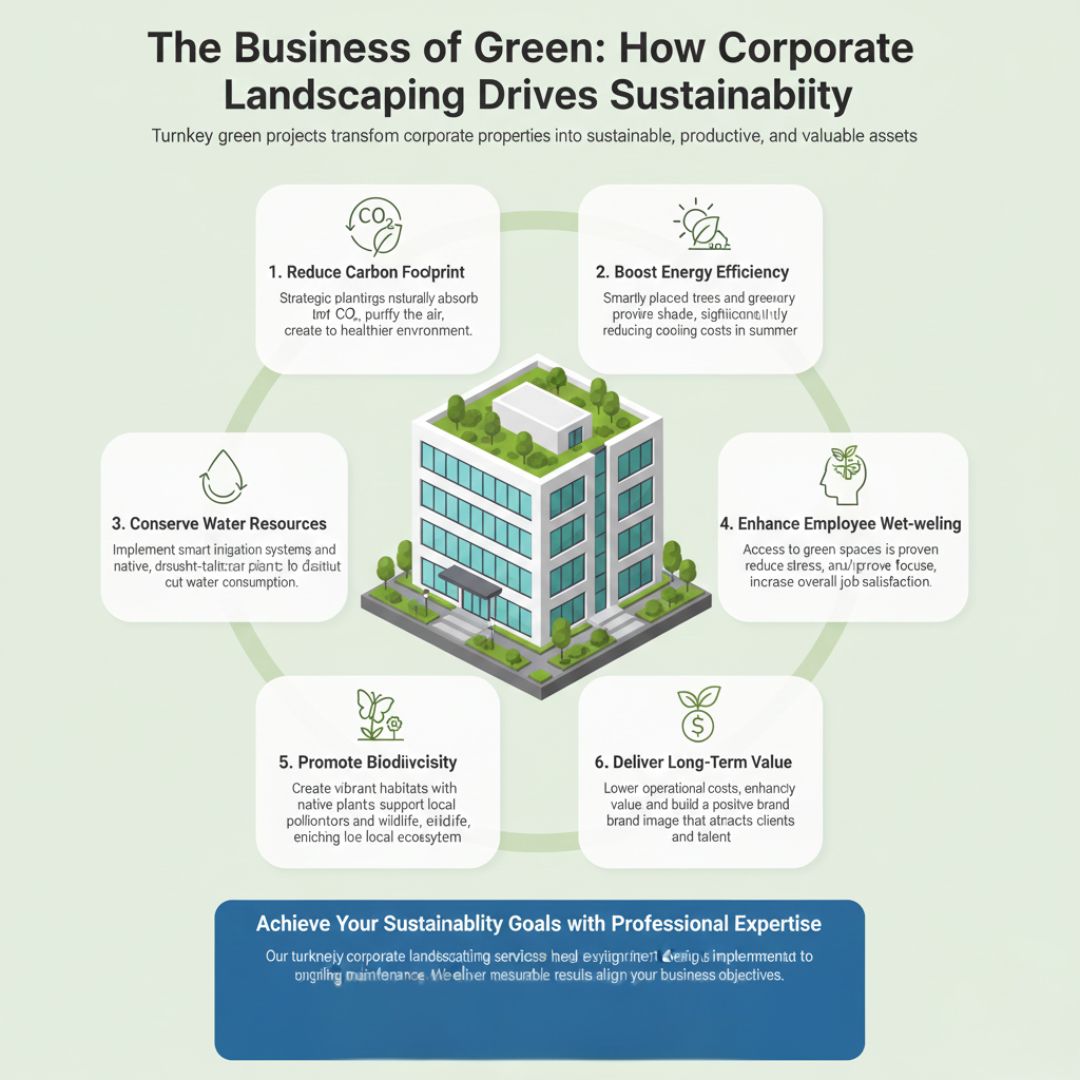
Plants naturally absorb carbon dioxide and release oxygen, helping offset carbon emissions from buildings and transportation. Strategic planting of trees, shrubs, and other greenery can make corporate properties more environmentally friendly. Beyond the environmental benefit, green spaces also provide visual and psychological benefits for employees and visitors.
Energy Efficiency
Incorporating greenery can help regulate building temperatures. Trees and other plants provide shade and reduce heat absorption, which can lower the need for air conditioning in warmer months. By designing landscapes with energy efficiency in mind, companies can reduce electricity consumption while creating a more comfortable environment.
Water Management and Conservation
Sustainable water management is a critical aspect of corporate landscaping. Turnkey green projects often include advanced irrigation systems such as drip irrigation, rainwater harvesting, and smart watering schedules. Selecting native and drought-resistant plants further reduces water requirements.
These measures help companies conserve water, lower operational costs, and maintain lush landscapes without overusing resources. Implementing water-efficient landscaping solutions also demonstrates a corporate commitment to responsible resource management.
Enhancing Employee Well-Being
Sustainability initiatives are not limited to environmental impact. Green spaces within corporate properties can significantly improve employee well-being. Access to greenery has been linked to reduced stress, improved concentration, and increased satisfaction. Outdoor areas for walking, sitting, or relaxing provide opportunities for breaks, informal meetings, or quiet reflection.
By integrating landscaping into corporate environments, businesses can support the health and productivity of employees while simultaneously contributing to sustainability goals.
Promoting Biodiversity
Turnkey green projects often aim to create diverse habitats within corporate spaces. Using a variety of plant species, including native plants, helps attract birds, insects, and other wildlife. Small water features or pollinator-friendly gardens can enhance biodiversity further.
Encouraging local ecosystems not only aligns with sustainability objectives but also improves the aesthetic value and experiential quality of outdoor spaces. Employees and visitors benefit from a more vibrant and dynamic environment that fosters connection with nature.
Cost Benefits of Green Projects
While implementing turnkey green projects may require an initial investment, the long-term financial advantages are significant. Efficient irrigation and energy-saving design reduce operational costs over time. Well-chosen plantings are low-maintenance and resilient, reducing the need for constant upkeep.
Furthermore, thoughtfully designed outdoor spaces can improve property value, enhance corporate branding, and create environments that make positive impressions on clients and stakeholders.
The Importance of Professional Expertise
Successfully executing turnkey green projects requires professional knowledge. Corporate landscaping specialists assess soil quality, climate conditions, sun exposure, and building integration before designing a solution. Expert guidance ensures that the right plants are selected, irrigation and lighting systems are optimized, and maintenance requirements are manageable.
Professional oversight also ensures that the design aligns with corporate sustainability goals, delivers measurable outcomes, and creates spaces that are visually appealing, functional, and long-lasting. Pranaa has demonstrated how professional planning can transform corporate properties into sustainable environments that reflect both environmental responsibility and thoughtful design.
Measuring and Monitoring Impact
Tracking the impact of green initiatives is essential for evaluating success. Turnkey green projects often include systems to monitor water usage, plant health, energy savings, and overall environmental impact. These measurements allow organizations to understand progress toward sustainability goals and make informed decisions for future projects.
Regular maintenance and monitoring are crucial to ensure that green spaces remain effective and that sustainability benefits continue to accrue over time. Data-driven insights also help companies communicate their commitment to environmental responsibility to employees, investors, and the public.
Conclusion: Achieving Corporate Sustainability Through Green Projects
Turnkey green projects provide a practical and holistic approach to corporate sustainability. From improving energy efficiency and conserving water to enhancing employee well-being and promoting biodiversity, these projects deliver multiple benefits. Professional corporate landscaping ensures that every element of the space contributes to long-term sustainability while remaining functional and visually appealing.
By adopting turnkey solutions, companies can create corporate environments that reflect environmental responsibility, foster healthier workspaces, and offer lasting value. Integrating greenery thoughtfully supports not only ecological goals but also the overall experience of those who use the space.
FAQs
Q1: What is a turnkey green project in a corporate context?
It is a fully managed project that covers planning, design, installation, and maintenance of sustainable landscapes for corporate properties.
Q2: How does corporate landscaping contribute to sustainability goals?
Landscaping helps reduce carbon footprint, conserve water, improve energy efficiency, and promote biodiversity.
Q3: Can green projects improve employee satisfaction?
Yes, well-designed green spaces reduce stress, improve focus, and provide opportunities for relaxation or informal meetings.
Q4: Are turnkey green projects cost-effective?
While initial investment is required, efficient design and low-maintenance solutions reduce long-term operational costs.
tahir