
Global Shrimp Market Size, Trends, and Forecast (2025–2033)
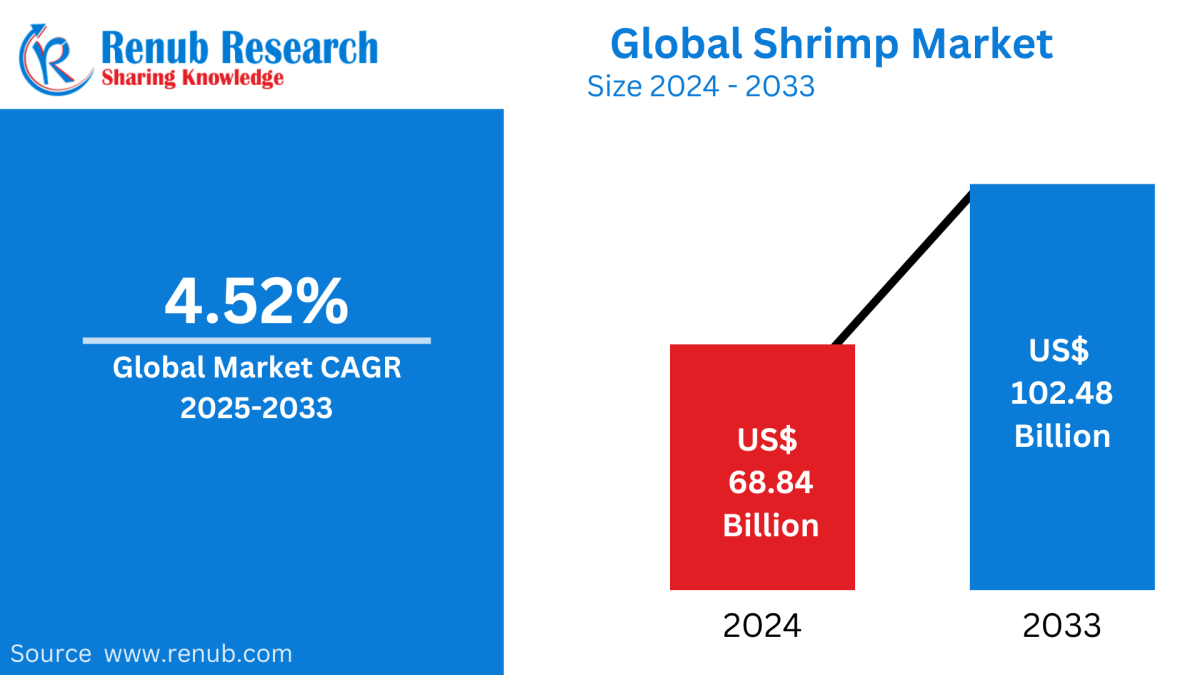
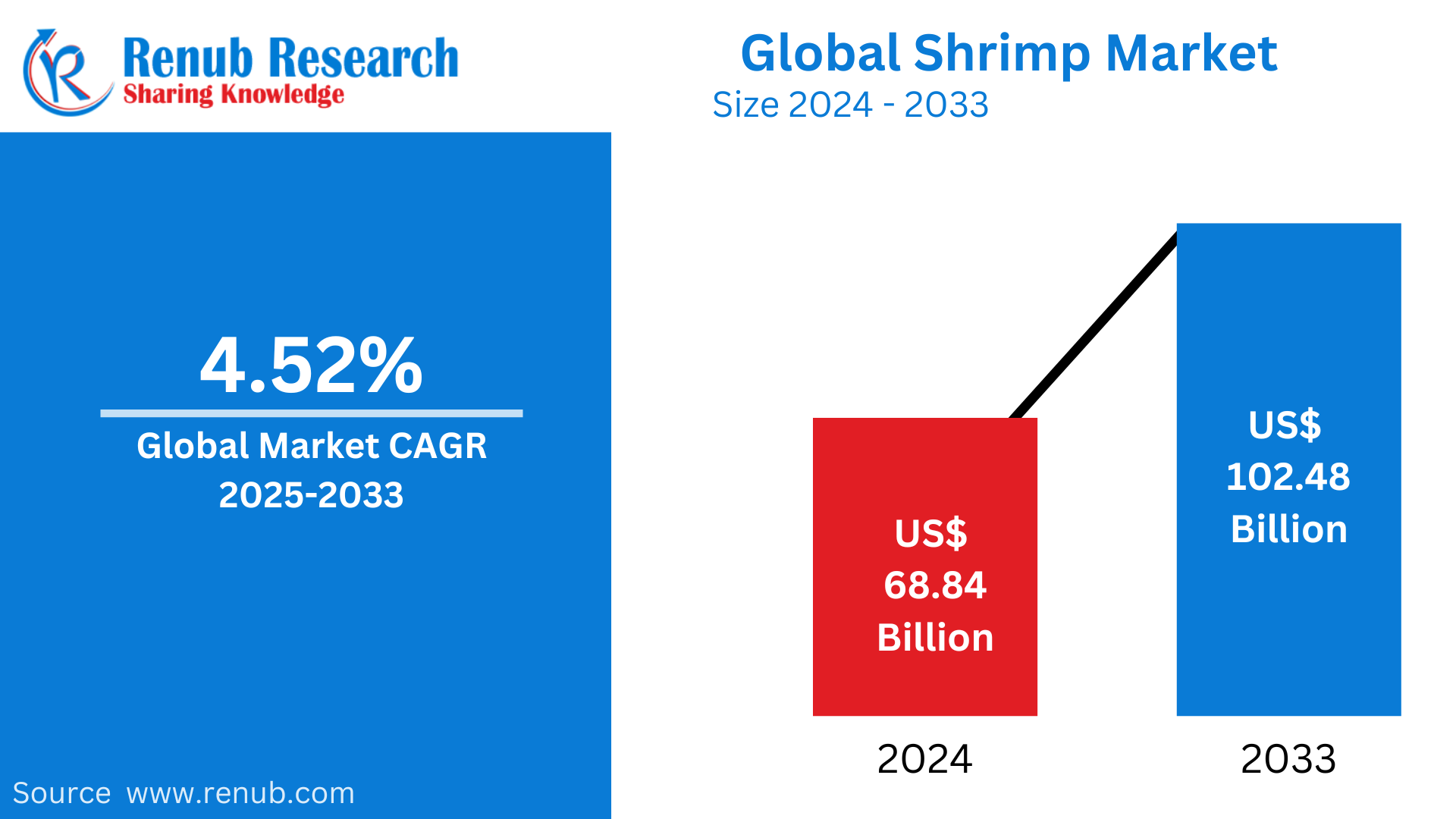
According to Renub Research Global Shrimp Market continues to gain significant momentum worldwide due to rising seafood consumption, advanced aquaculture practices, increasing health consciousness, and expanding demand for processed and frozen shrimp products. Valued at USD 68.84 Billion in 2024, the market is forecast to grow to USD 102.48 Billion by 2033, registering a healthy CAGR of 4.52% during 2025–2033. Shrimp has emerged as one of the most consumed seafood products globally thanks to its nutritional value, culinary versatility, and strong demand from households, restaurants, and food processing industries.
Global Shrimp Market Overview
Shrimp are aquatic crustaceans widely found in both freshwater and marine environments. Belonging to the Crustacea subphylum, shrimp are known for their elongated structure, subtle sweetness, and tender texture, making them a premium culinary ingredient used across diverse cuisines worldwide. Shrimp comes in numerous species and sizes, offering different taste profiles and cooking applications, making it a preferred protein source among consumers.
Growing global preference for nutrient-rich seafood, coupled with awareness about healthier diets, has significantly propelled shrimp consumption. Shrimp is rich in protein, omega-3 fatty acids, vitamins, and essential minerals while being low in calories and fats, making it an ideal balancing component in modern diets. Additionally, technological improvements in aquaculture have enhanced shrimp farming efficiency, supply consistency, and quality control, boosting market acceleration.
Download Free Sample Report:https://www.renub.com/request-sample-page.php?gturl=global-shrimp-market-p.php
Growth Drivers in the Global Shrimp Market
Growing Global Demand for Protein-Rich and Healthy Seafood
Increasing global population, urbanization, and health awareness are driving strong demand for seafood. Consumers are shifting from red meat to protein-rich, low-fat seafood options, with shrimp leading the segment. Shrimp provides superior nutritional benefits, ease of preparation, and global culinary acceptance.
Rising disposable incomes and the popularity of international cuisines have increased shrimp consumption across restaurants, supermarkets, and home kitchens. Europe witnessed shrimp price fluctuations between USD 33/kg to USD 67/kg in early 2023, highlighting steady demand. Innovation in product offerings, such as SeaPak’s Southern Style Jumbo Shrimp and Sea Best Seafood Festival Shrimp Boil, has further strengthened consumer interest.
Expansion of Aquaculture and Sustainable Farming
Advanced aquaculture practices have transformed shrimp farming efficiency and sustainability. Major producers like India, Vietnam, Ecuador, and Indonesia have implemented enhanced hatchery operations, disease management, selective breeding, and environmentally responsible farming solutions. Certifications such as BAP and ASC support regulatory compliance and premium exports.
According to the FAO’s 2022 report, global aquatic food consumption has climbed 3% annually since 1961, indicating long-term demand growth. Technology-driven improvements in feed quality, water systems, and traceability ensure better productivity and sustainability.
Rising Popularity of Processed and Value-Added Shrimp Products
Busy lifestyles, urbanization, retail growth, and e-commerce expansion have boosted demand for ready-to-cook, frozen, breaded, marinated, and cooked shrimp products. Quick service restaurants (QSRs), food chains, and hospitality industries heavily rely on processed shrimp for consistency, convenience, and extended shelf life.
Enhanced cold-chain logistics, smart packaging, and global seafood distribution channels are supporting large-scale consumption. Value-added shrimp products deliver better profitability to suppliers while offering variety and convenience to consumers.
Challenges in the Global Shrimp Market
Disease Outbreaks and Biosecurity Risks
Aquaculture remains vulnerable to disease outbreaks like EMS and WSSV, which can severely impact shrimp populations and cause financial losses. Maintaining strict biosecurity protocols, quality water conditions, and advanced diagnostic solutions remains critical.
Overreliance on antibiotics may result in environmental consequences and export restrictions. Therefore, investment in sustainable disease-resistant farming remains essential.
Market Price Instability and Trade Issues
Price fluctuations driven by production variations, feed costs, logistics expenses, tariffs, and trade regulations continue to challenge stakeholders. Global supply-demand imbalances affect profit margins for farmers and processors. Export quality standards, sustainability certification requirements, and traceability compliance also pose competitive challenges.
Key Shrimp Species and Market Segments
P. monodon (Black Tiger Shrimp) Market
Black tiger shrimp is highly valued for its size, taste, and premium quality, widely consumed in Europe, North America, and Asia. Although disease concerns reduced production earlier, genetic advancements and sustainable farming systems are restoring supply and demand.
M. rosenbergii (Giant Freshwater Prawn) Market
Popular in Asian markets, M. rosenbergii is valued for its large size and nutritional richness. Though slower to cultivate compared to marine shrimp, technological developments in hatcheries and feed efficiency are boosting productivity.
Shrimp Market by Size Segments
26–30 Size Shrimp Market
This size category remains one of the most commercially important globally, offering an ideal balance of affordability and size appeal. Widely used in restaurants, frozen packs, and retail markets, especially across North America, Asia, and Europe.
41–50 Size Shrimp Market
Widely preferred in household cooking, retail packs, and processed seafood manufacturing. This size segment supports salads, ready meals, frozen packs, and catering services and is especially popular in emerging markets.
Product Form Segments in the Shrimp Market
Cooked Shrimp Market
Driven by convenience demand, cooked shrimp is gaining massive traction among urban consumers. Ready-to-eat shrimp supports food services, retail packs, frozen meals, sushi, and pasta dishes globally.
Green/Head-On Shrimp Market
Favored by premium and gourmet consumers, especially in Mediterranean and Asian markets, head-on shrimp retains natural flavor and freshness. Demand is strong in upscale dining and specialized seafood retail.
Regional Shrimp Market Insights
United States Shrimp Market
The U.S. is one of the world’s top shrimp consumers, relying heavily on imports from India, Ecuador, and Indonesia. Frozen shrimp and ready-to-cook products dominate, while sustainability, traceability, and product variety influence consumer demand.
Germany Shrimp Market
Germany leads European shrimp consumption with strong demand for sustainable, premium-quality shrimp. Frozen and processed shrimp dominate retail markets. Certifications such as ASC and MSC significantly impact buying behavior.
India Shrimp Market
India stands as one of the largest shrimp producers and exporters globally, driven by advanced aquaculture systems, government support, and strong international demand. Domestic consumption is also increasing due to urbanization and dietary shifts.
Saudi Arabia Shrimp Market
Saudi Arabia is experiencing significant shrimp market growth through domestic aquaculture investment and seafood-focused dietary transitions. Vision 2030 initiatives, aquaculture infrastructure development, and biosecure farming technologies support the industry.
Global Shrimp Market Segmentation
By Species
- Vannamei
- Monodon
- Rosenbergii
- Others
By Size Category
<15, 15–20, 21–25, 26–30, 31–40, 41–50, 51–60, 61–70, >70
By Product Form
- Breaded
- Cooked
- Peeled
- Green/Head-Off
- Green/Head-On
- Others
Key Companies in the Global Shrimp Market
Leading shrimp market players include:
- Avanti Feeds Ltd.
- High Liner Foods Inc.
- Surapon Foods
- Thai Union Group
- The Waterbase Ltd.
- Royal Greenland
- Maruha Nichiro Corporation
- Mowi ASA
- Charoen Pokphand Foods PCL
These companies focus on technological innovation, aquaculture sustainability, capacity expansion, product diversification, and global supply chain enhancement to strengthen their market position.
Conclusion: Future Outlook of the Global Shrimp Market
The Global Shrimp Market is set for sustained growth through 2033 due to rising seafood demand, technological advancement in aquaculture, increased consumption of processed seafood, and expanding distribution channels. Despite challenges such as disease risk, trade uncertainties, and pricing fluctuations, continued innovation, sustainable farming practices, strong consumer demand, and government support initiatives will ensure a stable and lucrative future for the shrimp industry.
The market outlook remains positive as stakeholders invest in sustainability, premium product development, automation, and global expansion, ensuring shrimp remains one of the most sought-after seafood products worldwide.
renubresearch