
Gauged ears are a popular form of body modification, but years of stretching can permanently change the size, shape, and structure of the earlobes. Although some stretched earlobes may shrink naturally after jewellery is removed, larger gauge openings often remain visible. In more pronounced cases, the earlobe can appear elongated, thin, split, or uneven, making it difficult to achieve the appearance a person wants.
Earlobe Correction Surgery in Dubai can help address these concerns by reshaping the stretched tissue, closing enlarged openings, and restoring a more natural earlobe contour. The procedure may be suitable for people who have retired their gauges, experienced tearing during stretching, or developed excess tissue around an enlarged piercing. However, the best surgical approach depends on the size of the opening, the amount of remaining tissue, the quality of the skin, and whether the earlobe has sustained additional damage.
For individuals considering treatment in Dubai, understanding the procedure and choosing an appropriately qualified medical professional are important steps. Clinics may offer different approaches to earlobe reconstruction, so patients should look beyond promotional claims and assess surgical experience, safety protocols, consultation quality, and aftercare arrangements.
This guide explores how earlobe repair works for gauged ears, what patients can expect during recovery, and which factors matter when comparing aesthetic clinics in Dubai. It also explains why complete restoration of the original earlobe is not always possible and how a personalised treatment plan can help achieve a balanced, natural-looking result.
How Does Earlobe Correction Surgery Repair Gauged Ears?
Gauging gradually stretches the earlobe to accommodate increasingly large jewellery. When stretching is extensive, the tissue may not return to its original dimensions after the jewellery is removed. The opening can remain enlarged, and the surrounding skin may become thin or irregular.
Surgical correction addresses these changes by removing or reshaping selected tissue and carefully bringing the remaining edges together. The specific technique depends on the condition of the earlobe.
-
Closure of enlarged openings: The surgeon removes or reshapes tissue around the stretched opening before suturing the edges together.
-
Reconstruction of split earlobes: Where stretching has caused a tear or near-complete division, the surgeon repairs the separated tissue and rebuilds the earlobe contour.
-
Correction of irregular shapes: Uneven edges or excess tissue may be adjusted to improve symmetry.
-
Restoration of natural proportions: The surgeon aims to create an earlobe shape that complements the surrounding ear and facial features.
The procedure is commonly performed under local anaesthesia, although the exact anaesthetic approach depends on the extent of reconstruction and the patient’s circumstances.
It is important to understand that surgery cannot always recreate the exact appearance of an untouched earlobe. Larger gauge openings may leave scars, and extensive tissue loss can limit the achievable shape. A consultation helps establish realistic expectations before treatment.
Clinics to Consider for Earlobe Repair in Dubai
When exploring earlobe reconstruction, patients should compare clinics according to the services actually offered, the qualifications of the treating clinician, and their experience with stretched or damaged earlobes. The following clinics are options to investigate; their current availability of gauged-ear reconstruction should be confirmed directly.
Five Cosmetic
Five Cosmetic is an option for patients researching aesthetic treatments in Dubai. Anyone considering earlobe reconstruction should ask whether the clinic provides surgical correction for enlarged gauge openings or refers patients to a suitable surgical specialist.
During an initial consultation, patients should discuss the degree of stretching, any previous tears, and whether the remaining earlobe tissue can be reshaped without creating excessive tension. It is also useful to ask about scar placement, expected healing time, and the likelihood of needing a secondary procedure.
A clear explanation of the proposed technique and its limitations is more valuable than a promise of a particular cosmetic outcome.
Silkor Laser & Aesthetic Center
Silkor Laser & Aesthetic Center is another name patients may encounter while researching aesthetic services in the UAE. However, laser and non-surgical aesthetic treatments are different from surgical earlobe reconstruction, and patients should not assume that every aesthetic centre performs this procedure.
Anyone considering Silkor for gauged-ear repair should confirm whether surgical earlobe correction is currently available and who would perform it. If the service is not offered, asking for guidance on finding an appropriately qualified surgical specialist may be helpful.
A suitable provider should assess the thickness of the remaining tissue, the dimensions of the stretched opening, and any signs of previous injury before discussing possible correction methods.
Dynamic Life Clinic
Dynamic Life Clinic is another option to investigate when comparing cosmetic treatment providers in Dubai. For patients with enlarged gauge openings, the most relevant consideration is whether the clinic offers the specific reconstructive procedure required rather than general aesthetic services alone.
A thorough assessment should distinguish between a simple enlarged piercing and a more complex deformity involving substantial tissue loss or a split earlobe. This distinction affects the surgical technique, recovery expectations, and potential for visible scarring.
Patients should ask about the clinician’s training, experience with earlobe repair, infection-prevention procedures, and postoperative support. Reviewing appropriately consented before-and-after photographs of comparable cases, where available, may also help establish realistic expectations.
Tajmeels Clinic
Tajmeels Clinic may be considered by patients comparing aesthetic providers in Dubai. Before booking treatment, prospective patients should verify whether the clinic currently offers surgical correction for gauged ears and whether the procedure is performed by a qualified clinician with relevant reconstructive experience.
An informative consultation should cover the size of the gauge opening, the condition of the surrounding skin, and the amount of tissue available for reconstruction. Patients should also receive an explanation of possible complications, including infection, wound separation, scarring, asymmetry, and incomplete closure.
Understanding these factors makes it easier to compare providers on clinical suitability and safety rather than relying solely on advertised services.
Enfield Royal Clinic
Enfield Royal Clinic is one of the clinics patients may consider when researching cosmetic correction options in Dubai. For people with stretched piercings, the key question is whether the clinic can provide an appropriate assessment and arrange treatment with a suitably qualified practitioner experienced in earlobe reconstruction.
Before proceeding with Earlobe Correction Surgery, patients should ask how the clinician evaluates enlarged gauge openings, thin tissue, asymmetry, and existing scars. These details help determine whether straightforward closure is appropriate or whether a more involved reconstruction may be required.
Patients should also clarify the type of anaesthesia used, the expected visibility of scars, postoperative wound-care instructions, and follow-up arrangements. Confirming the treating clinician’s credentials and experience with comparable cases can help patients make an informed decision.
What Happens During Earlobe Reconstruction?
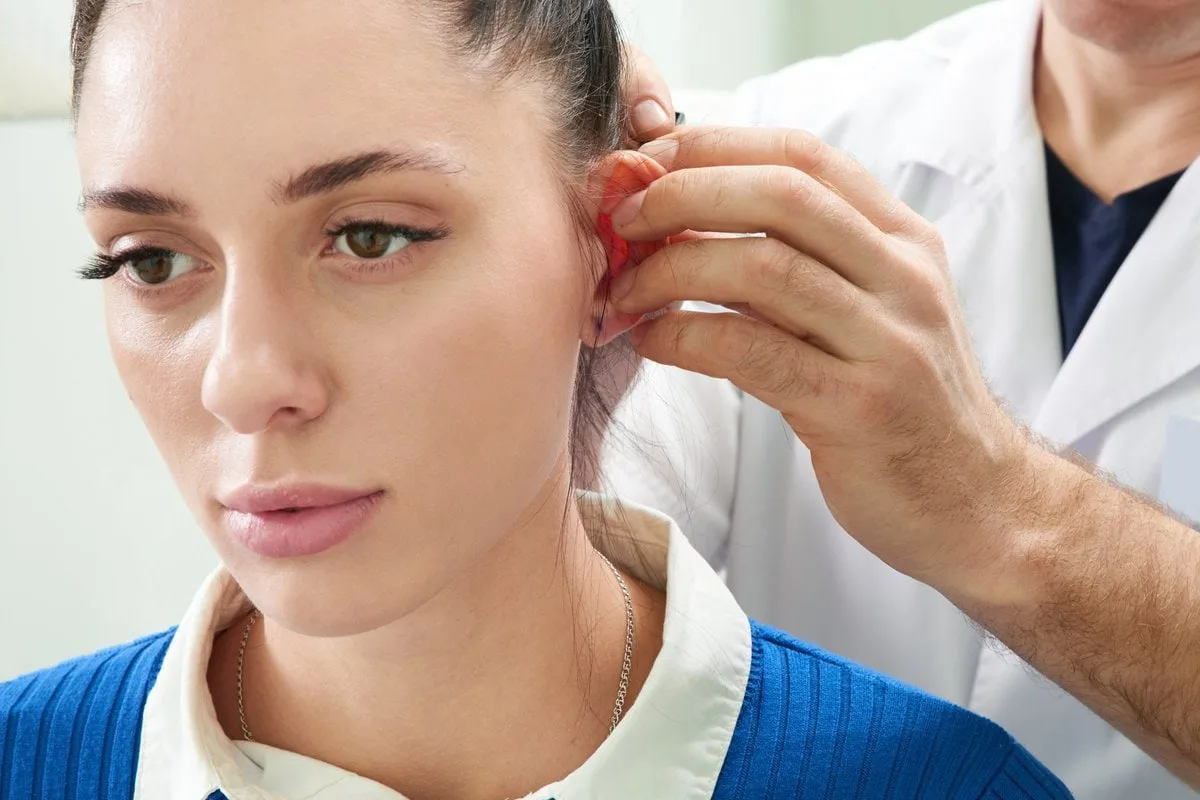
The treatment process typically begins with a consultation and examination. The clinician assesses the stretched opening, checks the integrity of the surrounding tissue, and discusses the patient’s preferred earlobe shape.
If surgery is appropriate, the area is cleaned and anaesthetised. The surgeon then removes or reshapes the necessary tissue and closes the wound with sutures. More complex cases may require a customised reconstructive technique to preserve the earlobe’s natural contour.
Many uncomplicated repairs are performed as outpatient procedures, allowing patients to return home the same day. However, procedure duration and recovery depend on the extent of correction.
After surgery, patients receive instructions on keeping the wound clean, managing discomfort, and attending follow-up appointments. Sutures may need to be removed or may dissolve naturally, depending on the technique used.
Patients should avoid stretching, pulling, or placing pressure on the healing earlobe. Re-piercing should only be considered after the tissue has healed sufficiently and the treating clinician has confirmed that it is appropriate.
How Long Does Recovery Take?
Initial healing often takes a few weeks, although complete scar maturation can take several months. The timeline varies according to the size of the original opening, the surgical technique, individual healing characteristics, and adherence to aftercare instructions.
Mild swelling, tenderness, bruising, and temporary redness can occur during early recovery. These symptoms should gradually improve. Increasing pain, spreading redness, pus, fever, or wound separation warrant prompt medical assessment.
Patients with extensive gauging may require a longer recovery period than those undergoing a straightforward closure. Follow-up appointments allow the clinician to monitor healing and identify any complications.
What Results Can Patients Expect?
The primary goal of gauged-ear repair is to reduce the enlarged opening and create a more natural-looking earlobe. Many patients can achieve a substantial improvement in contour, but the final result depends on the amount and quality of the remaining tissue.
Scars are an expected part of surgical healing. They may become less noticeable over time, but their visibility varies. Severe stretching, previous tears, and repeated trauma can make perfect symmetry or complete restoration difficult.
Patients should also understand that the procedure does not guarantee that the repaired earlobe will tolerate future stretching or heavy jewellery. In some cases, avoiding renewed stretching is the best way to protect the surgical result.
How to Choose the Right Clinic for Earlobe Correction Surgery
Choosing a provider requires more than comparing prices or convenience. The suitability of the clinician and the proposed surgical plan should be the main considerations.
Experience and qualifications
Check that the treating clinician has the appropriate medical registration, surgical qualifications, and relevant experience in earlobe repair or reconstruction. Ask about previous cases involving enlarged gauge openings rather than relying on experience with routine piercing closures alone.
Technology and techniques
The quality of the surgical plan matters more than the number of technologies advertised. Ask which closure or reconstruction technique is recommended and why it suits your earlobe. The approach should reflect the amount of tissue available, the opening’s size, and the desired contour.
Safety standards
Confirm that the procedure takes place in an appropriately licensed setting with suitable infection-control measures, sterile instruments, and arrangements for managing complications. The clinician should explain the risks and obtain informed consent before surgery.
Consultation process
A good consultation should include an examination, a discussion of medical history, and an explanation of the proposed treatment. Patients should have an opportunity to ask questions about scarring, anaesthesia, healing, and the possibility of revision surgery.
Patient experience
Look for clear communication, transparent fees, accessible aftercare, and realistic explanations of outcomes. Before-and-after photographs may be useful when they show comparable cases and are presented with appropriate consent.
Expected results
Ask what improvement is realistically achievable in your particular case. A responsible clinician should explain the limitations of reconstruction, including the possibility of residual scars, minor asymmetry, or incomplete restoration.
Frequently Asked Questions
Can Earlobe Correction Surgery completely reverse gauged ears?
Surgery can close enlarged openings and improve earlobe shape, but it cannot always restore the exact original appearance. The result depends on the degree of stretching, tissue quality, and any existing scars or tears.
Is surgery necessary for every stretched earlobe?
No. Smaller gauge openings may contract partially after jewellery is removed. Larger openings are less likely to close naturally, particularly when stretching has been extensive. A clinical assessment can help determine whether observation or surgery is more appropriate.
Is gauged-ear repair painful?
Local anaesthesia is commonly used for straightforward procedures, helping minimise discomfort during surgery. Mild soreness or tenderness may occur afterwards and can usually be managed according to the clinician’s instructions.
Will there be a visible scar after earlobe reconstruction?
Some scarring is expected because the procedure involves an incision. Scars may fade over time, but their final appearance varies according to the surgical technique, the extent of the original damage, and individual healing.
Can I stretch my ears again after surgery?
Re-stretching is generally discouraged until the repair has fully healed, and even then, it may compromise the result. Patients should discuss their future piercing or jewellery plans with the surgeon before treatment.
Conclusion
Gauged ears can leave lasting changes to the earlobe, especially when stretching has created a large opening, thin tissue, or an irregular contour. Surgical reconstruction offers a way to close the opening and improve the earlobe’s shape, although the extent of correction depends on the original damage and the tissue available.
Before choosing Earlobe Correction Surgery in Dubai, patients should confirm that their selected provider offers the required procedure and has an appropriately qualified clinician with relevant experience. Careful consultation, realistic expectations, and consistent aftercare are essential for supporting healing and achieving a natural-looking result.
Areej