
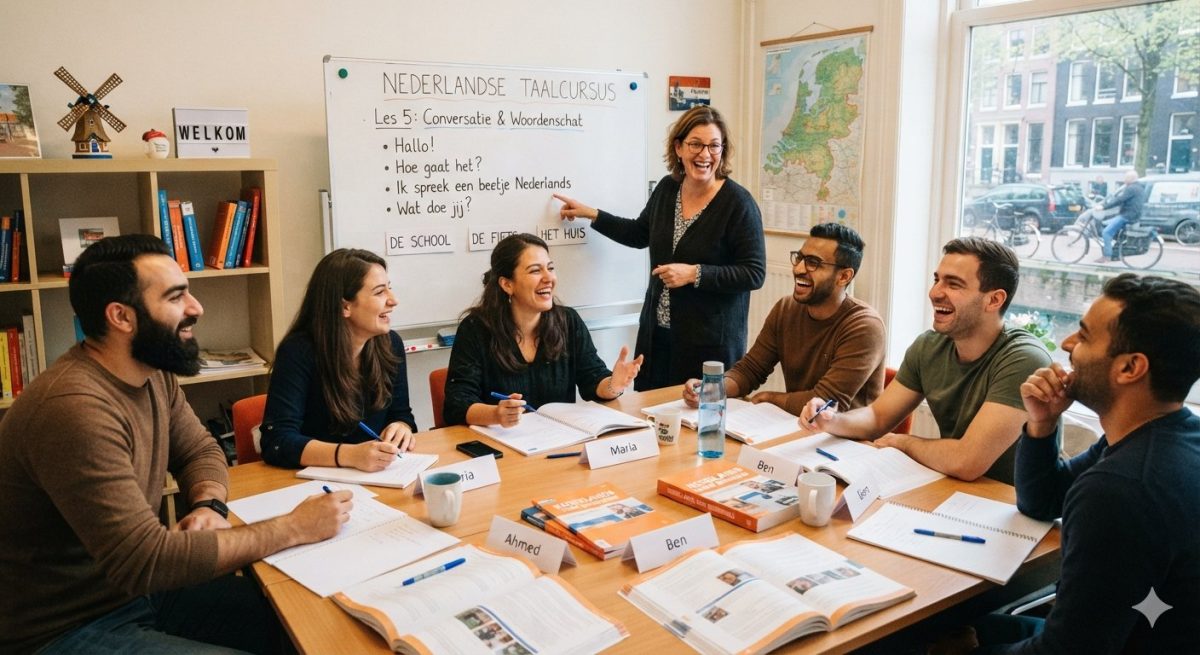
Compare popular Dutch language course options, understand CEFR levels A1-C2, and learn how to pick the right learning platform for your goals and budget.
The best Dutch language course matches your goal, level, and schedule. Check that it follows CEFR levels (A1-C2), includes speaking practice with real feedback, and offers exam preparation if you need certification. Try a free trial first, then compare price, teacher access, and how clearly it shows your progress.
What Are You Really Looking For in a Dutch Course?
Most people searching for a popular Dutch language course want one of three things:
- Practical Dutch for living, working, or studying in the Netherlands or Flanders
- A recognised certificate for immigration, university admission, or a job
- Travel or personal interest, usually at a relaxed pace
Your goal decides everything else. A platform that suits a weekend traveller can leave an exam candidate badly underprepared. Before comparing brands, write down your goal, your deadline, and how many hours a week you can study.
Understand the Levels First
Reputable courses organise content around the Common European Framework of Reference (CEFR), created by the Council of Europe. It uses six levels, and it applies to Dutch, German, and most other European languages.
| Level | Label | What You Can Typically Do in Dutch |
|---|---|---|
| A1 | Beginner | Introduce yourself, order food, ask simple questions |
| A2 | Elementary | Handle shopping, simple work chats, short messages |
| B1 | Intermediate | Discuss familiar topics, write simple emails, follow clear speech |
| B2 | Upper intermediate | Join work meetings, understand news, argue a point |
| C1 | Advanced | Use Dutch fluently for study and professional life |
| C2 | Mastery | Understand almost everything with ease |
If a platform doesn’t tell you which CEFR level each course covers, that’s a warning sign.
Dutch and German: How the Levels Compare
Many learners study Dutch and German together, or move from one to the other, because the languages are closely related. The CEFR scale is the same for both, so B1 Dutch and B1 German describe a similar ability.
The exams differ. German uses certificates such as the Goethe-Zertifikat at each level. For Dutch as a second language, the Netherlands uses the State Exams NT2 (Programme I at B1 and Programme II at B2), and the CNaVT exam is another recognised option. If you’re comparing the levels of German language courses with Dutch ones, check which exam each course prepares you for, not just the level label.
Five Types of Dutch Learning Platforms
| Platform Type | Best For | Strengths | Watch Out For |
|---|---|---|---|
| Self-study apps | Casual beginners | Cheap, flexible, short daily lessons | Limited speaking practice, shallow grammar |
| Online group classes | Steady progress with accountability | Live interaction, fixed schedule, lower cost than private lessons | Pace may not suit you; class size varies |
| Private online tutors | Fast progress, specific goals | Personalised plan, direct correction | Higher cost; quality varies between tutors |
| Structured courses with exam prep | Certification seekers | Clear syllabus, practice tests | Less flexible; may feel formal |
| Local language schools or immersion | Those living in the Netherlands or Belgium | Real-world practice, community | Fixed locations, schedules, and often waiting lists |
Many successful learners combine two types, for example an app for daily vocabulary plus a weekly tutor for speaking.
Seven Things to Check Before You Enrol
- Clear level structure. You should see exactly what you’ll learn at each stage.
- Speaking and listening practice. Dutch pronunciation, especially the g and ui sounds, is hard to learn from reading alone.
- Qualified teachers. Look for experience teaching Dutch as a second language (NT2), not just native speakers.
- Real feedback. Automated scoring is fine for vocabulary but weak for writing and speech.
- Exam alignment. If you need a certificate, ask which exam the course prepares you for.
- Transparent pricing. Look for the full cost, refund terms, and whether materials are included.
- Trial access. A free lesson or trial period shows you the teaching style before you pay.
Is a Premium Plan Worth It?
Many platforms offer a free tier and a premium plan. Premium isn’t automatically better, but it can be worth paying for when it adds something you’ll actually use.
Premium tends to be worth it when it includes:
- Live lessons or tutor access
- Personalised feedback on speaking and writing
- Exam practice materials
- Offline access and progress tracking you’ll use regularly
Skip it when it only offers:
- Removed ads
- Larger vocabulary lists you won’t finish
- Features you can’t name before buying
Ask yourself: What specific problem will this solve for me? If you can’t answer, stay on the free tier a little longer.
A Practical Example
Consider a software engineer relocating to Utrecht for work in six months. She needs everyday Dutch for shopping, neighbours, and colleagues, but no certificate.
Her plan might be:
- Months 1-2: an app for 15 minutes daily, plus one trial group class to test the format
- Months 3-6: a weekly online group class at A1-A2 and one conversation session with a tutor
- Ongoing: Dutch podcasts and subtitled shows to train her ear
Compare that with someone who needs B1 for a residence requirement. They’d skip casual apps and pick a structured course tied to the relevant exam, with timed practice tests. Same language, very different choice of platform.
Common Mistakes to Avoid
- Choosing by popularity alone. A popular Dutch language course works for many people, but it may not suit your goal or schedule.
- Ignoring speaking. Learners who only read and tap through exercises often freeze in real conversations.
- Skipping the placement test. Starting at the wrong level wastes time and motivation.
- Paying for a long plan upfront. Test first, commit later.
- Expecting fluency in weeks. Progress depends on hours of study and practice, not just the platform.
How to Test a Platform in One Week
- Take the placement test (or start at A1 if you’re new).
- Levels of German language Premium
- Complete three lessons and note whether the explanations make sense.
- Book a trial class or tutor session, if offered.
- Try speaking aloud and see whether you receive useful correction.
- Decide: do you feel you’re learning, and do you want to come back tomorrow?
The last question matters most. Consistency beats the perfect course.
FAQ’s
1. What is the best way to learn Dutch as a beginner?
Combine structured lessons (a course or class) with daily short practice. Start at A1, focus on pronunciation early, and speak from the first week.
2. How long does it take to learn Dutch?
It depends on your starting language, weekly study time, and goal. English speakers often find Dutch easier than many languages, but reaching B1 or B2 still takes sustained, regular study.
3. Are free Dutch courses good enough?
They’re good for vocabulary and basics. For speaking, correction, and exam preparation, most learners benefit from live instruction.
4. Do I need a certificate to prove my Dutch level?
Only if a university, employer, or immigration process requires one. Check the exact requirement with the relevant authority first.
5. What’s the difference between A2, B1, and B2?
A2 covers simple everyday exchanges, B1 lets you handle familiar topics independently, and B2 lets you work and study comfortably in Dutch.
6. Is Dutch similar to German?
Yes, they share Germanic roots and many cognates, so learners of one often progress faster in the other. Grammar, word order, and pronunciation still differ.
7. Are the levels of German language courses the same as Dutch ones?
Both follow the CEFR scale (A1-C2). The exams and certificates differ, so check which test a course prepares you for.
8. Online course or in-person class?
Online offers flexibility and wider choice. In-person suits learners who value routine and local community. Both work if they include speaking practice.
9. Can I switch platforms midway?
Yes. Take a placement test on the new platform so you start at the right level, and keep notes on what you’ve learned.
10. How can I tell if a Dutch teacher is qualified?
Look for teaching experience, training in Dutch as a second language, clear lesson plans, and verifiable learner feedback.
Conclusion
Choosing a Dutch course isn’t about finding the single most popular option. It’s about matching a platform to your goal, level, and routine. Start by defining why you’re learning, confirm the course follows CEFR levels, make sure it includes real speaking practice, and use a trial before committing. If you need certification, pick a course aligned with the exam. Then protect the habit: a decent course used consistently will beat a perfect one you abandon.
james