


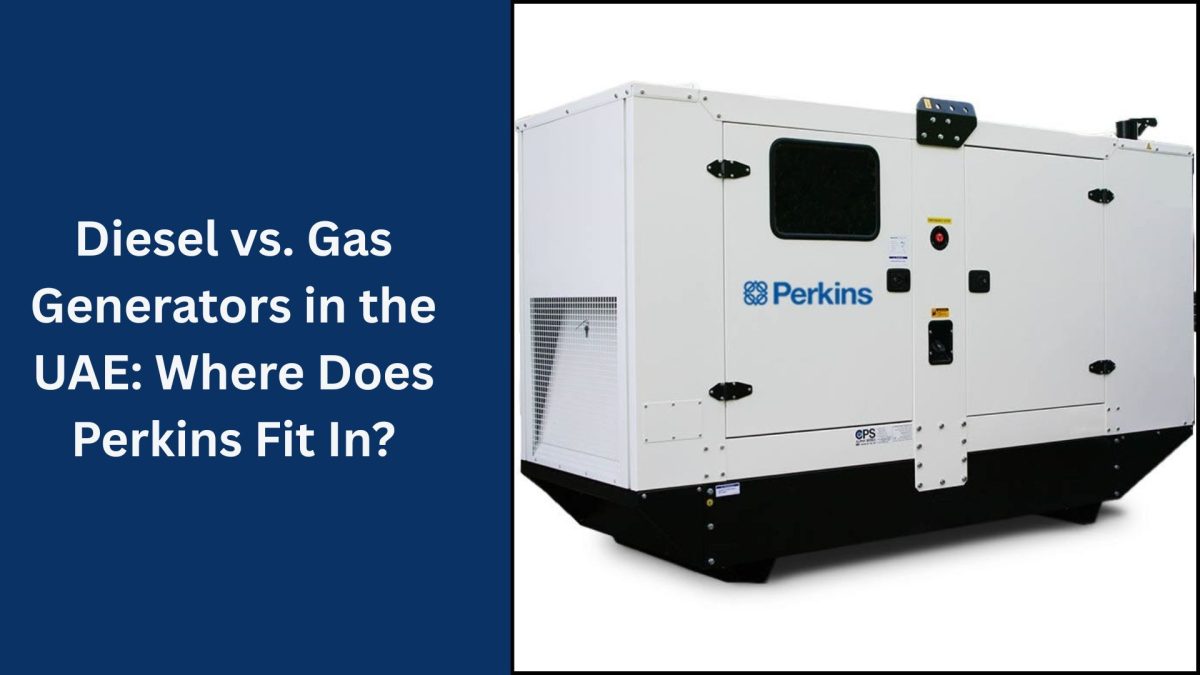
Introduction: Powering a Country That Never Sleeps
Dubai’s skyline glows long after midnight. Construction cranes move under floodlights, and data centers hum quietly in the background. The UAE doesn’t slow down — and neither can its power supply.
In a place where energy reliability means productivity, the question of which type of generator to choose has never been more important. Diesel has long been the king of backup power, but gas is catching up fast. Each promises reliability, efficiency, and lower costs — depending on who you ask.
So, where does one of the world’s most respected brands, Perkins generators UAE, fit into this power tug-of-war? Let’s break it down without the jargon and figure out what really matters when the lights (almost) go out.
The UAE’s Power Reality: Always On, Always Growing
Before comparing diesel and gas, it helps to understand why generator demand in the UAE keeps rising.
1. Constant Construction and Expansion
From new commercial towers to desert-based logistics hubs, construction sites are popping up everywhere. Many of these projects are in areas without stable grid connections. Portable generators are what keep the cranes moving and the lights on.
2. Climate and Comfort
When summer temperatures touch 45°C, power isn’t optional. Air conditioning, refrigeration, and data cooling systems all rely on steady electricity — and even short outages can have big consequences.
3. Business Continuity
Hospitals, hotels, and data centers can’t afford a minute of downtime. A backup generator isn’t just an emergency plan; it’s an operational necessity.
All of this explains why businesses are rethinking their energy sources — and why brands like Perkins are leading the charge toward smarter, more adaptable power solutions.
Diesel Generators: The Old Workhorse
Diesel generators have been the backbone of UAE’s power security for decades. They’re reliable, robust, and capable of delivering high power output under tough conditions.
Advantages of Diesel Generators
1. Durability and Longevity
Diesel engines are built to last. They can run for thousands of hours with proper maintenance — perfect for demanding industries like construction and oil & gas.
2. Fuel Efficiency
Despite high energy output, diesel engines burn fuel efficiently. This keeps operational costs manageable, especially when used frequently or for extended periods.
3. Easy Maintenance
Because diesel engines are mechanically simpler, maintenance is straightforward. Spare parts and technicians are widely available across the UAE, which keeps downtime to a minimum.
Challenges of Diesel Generators
1. Environmental Concerns
Diesel generators emit more carbon and particulates compared to natural gas systems. As sustainability goals rise across the UAE, this is becoming a real issue.
2. Noise and Smell
Even with soundproofing, diesel units can be loud — and that familiar exhaust smell isn’t exactly pleasant. This makes them less ideal for residential or urban environments.
3. Fuel Storage and Handling
Diesel needs proper storage and regular checks to avoid contamination. It’s one more logistical detail for businesses to manage.
Also Read this: Will Smart Laundry Systems Dominate Dubai’s Homecare Industry?
Gas Generators: The Cleaner Challenger
Now let’s look at the other side. Gas generators — powered by natural gas or LPG — are increasingly popular in urban and eco-conscious settings.
Advantages of Gas Generators
1. Cleaner Emissions
Natural gas burns cleaner than diesel, producing significantly fewer pollutants. This aligns with the UAE’s sustainability targets and growing focus on green energy.
2. Quieter Operation
Gas engines are generally quieter and smoother. That makes them suitable for areas where noise control matters — hotels, hospitals, and residential developments, for instance.
3. Continuous Fuel Supply
When connected to a natural gas line, there’s no need to worry about refueling. This makes operations more seamless and cost-effective in the long run.
Challenges of Gas Generators
1. Higher Initial Cost
Gas systems often come with a steeper upfront price. Installation can also be complex, especially for facilities without existing gas connections.
2. Lower Power Density
Diesel engines typically produce more power from smaller engines. Gas units can need larger systems to match the same output, which increases footprint.
3. Maintenance Complexity
Gas systems require more precise tuning and specialized service — not every technician in the UAE is trained to handle them.
Diesel vs. Gas: Which Suits the UAE Better?
Here’s where context matters. Both types have their place — the key is understanding your use case.
For Construction Sites
Diesel wins hands down. It’s rugged, portable, and works well even in remote desert areas without gas infrastructure. You can refuel on-site and keep working without worrying about pipelines.
For Urban or Commercial Spaces
Gas is more appealing here. It’s cleaner, quieter, and integrates nicely with modern sustainability goals. Many businesses in Dubai and Abu Dhabi are now exploring hybrid systems — pairing gas and solar — to balance reliability with responsibility.
For Industrial Operations
It depends. Diesel remains dominant in heavy industries, while gas is gaining ground in sectors like manufacturing and utilities, where continuous fuel supply and low emissions matter.
In short, the UAE isn’t choosing one or the other. It’s moving toward balance — leveraging both technologies based on need.
Where Perkins Fits In: The Bridge Between Power and Progress
Now, let’s talk about Perkins — a brand that has quietly powered cities, industries, and innovation worldwide.
A Legacy of Engineering Reliability
Perkins has earned its reputation over decades of designing engines that withstand heat, dust, and heavy loads — conditions that define much of the UAE’s environment.
Their diesel engines, especially the 4000 Series, are legendary for durability. They’re used everywhere from oil rigs to hospitals. But what sets Perkins apart isn’t just performance — it’s adaptability.
Innovation Beyond Diesel
Perkins isn’t stuck in the past. Their newer models are designed with lower emissions, quieter operation, and hybrid compatibility in mind. Some even integrate advanced electronic control systems for improved efficiency.
In addition, Perkins is investing heavily in engines that can run on alternative fuels like bio-diesel and natural gas — aligning perfectly with the UAE’s vision for a cleaner, smarter energy future.
Support That Keeps Businesses Running
Another reason Perkins generators stand out in the UAE? Unmatched local support. Authorized dealers provide maintenance, spare parts, and quick-response services — crucial in industries where downtime costs money.
It’s that combination of reliability, innovation, and after-sales care that explains why Perkins remains the go-to choice for so many UAE businesses, even as the energy landscape evolves.
Hybrid Power: The Future Is Already Here
Between diesel and gas, there’s a third option quietly rising — hybrid systems. These combine diesel or gas engines with renewable energy sources like solar or wind, plus advanced battery storage.
Here’s the trick: hybrid systems use renewable energy as the primary source and activate the generator only when needed. The result? Massive fuel savings and reduced emissions.
Perkins has started supporting these systems too, providing engines that can intelligently integrate with renewables. This flexibility ensures companies can transition gradually without losing reliability.
For UAE businesses looking to future-proof their operations, hybrids might just be the best of both worlds.
Cost Comparison: Short-Term vs. Long-Term Thinking
Many people look only at the purchase price when choosing between diesel and gas, but the true picture emerges over time.
Diesel: Lower Upfront, Higher Ongoing Costs
Diesel units cost less initially and are easy to deploy. But fuel, maintenance, and emissions compliance add up over years of use.
Gas: Higher Upfront, Lower Operating Costs
Gas systems cost more to install but offer savings in the long run — especially if your site has access to a gas network. They also help companies meet sustainability commitments without heavy retrofitting.
Perkins’ product range spans both categories, offering flexible options for businesses that want to optimize total cost of ownership.
Real-World Example: A Balanced Power Strategy
Take a logistics company operating near Jebel Ali. They initially relied entirely on diesel generators but faced high fuel expenses and stricter noise regulations.
After consulting with a Perkins distributor, they installed a hybrid setup — a gas generator supplemented by solar panels and battery storage. Within a year, they cut fuel consumption by 30% and maintenance costs by 20%.
The best part? They didn’t sacrifice reliability. Power stayed constant, operations stayed smooth, and the company’s sustainability rating improved — a win on all fronts.
Also Read this:
FAQs: Choosing the Right Generator in the UAE
Q1: Are Perkins generators available in both diesel and gas models?
Yes. Perkins offers a wide range of engines compatible with diesel, gas, and even biofuel blends.
Q2: Which is better for the UAE’s desert environment — diesel or gas?
Diesel performs exceptionally well in remote and dusty areas, while gas is ideal for urban or industrial zones with stable infrastructure.
Q3: Do Perkins generators meet UAE emission standards?
Absolutely. Perkins’ latest models are designed to comply with international and regional environmental regulations.
Q4: Can I convert my existing diesel generator to a hybrid system?
In many cases, yes. Perkins engines can integrate with hybrid setups using solar panels or battery systems.
Q5: What’s the lifespan of a Perkins generator in UAE conditions?
With proper maintenance, they can easily last 15–20 years, even under harsh heat and dust.
Conclusion: Finding Balance in Power and Progress
So, diesel or gas — which should you choose? The truth is, it depends on your needs, location, and long-term goals. Diesel offers proven reliability and power under pressure. Gas delivers cleaner, quieter performance for the eco-conscious era.
Perkins brings both worlds together — reliable engineering that adapts to the UAE’s demanding conditions while evolving toward cleaner, smarter solutions.
Whether you’re powering a remote construction site or a high-tech facility, Perkins generators UAE remain a symbol of strength, innovation, and resilience in a country that never stops moving forward.
Neha