


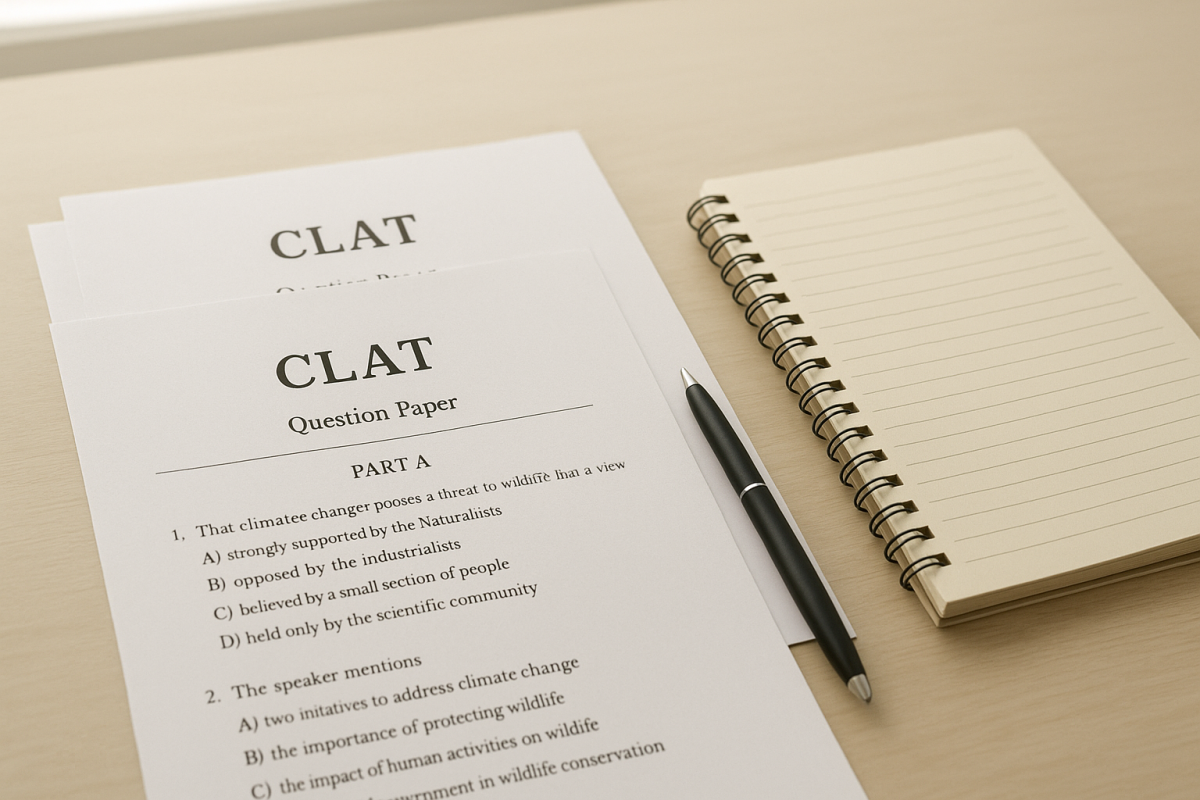
If you’re preparing for CLAT and you’re not solving CLAT Previous Year Question Papers, then let’s be blunt—you’re preparing blindly. Coaching notes, fancy books, and endless current affairs PDFs won’t save you if you don’t understand how CLAT actually asks questions.
CLAT doesn’t reward hard work alone.
It rewards pattern recognition, time control, and decision-making under pressure.
And the fastest way to build all three is through CLAT Previous Year Question Papers.
This article breaks down why these papers drive real results, how toppers use them differently from average students, and how you should use them if you actually want a rank—not just “experience”.
Why CLAT Previous Year Question Papers Matter More Than Anything Else
Let’s clear one myth first:
“CLAT changes every year, so old papers aren’t useful.”
Wrong. Completely wrong.
CLAT changes topics, not thinking style.
The Consortium may tweak the difficulty or length, but:
- The way comprehension is tested
- The trap options
- The time pressure
- The logic behind legal reasoning
—all stay consistent.
CLAT Previous Year Question Papers expose:
- How questions are framed
- What kind of options confuse students
- How much reading is actually manageable in 2 hours
- Which sections are score boosters and which are time traps
No guidebook teaches this properly. The papers do.
What Most Students Do Wrong with CLAT Previous Year Question Papers
Here’s the uncomfortable truth.
Most aspirants:
- “Solve” papers casually
- Check answers immediately
- Feel good about 70–80% accuracy
- Move on without analysis
That’s not preparation. That’s self-deception.
If you treat CLAT Previous Year Question Papers like practice worksheets, they won’t drive results. They’ll just waste your time.
Toppers treat them like data.
How CLAT Toppers Actually Use Previous Year Papers
This is where results are made.
1. They Solve Papers Like the Real Exam
No pauses.
No phone.
No checking answers mid-way.
They sit for 2 straight hours, replicating:
- Mental fatigue
- Reading pressure
- Decision stress
Because CLAT isn’t hard at question level it’s hard at endurance level.
2. They Analyze More Than They Solve
For every CLAT paper solved, toppers spend double the time analyzing.
They ask:
- Why was this option correct?
- Why did I choose the wrong one?
- Was it lack of concept or poor reading?
- Could I have skipped this faster?
This is where CLAT Previous Year Question Papers start driving results instead of frustration.
3. They Track Section-Wise Patterns
CLAT is not balanced.
Some years:
- Legal reasoning dominates
Other years: - Reading comprehension eats time
Sometimes: - Quant is laughably easy
Sometimes: - It’s a rank killer
By solving CLAT Previous Year Question Papers, patterns emerge:
- Which section gives easy marks
- Which section wastes time
- Which questions are designed to mislead
That insight alone can push your rank up by hundreds.
Section-Wise Benefits of CLAT Previous Year Question Papers
Legal Reasoning
This is where CLAT separates toppers from average students.
Old papers show:
- How principles are twisted
- How facts are overloaded
- How options look similar but aren’t
If you don’t practice legal sections from CLAT Previous Year Question Papers, you’ll fall for traps on exam day. Guaranteed.
Reading Comprehension
CLAT doesn’t test English.
It tests reading discipline.
Previous papers teach you:
- When to skim
- When to slow down
- Which questions don’t deserve full reading
Without these papers, you’ll either over-read or panic.
Logical Reasoning
CLAT logic is not puzzle-heavy, it’s argument-heavy.
Old papers train your brain to:
- Identify assumptions
- Ignore emotional language
- Eliminate extreme options
Again, no shortcut beats CLAT Previous Year Question Papers here.
Quantitative Techniques
Let’s be honest, quant is low-hanging fruit.
Most questions are basic:
- Ratios
- Percentages
- Averages
But students still mess it up because they panic.
Solving past papers builds confidence, which is all quant really needs.
How Many CLAT Previous Year Question Papers Should You Solve?
Short answer: All of them. Properly.
Long answer:
- Start with papers from recent years
- Move backwards gradually
- Don’t rush through years just to “complete” them
Quality > quantity.
Solving 10 papers with deep analysis beats solving 25 papers mindlessly.
When Should You Start Solving CLAT Previous Year Question Papers?
Another myth:
“I’ll solve papers after completing the syllabus.”
Bad idea.
You should start:
- Even when your syllabus is incomplete
- Even if your score is low initially
Early exposure helps you:
- Understand what actually matters
- Stop wasting time on low-value topics
- Adjust your preparation direction early
CLAT punishes late course-correction.
Why Mock Tests Alone Are Not Enough
Mocks are useful but they’re not the source.
Mocks are guesses.
CLAT Previous Year Question Papers are facts.
Mocks try to predict CLAT.
Past papers show what CLAT has already done.
Use mocks to practice.
Use previous year papers to learn.
Final Takeaway
If you want comfort, read theory.
If you want marks, solve CLAT Previous Year Question Papers.
These papers:
- Train your brain for CLAT thinking
- Reveal patterns no book can explain
- Build confidence under pressure
- Prevent stupid mistakes on exam day
CLAT rewards those who prepare strategically, not emotionally.
selfstudys