


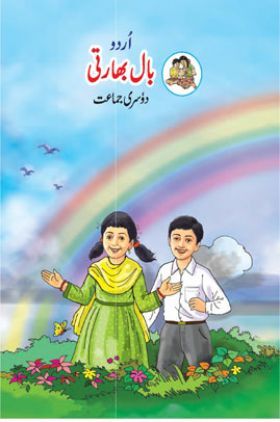
You’ll find Class 2 Balbharti- Urdu builds a gentle foundation in basic vocabulary, short stories, and simple grammar that supports classroom learning and everyday use of Urdu. This textbook gives your child clear, age‑appropriate lessons that make speaking and understanding Urdu easier while linking stories and activities to classroom goals.
Explore how lessons unfold across chapters, with engaging poems, dialogues, and exercises designed to strengthen listening, speaking, reading, and writing skills. Expect practical examples, colorful illustrations, and short activities that keep learning active and suited to young learners.
Overview of Class 2 Balbharti- Urdu
This curriculum gives young learners clear steps to build Urdu vocabulary, basic grammar, reading fluency, and listening skills. It organizes lessons into short thematic units with exercises, stories, and activities that reinforce daily classroom practice.
Structure of the Curriculum
The curriculum divides content into thematic chapters such as family, school, animals, festivals, and daily routines. Each chapter typically contains a short story or dialogue, vocabulary lists, simple grammar points, and 6–10 practice exercises designed for a 30–40 minute classroom session.
Lessons progress from single words and simple sentences to short paragraphs, with repetition and scaffolded practice. Teachers receive suggested activities: read-aloud, choral repetition, picture-based vocabulary drills, handwriting exercises, and pair speaking tasks. Assessment items include oral checks, fill-in-the-blanks, matching, and short reading comprehension questions to monitor weekly progress.
Key Learning Objectives
You will expand a core vocabulary set of common nouns, verbs, adjectives, and question words suited to a 6–8 year old learner. The aims include accurate pronunciation of basic Urdu sounds, correct formation of simple subject–verb sentences, and the ability to answer and ask simple questions about familiar topics.
Reading objectives target word recognition, decoding of short words and two-line sentences, and comprehension of brief stories with 2–4 simple questions. Writing goals focus on copying words neatly, forming short phrases, and writing 2–3 sentence answers. Listening objectives require following short instructions and retelling a one- or two-sentence story.
Language Skills Developed
Speaking: You practice pronunciation through repeated choral drills, role-plays, and simple conversational prompts, which build confidence in everyday exchanges. You learn to use greetings, introduce yourself, and describe familiar objects and actions.
Listening: Lessons include teacher read-alouds and audio-supported stories that develop the ability to identify key words, follow short instructions, and extract main ideas from a few sentences.
Reading: Materials emphasize letter-sound correspondence, sight-word recognition, and decoding of short words. You develop fluency with two-line sentences and comprehension of brief illustrated texts.
Writing: Handwriting practice and short composition tasks train you to copy words, form simple sentences, and label pictures. Exercises gradually move from guided sentence completion to independent two-sentence responses.
Highlights of Major Chapters and Lessons
This section highlights memorable stories and poems, the grammar and vocabulary that build core skills, and hands-on activities that reinforce comprehension and speaking. Expect concrete examples of lesson types, target words and structures, and classroom-ready activities you can use.
Popular Stories and Poems
You find simple narrative tales that focus on everyday situations, family, animals, and local culture. Stories like short dialogues between siblings, a village market scene, or an animal fable emphasize clear sequence words (پہلا, پھر, آخر) and moral points suitable for class 2 comprehension.
Poems use rhyme, repetition, and rhythm to teach pronunciation and intonation. Short rhymes about seasons, toys, and school routines recur across chapters. Each poem includes comprehension questions and picture prompts that ask you to identify characters, describe actions, and predict outcomes.
Look for illustrated stories where each page pairs a 1–2 sentence caption with a bright image. These pages target reading aloud and listening skills. You will also see boxed vocabulary lists beside stories that highlight 8–12 key words per lesson for reinforcement.
Grammar and Vocabulary Focus
Grammar lessons concentrate on everyday sentence patterns: simple subject-verb-object sentences, classroom commands, and basic question forms like “آپ کیا کر رہے ہیں؟”. You practice pronouns (میں، آپ، وہ), singular/plural markers, and common postpositions through short drills and matching exercises.
Verb forms shown are present and past simple with frequent verbs such as کرنا, جانا, کھانا. Lessons introduce adjectives for color, size, and quantity, and teach agreement in gender and number with clear examples. Each grammar point includes guided practice: fill-in-the-blanks, reorder-the-sentence tasks, and oral repetition.
Vocabulary lists target thematic sets: family members, school objects, animals, and foods. You get flashcard-style exercises and picture-word matching to cement meanings. Frequent review pages cycle previous lesson words into new contexts to build retention.
Illustrative Activities
Activities pair visuals with clear instructions so you can apply language actively. Common tasks include picture description (2–3 sentences), role-plays of market or school scenes, and sequencing cards for story order. You perform speaking tasks in pairs to practice dialogues introduced in the text.
Writing tasks stay short: label-a-picture, complete-a-caption, and sentence-completion using target vocabulary. Listening activities use short recorded dialogues or teacher-read passages followed by true/false and short-answer questions to check comprehension.
Games and crafts appear as periodic reinforcement: word bingo using lesson vocabulary, matching-pairs memory games for antonyms/synonyms, and simple drawing prompts where you write 1–2 sentences about your picture. Each activity lists materials, time required, and learning objective for easy classroom use.
Netbookflix