


Introduction
The adhesive industry plays an important role in India’s growing manufacturing and industrial sectors. From woodworking and furniture production to packaging, footwear, automotive components, and construction, adhesives are widely used to join different materials and improve product performance.
Adhesive companies in India provide a wide range of bonding solutions designed to meet the requirements of different industries. These solutions include hot melt adhesives, water-based adhesives, rubber-based adhesives, pressure-sensitive adhesives, and other specialized bonding products.
As businesses look for efficient, durable, and reliable bonding materials, understanding adhesive technologies and their applications has become increasingly important. Selecting the right adhesive company involves evaluating product quality, manufacturing capabilities, technical support, and application suitability.
This article explores the role of adhesive companies in India, the types of adhesives available, their applications, and the factors businesses should consider when choosing an adhesive manufacturer or supplier.
What Are Adhesive Companies in India?
Adhesive companies in India are businesses involved in manufacturing, supplying, distributing, or developing bonding materials for industrial and commercial applications.
These companies serve industries that require adhesives for joining materials such as wood, paper, plastic, metal, fabric, foam, and other substrates.
Depending on their operations, adhesive companies may offer:
-
Industrial adhesive glue for manufacturing and assembly.
-
Hot melt adhesives for packaging and woodworking.
-
Water-based adhesives for furniture and paper applications.
-
Rubber-based adhesives for flexible bonding.
-
Pressure-sensitive adhesives for tapes and labels.
-
Specialty adhesives for specific industrial requirements.
The role of an adhesive company goes beyond supplying a bonding product. Product consistency, application guidance, technical documentation, and customer support can also be important considerations for industrial buyers.
Types of Adhesives Offered by Adhesive Companies in India
Different industries require different adhesive technologies. Understanding these types helps businesses identify products that match their materials and manufacturing processes.


1. Hot Melt Adhesives
Hot melt adhesives are thermoplastic bonding materials applied in a molten state. They develop a bond as they cool and solidify.
These adhesives are widely used in woodworking, furniture manufacturing, packaging, bookbinding, and product assembly.
Key features:
-
Fast setting in suitable applications.
-
Compatibility with automated production processes.
-
Availability in different formulations for specific substrates.
-
Efficient bonding for suitable high-volume manufacturing operations.
Hot melt adhesives are especially useful when production speed and consistent application are important.
2. Water-Based Adhesives
Water-based adhesives use water as a carrier for adhesive components. The bond develops as the water evaporates or is absorbed by a suitable substrate.
These adhesives are commonly used in woodworking, furniture, paper processing, packaging, and selected textile applications.
Key features:
-
Suitable for many porous materials.
-
Available in formulations for different bonding applications.
-
Convenient application in compatible manufacturing processes.
-
Often lower in volatile organic compounds than many solvent-based products, depending on formulation.
Water-based adhesives are frequently selected for applications involving wood, paper, and other suitable materials.
3. Rubber-Based Adhesives
Rubber-based adhesives are formulated using natural or synthetic rubber components to provide tack, flexibility, and bonding performance.
They are used in furniture manufacturing, footwear, upholstery, foam bonding, and selected industrial applications.
Key features:
-
Good initial tack in suitable formulations.
-
Flexible bonding performance.
-
Compatibility with selected flexible and rigid substrates.
-
Availability in different adhesive systems.
The correct rubber-based adhesive depends on the substrate, application method, and required bond performance.
4. Pressure-Sensitive Adhesives
Pressure-sensitive adhesives form a bond when pressure brings the adhesive into contact with a surface.
They are commonly used in labels, tapes, stickers, protective films, and other products requiring adhesion without conventional curing.
Their performance depends on adhesive formulation, surface condition, temperature, and application pressure.
5. Specialty Industrial Adhesives
Some adhesive companies offer specialty products developed for particular manufacturing requirements.
These may include reactive adhesives, structural bonding systems, and formulations designed for specific temperature, chemical, or environmental conditions.
Selecting a specialty adhesive requires evaluating the intended use and relevant performance specifications.
Major Industries Served by Adhesive Companies in India
Adhesives are used across many industrial sectors because they can join a wide range of compatible materials and support different manufacturing processes.


1. Woodworking and Furniture Manufacturing
Woodworking is an important application area for adhesive products. Adhesives are used in furniture assembly, panel bonding, decorative lamination, edge banding, and wooden component manufacturing.
Common applications include:
-
Wooden furniture and cabinet production.
-
Plywood and panel processing.
-
Decorative surface lamination.
-
Edge banding and profile wrapping.
-
Assembly of wooden components.
The selection of adhesive depends on the type of wood, surface condition, moisture content, manufacturing process, and required bond strength.
2. Packaging Industry
Adhesive products are widely used in packaging applications, including carton sealing, corrugated box manufacturing, paper bags, labeling, and other paper-based packaging processes.
Hot melt and water-based adhesives are commonly used for different packaging requirements.
Suitable adhesives can help packaging manufacturers maintain consistent bonding, support production efficiency, and achieve the required package performance.
3. Automotive Industry
Adhesives are used in automotive manufacturing for bonding interior components, trim, foam, selected panels, and other parts.
Depending on the application, adhesives can help distribute stress across bonded surfaces and reduce the need for some mechanical fasteners.
The selected product must meet the relevant performance and safety requirements for the component.
4. Footwear and Leather Industry
Adhesives are important in footwear and leather product manufacturing.
They are used to bond shoe soles, linings, leather components, synthetic materials, and other parts.
Rubber-based and specialized adhesive formulations are selected according to the materials, flexibility requirements, and production process.
5. Construction and Building Materials
Adhesives are used in selected construction and building-material applications, including flooring systems, panels, insulation products, and interior finishing.
The appropriate adhesive depends on the substrate, exposure conditions, application method, and relevant technical requirements.
Benefits of Working with Adhesive Companies in India
Businesses sourcing adhesives can evaluate several factors that influence bonding performance and manufacturing efficiency.
1. Access to Different Adhesive Technologies
Adhesive companies may offer multiple product categories, including hot melt, water-based, rubber-based, and specialty adhesives.
This helps businesses compare products based on their materials and production requirements.
2. Consistent Product Quality
Manufacturing quality-control procedures can help maintain consistency in properties such as viscosity, setting time, tack, and bonding performance.
Consistency is particularly important for production processes that depend on repeatable results.
3. Application-Specific Solutions
Different industries require different bonding characteristics. Adhesive companies may provide products designed for specific substrates, production conditions, and end-use applications.
4. Technical Guidance
Technical information about application temperature, surface preparation, storage, and setting conditions can help businesses use adhesives correctly.
5. Manufacturing Efficiency
Suitable adhesives can support efficient assembly, reduce handling time in certain applications, and improve production workflow when matched to the process.
How to Choose the Right Adhesive Company in India
Choosing an appropriate adhesive manufacturer or supplier requires careful evaluation of product suitability and business requirements.
1. Understand Your Application
Identify the materials being bonded and the purpose of the adhesive.
For example, woodworking applications may require adhesives designed for wood panels, decorative laminates, or furniture assembly.
2. Review Product Quality
Evaluate the manufacturer’s quality-control procedures, technical specifications, and available testing information.
Where required, review relevant product certifications and compliance documentation.
3. Check Manufacturing Capabilities
Consider whether the company can supply the required adhesive type, production volume, packaging format, and product specifications.
4. Evaluate Technical Support
Technical assistance can be valuable when selecting an adhesive, troubleshooting bonding problems, or optimizing application conditions.
5. Compare Application Performance
Consider factors such as bond strength, setting time, flexibility, heat resistance, moisture resistance, and compatibility with the intended substrate.
6. Review Supply Reliability
For industrial production, consistent supply and suitable storage and delivery arrangements can help reduce interruptions.
7. Consider Safety and Documentation
Review technical data sheets, safety data sheets where applicable, storage requirements, handling instructions, and relevant regulatory obligations.
Adhesive Manufacturer in India: Manufacturing and Quality Control
An adhesive manufacturer in India may produce different adhesive formulations for woodworking, packaging, furniture manufacturing, and other industrial applications.
The manufacturing process depends on the adhesive technology and may involve several stages.
Raw-Material Selection
Manufacturers select suitable polymers, resins, additives, and other ingredients according to the required adhesive properties.
Formulation and Mixing
Ingredients are combined under controlled conditions to achieve the desired characteristics.
Process Monitoring
Manufacturing parameters such as temperature, mixing conditions, and product consistency may be monitored throughout production.
Quality Testing
Depending on the product, testing may include viscosity, appearance, setting characteristics, and bond-performance evaluation.
Packaging and Storage
Adhesives are packed in suitable containers and stored under recommended conditions to maintain product quality.
Technical Documentation
Product specifications, application guidance, and safety information help industrial customers understand how to use the adhesive appropriately.
Role of Adhesive Suppliers in India
Adhesive suppliers in India help businesses obtain suitable bonding materials for manufacturing and commercial operations.
Suppliers may distribute products to furniture manufacturers, woodworking businesses, packaging companies, footwear producers, and other industrial customers.
When selecting an adhesive supplier, businesses can evaluate:
-
Product availability and range.
-
Application suitability.
-
Product storage and handling practices.
-
Technical information and customer support.
-
Delivery schedules and supply consistency.
-
Relevant product documentation.
A suitable supplier helps businesses identify products that meet their technical and operational requirements.
Rules and Regulations for Adhesive Businesses in India
Adhesive manufacturers and suppliers may need to consider different regulatory requirements depending on the adhesive formulation, manufacturing process, chemical composition, storage quantities, packaging, and intended use.
Important areas to review include:
1. BIS Standards and Certification
The Bureau of Indian Standards develops Indian Standards for various products and testing requirements.
Businesses should identify whether an Indian Standard applies to their particular adhesive and whether certification is voluntary or compulsory under applicable requirements.
2. Chemical Safety
Some adhesives may contain substances that are subject to chemical-safety requirements.
Manufacturers and users should evaluate the product’s composition, hazard classification, storage conditions, and handling requirements.
3. Workplace Safety
Adhesive manufacturing and industrial application may involve heat, machinery, chemicals, or vapours.
Appropriate handling procedures, training, protective equipment, and emergency measures should be considered according to the product and facility.
4. Waste Management
Adhesive residues, containers, solvents, and other manufacturing waste should be classified and managed according to the applicable waste-management requirements.
Businesses should verify whether specific hazardous-waste provisions apply to their operations.
5. Product Documentation
Technical data sheets, safety information, storage instructions, and application guidelines can help users handle and apply adhesives appropriately.
Important: Regulatory obligations differ by product and facility. Businesses should verify the current requirements applicable to their specific operations.
Superbond: Adhesive Solutions for Industrial Applications
Superbond is an adhesive manufacturing brand in India offering bonding solutions for industrial and commercial applications.
Businesses evaluating Adhesive companies in India can consider different adhesive technologies based on the intended application, including:
-
Hot melt adhesives for suitable woodworking, furniture, packaging, and manufacturing processes.
-
Water-based adhesives for compatible bonding applications involving wood, paper, and other materials.
-
Rubber-based adhesives for selected applications requiring tack and flexibility.
The right product depends on substrate compatibility, application method, production conditions, and the required bonding performance.
For industrial users, reviewing product specifications and conducting suitable application testing are important steps before selecting an adhesive.
Future of Adhesive Companies in India
The adhesive industry continues to serve changing manufacturing needs across India.
Several factors influence the development of adhesive technologies and industrial demand.
Demand for Efficient Manufacturing
Businesses increasingly evaluate adhesives that can support efficient production workflows and consistent bonding performance.
Development of Application-Specific Products
Different materials and manufacturing processes require specialized formulations designed for particular bonding conditions.
Interest in Water-Based Technologies
Some industries are evaluating water-based adhesive systems as part of their efforts to meet specific application and environmental requirements.
Growth of Modern Furniture and Packaging
Furniture manufacturing, packaging, and other industrial sectors continue to create demand for adhesive products suitable for their production requirements.
The future development of adhesive technologies will depend on material innovation, manufacturing needs, product performance, and applicable environmental and safety requirements.
Conclusion
Adhesive companies in India play an important role in supporting manufacturing, woodworking, furniture production, packaging, footwear, automotive components, and other industrial applications.
With a wide range of adhesive technologies available, businesses need to evaluate material compatibility, bonding performance, quality consistency, technical support, and supply reliability when selecting a suitable manufacturer or supplier.
Understanding the differences between hot melt, water-based, rubber-based, and specialty adhesives can help businesses identify products that match their production needs.
Superbond offers adhesive solutions for different industrial applications, including hot melt, water-based, and rubber-based technologies. Selecting the appropriate adhesive begins with understanding the materials, application process, and performance requirements of the project.
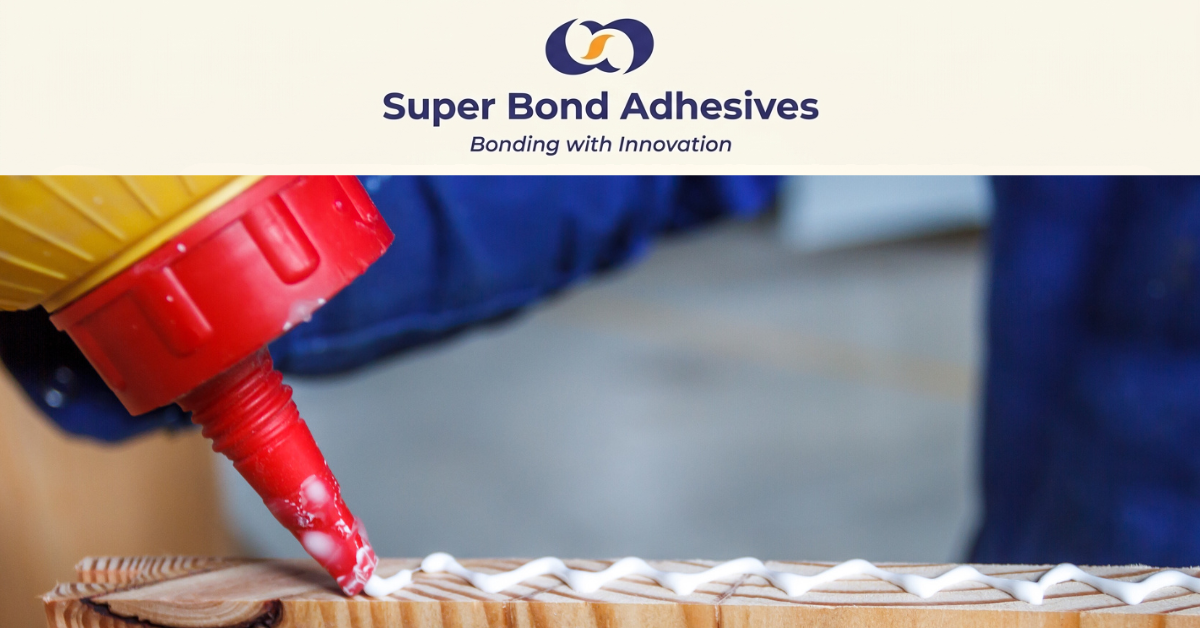
superbond