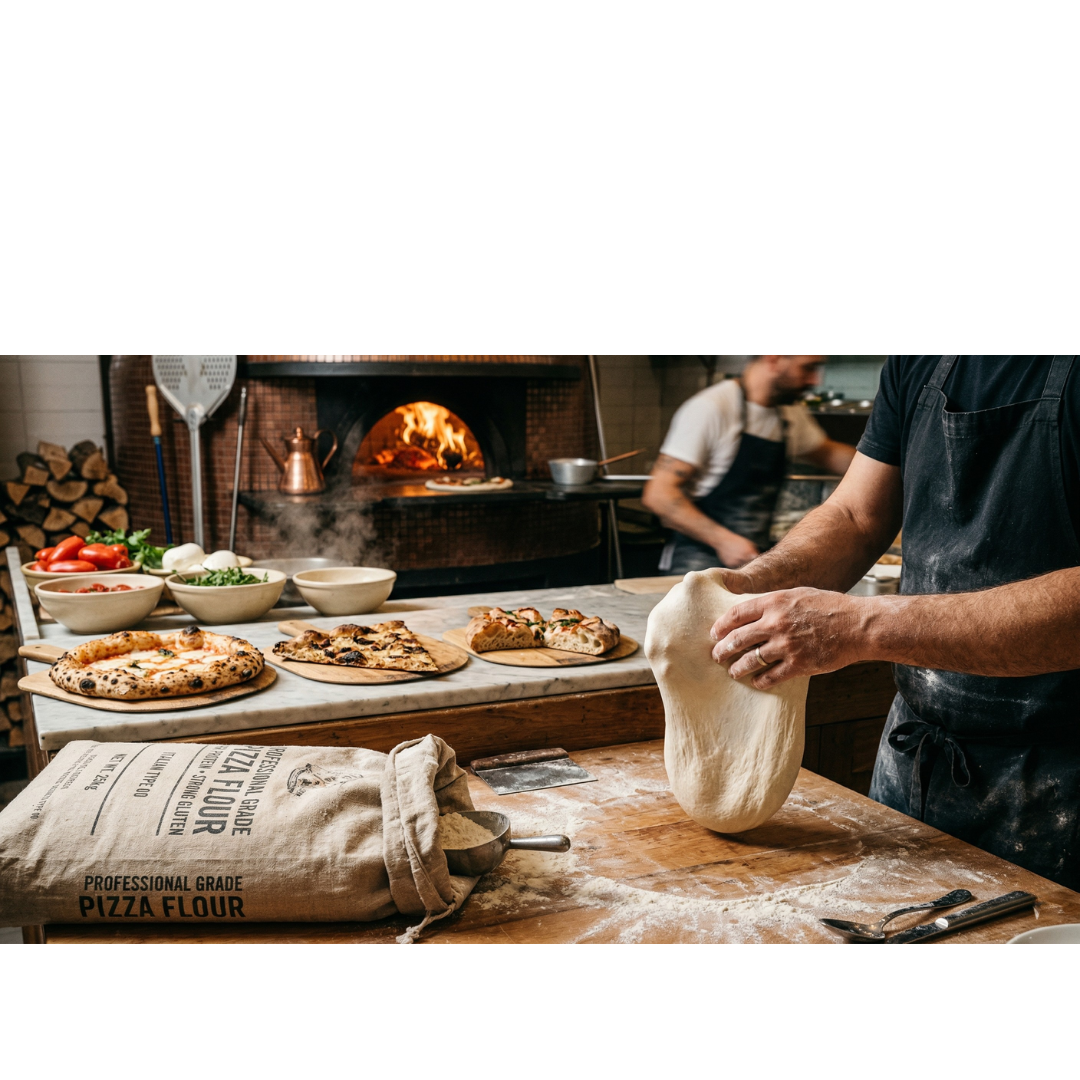
How Does Pizza Flour Affect Pizza Dough Texture?
Texture is what separates a good pizza from a forgettable one. In commercial settings where consistency matters across hundreds of units per shift, the flour you choose directly shapes the chew, crispness, and structure of every crust.
This blog breaks down how specific flour properties influence dough behavior and final texture, giving professional bakers and chefs a clear framework for flour decisions at scale.
Why Protein Content Is the Starting Point
Every flour carries a protein percentage that tells you a great deal about dough performance. For pizza production, protein levels between 11% and 14% are most common in professional-grade pizza flour, though the ideal range depends on the style being produced.
Higher protein flours develop stronger gluten networks, resulting in more chew and better structural integrity. Lower protein flours produce softer, more tender doughs suited for thin crust varieties.
In commercial production, even a 1% shift in protein can ch…
Read more