
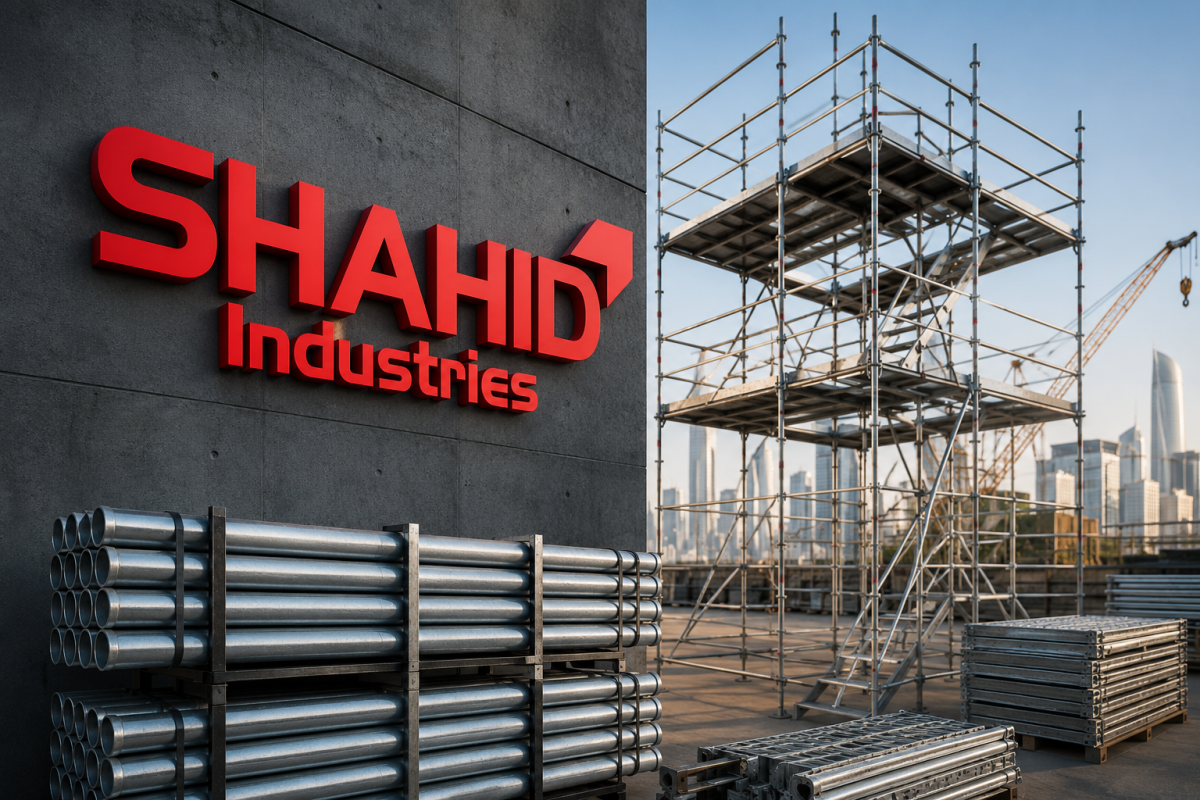
The construction and industrial sectors rely on suitable access equipment to complete projects efficiently and safely. When selecting equipment for construction, maintenance, or renovation work, understanding the role of a scaffolding manufacturer UAE is useful for contractors, project managers, and procurement teams. Manufacturers contribute to the supply chain by producing scaffolding components and systems designed to meet specific requirements for working height, platform capacity, stability, and site conditions.
Scaffolding is used to provide temporary access and working platforms for tasks performed above ground level. Different systems are designed for different applications, making it important to understand their construction, materials, intended uses, and safety requirements before selecting equipment for a project.
What Does a Scaffolding Manufacturer Do?
A scaffolding manufacturer produces equipment and components used to create temporary access structures. Depending on its product range, a manufacturer may produce frames, tubes, braces, platforms, access ladders, base jacks, adjustable components, and connecting accessories.
The manufacturing process generally involves material selection, component fabrication, dimensional checks, assembly compatibility assessments, and quality-control procedures. These steps help ensure that components meet the specifications established for the particular system.
Manufacturers may also provide technical documentation describing assembly procedures, permitted configurations, load ratings, inspection requirements, and maintenance instructions. This information is important because scaffolding performance depends not only on the quality of individual components but also on how the complete system is configured and used.
Common Types of Scaffolding Used in the UAE
Construction projects vary in size, complexity, and working conditions. The type of scaffolding selected should match the work being performed and the requirements of the site.
1. Aluminium Scaffolding
Aluminium scaffolding is known for its relatively lightweight construction compared with many steel systems of similar design. It is used for selected maintenance, painting, installation, inspection, and renovation tasks.
Mobile aluminium towers can be useful when access equipment needs to be repositioned between work areas, provided the system is designed for that purpose and is moved according to its instructions.
2. Steel Scaffolding
Steel scaffolding is widely used in construction and industrial environments where the system must meet particular structural and loading requirements. Its suitability depends on the design, component specifications, working conditions, and intended configuration.
Steel systems may be used for building projects, exterior work, industrial maintenance, and other applications requiring appropriately engineered access structures.
3. Mobile Scaffolding Towers
Mobile scaffold towers generally incorporate castors and are designed to allow movement between work areas. They can be suitable for certain indoor maintenance and finishing activities.
The wheels must be appropriate for the system and secured as instructed during use. Tower height, stabilisers, platform loading, surface conditions, and restrictions on movement must all be considered.
4. Modular Scaffolding Systems
Modular scaffolding uses compatible components that can be assembled into approved configurations for different projects. Such systems may be useful where the required access arrangement changes according to the building design or work area.
Only components approved for the particular system should be used together. Mixing parts from different systems without confirmed compatibility can compromise structural integrity.
Why Manufacturing Quality Matters
The quality of scaffolding components is an important consideration because workers rely on the assembled structure for access and support at height.
Material Selection
Materials should be appropriate for the intended application and the system’s design requirements. Their properties can influence component weight, strength, durability, corrosion resistance, and maintenance needs.
Material choice alone does not establish that a complete scaffolding system is safe. The design, connections, manufacturing tolerances, and permitted assembly arrangements are also important.
Dimensional Accuracy
Frames, braces, connectors, and platforms must be compatible with their intended system. Dimensional inconsistencies can make assembly difficult or create problems with connections and stability.
Manufacturing checks can help identify deviations from specified dimensions and ensure components fit as intended.
Quality Control and Documentation
A responsible manufacturing process should include suitable inspection and quality-control procedures. Buyers should ask for relevant product specifications, technical documentation, and applicable conformity information.
Where standards or certifications are claimed, it is important to verify that the documents apply to the exact product and system being considered.
Applications of Scaffolding Across UAE Industries
A scaffolding manufacturer UAE may serve markets connected to construction, building maintenance, industrial operations, and infrastructure. Scaffolding systems can support various activities when properly selected and used.
Construction and renovation: Temporary platforms can provide access for selected structural, finishing, and repair tasks.
Commercial buildings: Maintenance teams may use scaffolding for ceiling repairs, painting, lighting work, and other elevated maintenance activities.
Industrial facilities: Factories and warehouses may require suitable access equipment for inspections, equipment servicing, and repairs.
Building exterior maintenance: Appropriate scaffolding can support certain façade repair, surface preparation, and painting operations.
Installation projects: Qualified workers may use scaffolding for selected mechanical, electrical, and building-services installations.
Every application requires an assessment of working height, expected loads, ground conditions, nearby hazards, and environmental exposure.
How to Evaluate a Scaffolding Manufacturer in the UAE
Selecting a manufacturer or supplier involves more than comparing prices. Buyers should evaluate whether the equipment and supporting documentation match the project’s needs.
Check the Product Range
Identify whether the manufacturer offers the type of scaffolding required, such as aluminium towers, steel systems, frames, platforms, or compatible accessories. Confirm the intended application of each product.
Review Technical Specifications
Ask for details about load capacity, working height, component dimensions, compatible accessories, assembly procedures, and inspection requirements. The selected configuration should be explicitly permitted by the manufacturer.
Ask About Quality and Compliance
Review available quality-control information and relevant product documentation. Confirm that equipment meets the applicable requirements for the project and location.
Consider Supply and After-Sales Support
Project teams should clarify production or delivery lead times, order quantities, replacement-part availability, and technical support arrangements. These details can influence project schedules and ongoing equipment management.
Compare Total Cost
The purchase price is only one part of the overall cost. Buyers may also need to consider transportation, storage, inspection, maintenance, replacement components, and the expected frequency of use.
Essential Scaffolding Safety Considerations
Even well-manufactured equipment can become unsafe if it is incorrectly assembled, damaged, overloaded, or used in unsuitable conditions.
Before use, inspect relevant components for cracks, deformation, corrosion, missing parts, and damaged connections. Ensure that the supporting surface is suitable and that the system is assembled according to the manufacturer’s instructions.
Platforms must remain within their specified load limits, and required guardrails, access components, braces, and stabilisers must be installed. Assembly, alteration, inspection, and dismantling should be carried out by competent personnel in accordance with applicable regulations and site procedures.
In the UAE, project teams should also consider environmental conditions such as heat, dust, and wind exposure when assessing equipment suitability and work-at-height risks.
Understanding the Role of Shahid Industries
Businesses researching scaffolding equipment in the UAE can visit Shahid Industries to learn more about the company and explore information relevant to their requirements.
Before selecting any scaffolding product, buyers should confirm the available specifications, system compatibility, intended applications, delivery arrangements, and relevant safety documentation. Providing project details such as working height, location, estimated quantity, and type of work can help clarify equipment requirements.
Conclusion
Choosing a suitable scaffolding manufacturer is an important part of planning construction and maintenance work. Material selection, dimensional accuracy, quality control, technical documentation, and component compatibility all contribute to the suitability of scaffolding equipment.
For businesses evaluating a scaffolding manufacturer UAE, the best approach is to compare technical specifications, verify relevant documentation, and match the selected system to the actual working conditions. Combining appropriate equipment with competent assembly, regular inspection, and safe working procedures helps support responsible work-at-height practices.
Naushad Qureshi