
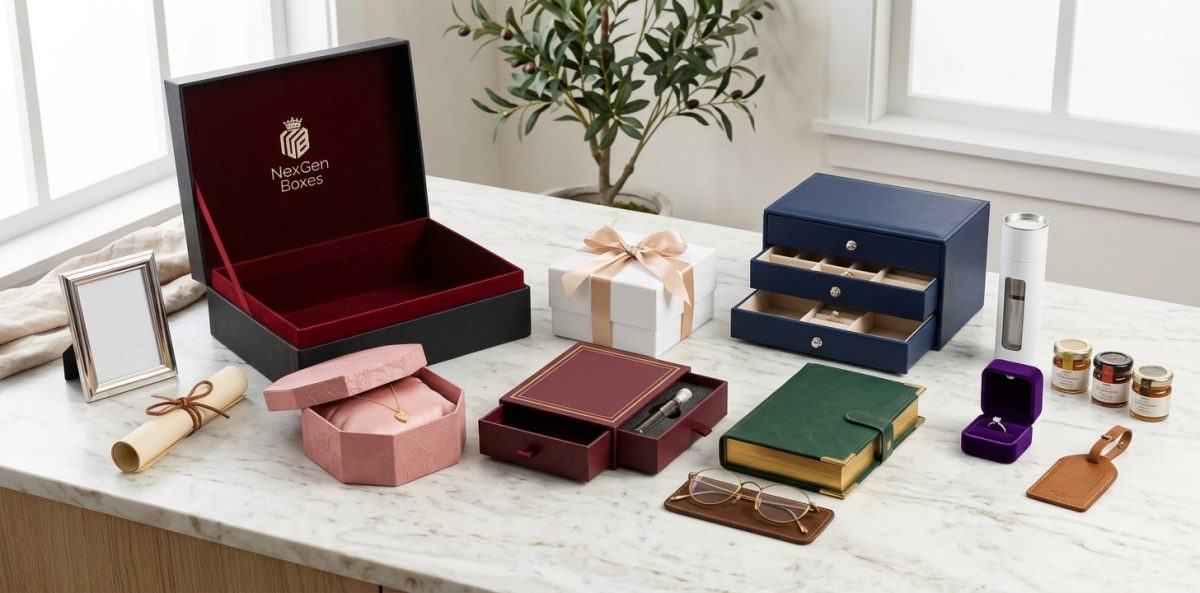
Many brands know they want premium packaging but struggle to turn that vision into a box that works. Artwork usually gets attention first, while the structure, insert, and opening experience are decided later, and that is where problems can start.
Custom rigid boxes wholesale are a useful starting point for brands looking for premium, practical packaging at scale. Booklet rigid boxes open on a hinge like a hardcover book, allowing the product to be revealed in one smooth motion. This guide explains how to design custom rigid boxes around the product itself, covering structure, inserts, finishes, alternatives, and a six-point checklist you can bring to a packaging supplier.
What Makes a Booklet Rigid Box Different?
A booklet rigid box is a rigid box whose lid is attached to the base by a spine and hinge, so it opens like a book. A thick board gives it shape, and an insert holds the product in place. You may also see it called a book-style or hinged rigid box.
The Hinged Book-Style Structure
A rigid box, also called a set-up box, is built to hold its shape. It cannot be flattened for shipping the way a folding carton can. The booklet version has five main parts:
- Lid: the cover that swings open.
- Spine and hinge: the joint that keeps the lid attached to the base.
- Base: the tray that carries the product.
- Closure: a magnet, ribbon or friction fit that keeps the lid shut.
- Insert: the interior piece that positions and protects the product.
How the Opening Experience Works
The lid rotates on one fixed edge, so there is no separate cover to set aside. The customer sees the base and the inside of the lid at the same moment. That makes the first view something you can design on purpose, instead of something that happens by accident.
Start With the Product, Not the Artwork
Before designing the exterior, settle three things: the product size, its weight and where each item will sit inside the box. These decisions limit everything that follows.
Measure Product Dimensions
Measure the product at its widest, longest and tallest points. Include accessories, cables and any retail packaging that will travel inside. Allow a small clearance so the product lifts out easily, but not so much that it rattles. The interior depth must also let the lid close over the product without pressing on it. Send the supplier a physical sample or exact measurements rather than approximate ones.
Consider Product Weight and Protection
Weight matters in a hinged design because the hinge area takes the stress of repeated opening and closing. Heavier or fragile products need a firmer insert and more testing of how the lid sits when open. Ask for a sample and open it many times before approving production.
Plan the Interior Space
Decide what the customer should see first, where each item sits and what goes on the inside of the lid. A sketch of the open box, drawn before any artwork exists, will save revisions later.
Choose the Right Interior Insert
The insert connects four things: the product, the cavity that holds it, the protection it needs and how it is presented. Shape the insert around the product, not the other way around. No single insert material is best for every item.
Single-Product Inserts
One cavity, cut to the shape of the item, works well for watches, devices, bottles and similar products. Foam, molded material and paperboard can all be used, depending on the product.
Multi-Product Compartments
Sets and kits need separate compartments sized to each item. Think about reveal order too. Place the item you want noticed first where the eye lands as the lid opens.
Protective Inserts
Fragile or heavy products often need a cushioning material such as foam. Lighter goods, such as small cosmetics, may be held well enough by a paperboard insert, which some brands prefer for recyclability. Test the fit with the real product.
Plan the Opening Experience
The opening is a sequence, and each step can be designed:
- Hinge direction: choose which side the lid opens from so the product faces the customer correctly.
- Closure: magnets give a firm close and an audible click, but usually add material and assembly cost. Ribbon and friction closures are simpler.
- Lid interior: treat the inside of the lid as a brand surface. It can carry a short product story, usage instructions or care information rather than sitting blank.
- First touch: the outer paper and finish are the first thing a customer handles, so match them to the product.
Choose Materials, Printing and Finishes
Rigid Board
Rigid boxes are commonly built from chipboard about 2 to 3 millimeters thick, wrapped in decorative paper. Board thickness affects weight, feel and cost, so choose it with the product weight in mind.
Printing Options
CMYK builds colors from four process inks and suits full-color artwork. Pantone matching uses specific premixed inks, which helps when a brand color must stay consistent across materials.
Protective and Decorative Finishes
- Soft-touch coating: a velvety, matte feel.
- Foil stamping: metallic foil applied to selected areas, often for logos.
- Embossing and debossing: raised or recessed patterns.
- Spot UV: a glossy coating on chosen areas for contrast.
- Lamination: a matte or gloss film that adds protection against scuffs.
When Less Is More
The strongest premium packaging is not the box with the most finishes. It is the box where structure, product protection and presentation work together. One or two well-chosen finishes usually read as more confident than five competing ones, and each added process typically adds production steps and cost.
When Should You Choose Booklet Boxes?
Choose a booklet box when presentation and protection both matter and a structured reveal suits the product. Industry sources describe rigid boxes as a format generally used to protect small luxury goods. Common booklet applications include:
- luxury products and jewelry
- beauty and skincare sets
- electronics and premium accessories
- gift sets and corporate kits
- collectibles and limited editions
- premium product launches
When Another Box Style May Be Better
A two-piece rigid box is often enough when the product only needs a firm base and a simple lift-off lid. A drawer box suits compact items with a sliding reveal. A folding carton is the better choice when the product does not need a rigid shell, when the budget is tight or when flat shipping matters. Because rigid boxes do not collapse, they take more warehouse space and add weight to freight.
Booklet Boxes vs. Other Rigid Packaging
| Factor | Booklet box | Two-piece rigid box | Drawer box |
| Opening | Hinged | Lift-off | Sliding |
| Presentation | Book-like reveal | Traditional reveal | Layered reveal |
| Interior access | Immediate | Top-down | Pull-out |
| Branding surface | Exterior and interior | Exterior, lid and base | Exterior and drawer |
| Best suited to | Presentation-focused products | Classic premium packaging | Reveal-focused products |
This comparison is qualitative. The right structure depends on the product, the reveal you want and your storage and shipping needs.
The Six-Point Checklist Before Ordering Custom Booklet Boxes
Use this checklist to turn the decisions above into a specification:
- Product dimensions: exact length, width and height, including any accessories.
- Product weight: total weight and any fragile points.
- Structure and closure: hinge direction and the closure type.
- Interior insert: material, number of cavities and product positions.
- Artwork and finish: print method, brand colors and chosen finishes.
- Shipping and storage: how the boxes will be stored, packed and shipped.
What to Ask a Custom Packaging Supplier
With the checklist complete, these questions help you compare suppliers on equal terms:
- Can you provide a prototype or physical sample?
- Which board thicknesses and papers are available?
- Can the insert be customized to my product?
- Which printing and finishing options do you offer?
- How should artwork be prepared, and do you supply a dieline?
- What information do you need to give an accurate quote?
- Can you make the dimensions my product requires?
Once dimensions, inserts and finishing requirements are defined, brands can review custom printed booklet boxes from NexGen Boxes and compare them with their own specification. Also check which validation steps a supplier offers, such as flat-view proofs, 3D mockups and physical samples.
Before requesting a quote, prepare your product dimensions, quantity, insert requirements, artwork files and preferred finish. Request a proof or sample before moving into production.
Conclusion
Good booklet packaging is a coordinated structural, functional and branding decision, not simply a decorated box. Start with the product, design the insert and opening around it, and add finishes only where they support the brand. If the checklist shows that another structure fits better, that is a useful result too.
Frequently Asked Questions
What is a booklet rigid box?
A booklet rigid box is a rigid box with a lid attached to the base by a spine and hinge. It opens like a book and usually holds the product in a fitted insert.
How is a booklet box different from a two-piece rigid box?
A booklet box has an attached, hinged lid. A two-piece box has a separate lid that lifts off the base. The booklet format keeps the parts together and reveals the product as the lid swings open.
What products work well in booklet boxes?
Products that benefit from a structured reveal, such as jewelry, beauty sets, electronics, gift sets, corporate kits and collectibles. Check weight and fragility before deciding.
Can booklet boxes include custom inserts?
Yes. Inserts are normally cut or molded to the product, in materials such as paperboard or foam, with one or several compartments.
What should you consider before ordering custom booklet boxes?
Product dimensions and weight, closure type, insert design, artwork and finish, and shipping and storage needs. Request a sample before production.
Author Bio
I am Sarah, a packaging expert with extensive experience in custom packaging design, branding, and sustainable packaging solutions. I help businesses create packaging that enhances product presentation and improves the overall customer experience.
Sarah Mitchell