
Weeding is one of the most important and labor-intensive activities in Indian agriculture. For small and marginal farmers, removing weeds manually can take considerable time, physical effort, and labor cost. As agricultural mechanization continues to expand, compact machines are helping farmers handle routine field operations more efficiently.
A Mini Power Weeder is one such machine designed for farmers who need a compact and maneuverable solution for inter-row weeding, soil cultivation, and light field maintenance. Its smaller size makes it particularly useful for vegetable farms, nurseries, orchards, kitchen gardens, and other areas where large agricultural machines may be difficult to operate.
This guide explains what a Mini Power Weeder is, how it works, its benefits, applications, important specifications, and what farmers should consider before purchasing one.
What Is a Mini Power Weeder?
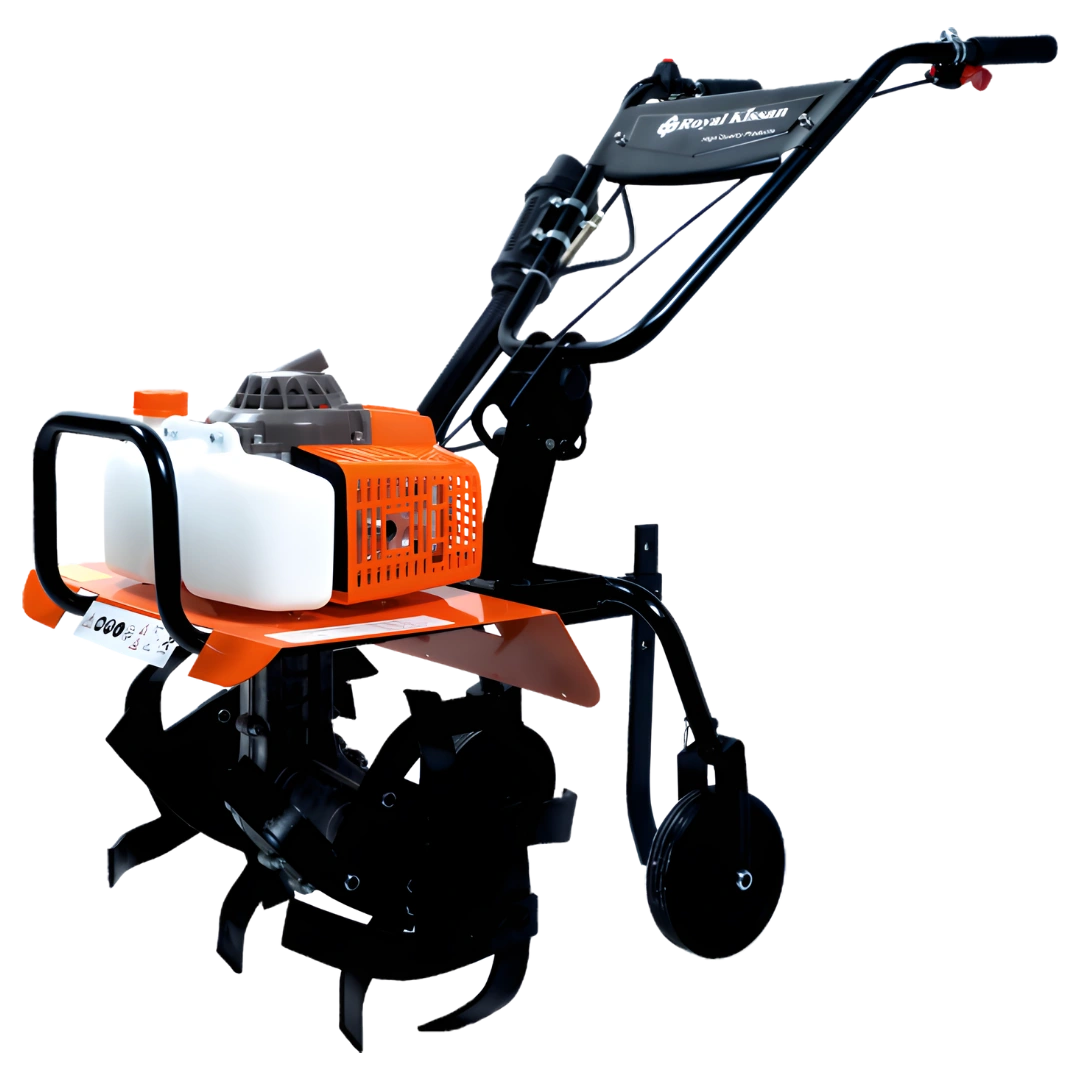
A Mini Power Weeder is a compact motorized agricultural machine used primarily to remove weeds and loosen the upper layer of soil between crop rows. Unlike large tractors and heavy power tillers, mini weeders are designed for maneuverability and precision.
Depending on the model, a mini weeder may use a petrol engine or an electric/battery-powered system. Petrol-powered machines are useful in locations where electricity is not readily available, while electric models can be suitable for gardens, nurseries, and smaller controlled environments.
The compact design allows the operator to guide the machine through relatively narrow spaces without disturbing the main crop. Some models can also support different attachments for cultivation and other light agricultural operations.
Why Is Weeding Important for Indian Farmers?
Weeds compete with crops for essential resources such as water, nutrients, sunlight, and growing space. If weeds are not controlled at the appropriate stage, they can interfere with crop development and make field management more difficult.
Traditional manual weeding requires workers to bend or squat for long periods. During peak agricultural seasons, finding sufficient farm labor can also become challenging in many regions.
Mechanization provides an alternative. A Mini Power Weeder can help reduce the physical workload associated with routine weeding and allow farmers to complete the operation more consistently.
The machine is particularly useful where a conventional tractor or larger power weeder would be too large for the available working space.
How Does a Mini Power Weeder Work?
The basic working principle is relatively simple. The machine uses rotating blades, tines, or similar cultivation components to disturb the soil surface and cut or uproot weeds.
The operator walks behind the machine and controls its direction using the handle. As the rotating components move through the soil, weeds are disturbed or cut while the upper soil layer is loosened.
Depending on the machine design, important specifications can include:
- Engine capacity or motor power
- Working width
- Working depth
- Machine weight
- Fuel type
- Starting mechanism
- Handle adjustment
- Blade or tine configuration
- Available attachments
For example, compact mini weeders are generally designed for narrower working areas, while larger power weeders can cover wider rows and handle more demanding field conditions.
Where Can a Mini Power Weeder Be Used?
One of the biggest advantages of a Mini Power Weeder is its versatility in smaller agricultural spaces.
1. Vegetable Farming
Vegetable crops are often cultivated in rows with limited space between plants. A compact weeder can help farmers manage weeds between rows while reducing manual effort.
Crops such as onions, garlic, vegetables, and other row-grown horticultural crops may benefit from appropriately sized weeding equipment.
2. Orchards
Orchards require regular management of the soil around trees. A small machine can be easier to maneuver between tree rows than larger agricultural equipment.
3. Nurseries
Plant nurseries often contain closely spaced plants and narrow working areas. A compact machine can be useful for light soil cultivation and weed management where a tractor cannot operate comfortably.
4. Kitchen and Small Farms
Farmers managing small plots may not require a large power tiller. A Mini Power Weeder can provide a more compact mechanization option for routine field maintenance.
5. Raised-Bed Cultivation
Raised beds are widely used for certain vegetable and horticultural crops. Because the working area can be restricted, machine size and working width become important considerations.
Benefits of Using a Mini Power Weeder
Reduces Manual Labor
One of the primary benefits is reducing dependence on manual hoeing and hand weeding. This can save physical effort and help farmers manage their available labor more efficiently.
Easy Maneuverability
The compact construction makes a mini weeder easier to guide through narrow rows, small plots, and spaces between trees.
Faster Field Operations
Compared with completely manual weeding, mechanized equipment can help farmers cover a larger area in less time, depending on soil conditions, crop spacing, machine capacity, and operator experience.
Soil Cultivation
Many models do more than simply disturb weeds. Their rotating blades can loosen the upper layer of soil, helping with routine intercultural operations.
Suitable for Small Farms
Large machinery is not always practical for fragmented landholdings. A Mini Power Weeder can provide a mechanization option for farmers working on smaller plots.
Mini Power Weeder vs. Power Tiller
Although the names may sound similar, a mini power weeder and a power tiller are intended for different applications.
A power tiller is generally a larger and more powerful machine used for operations such as primary tillage, seedbed preparation, puddling, and other heavier agricultural work.
A Mini Power Weeder, on the other hand, focuses more on precision operations such as inter-row weeding and light soil cultivation.
Therefore, the right choice depends on the farmer’s requirements. Farmers primarily looking for crop-row maintenance may consider a mini weeder, while those requiring heavier soil preparation and multiple operations may need a power tiller.
What Should You Check Before Buying a Mini Power Weeder?
Buying agricultural equipment online requires more than comparing prices. Farmers should examine the machine according to their crop, land conditions, and intended usage.
1. Working Width
Check whether the working width matches the spacing between your crop rows. A machine that is too wide can damage plants or become difficult to operate.
2. Engine or Motor Power
Choose power according to the soil condition and workload. A small machine may be sufficient for light cultivation, while harder soil may require a more powerful model.
3. Machine Weight
Weight affects transportation and maneuverability. A lightweight model can be easier to handle, particularly in smaller fields.
4. Fuel Type
Petrol models can provide convenient operation where electrical access is limited. Battery or electric machines may be appropriate for smaller areas where charging facilities are available.
5. Spare Parts and Service
After-sales support is an important consideration. Before purchasing, confirm the availability of replacement blades, belts, filters, engine components, and other commonly required parts.
6. Warranty
Review the manufacturer’s warranty terms carefully. Check which components are covered and whether service must be obtained through an authorized dealer.
7. Dealer Support
Buying from a dealer with agricultural machinery experience can make installation, operation, maintenance, and spare-parts support easier.
Is a Mini Power Weeder Worth Considering for Small Farms?
For farmers managing narrow crop rows, vegetable plots, orchards, nurseries, or small agricultural holdings, a Mini Power Weeder can be a practical mechanization option.
The main advantage is not simply engine power. It is the combination of compact dimensions, maneuverability, and the ability to perform routine weeding and light cultivation without requiring a full-size tractor.
However, farmers should select a machine based on actual field conditions rather than choosing solely by price or horsepower. Row spacing, soil type, crop type, working area, available service support, and spare-parts availability should all be considered.
Conclusion
Agricultural mechanization does not always mean purchasing larger and more powerful machinery. For many Indian farmers, the right solution can be a machine specifically designed for a particular operation.
A Mini Power Weeder provides a compact approach to weed management and light soil cultivation, particularly in vegetable fields, orchards, nurseries, raised beds, and small farms. By reducing manual effort and improving the convenience of routine field operations, it can become a useful addition to a small farm’s equipment lineup.
Before purchasing online, compare the machine’s working width, power, weight, attachments, warranty, spare-parts availability, and dealer support. Most importantly, make sure the selected model is suitable for your crop spacing and soil conditions.
With the right machine and proper operation, compact agricultural equipment can help bring practical mechanization to farms where larger machinery is not always suitable.
Royalkissan