
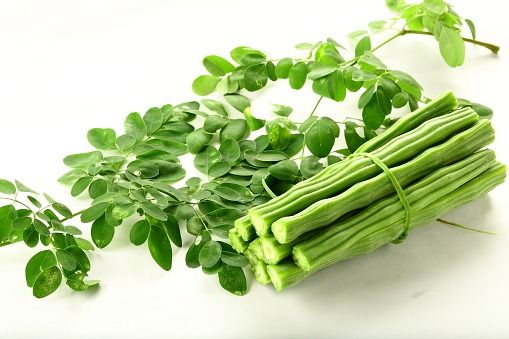
Moringa, also called Moringa oleifera or drumstick tree, has been part of Indian food traditions for generations. Today, moringa leaves and moringa powder are often discussed as nutrient-rich foods.
So, what does moringa actually provide?
Moringa leaves contain protein, dietary fiber, vitamins, minerals, and other plant compounds. The exact amount varies depending on whether you eat fresh leaves, dried leaves, or leaf powder. Growing conditions and processing also affect the nutrient profile.
That makes moringa interesting from a nutrition point of view, but it should be treated as one part of a balanced diet, not as a replacement for a varied diet or prescribed treatment.
Quick Answer
Moringa leaves provide several nutrients, including protein, fiber, calcium, potassium, magnesium, iron, and vitamins such as A, C, E, and some B vitamins. Dried moringa and moringa powder are more concentrated than fresh leaves because much of the water is removed during drying.
The nutritional value can vary based on the plant variety, growing conditions, harvesting stage, and processing method.
What Is Moringa?
Moringa oleifera is a plant commonly known as the drumstick tree.
Different parts of the plant are used in food, including:
- Leaves
- Pods
- Seeds
- Flowers
For nutrition, the leaves and leaf powder are particularly interesting.
You may have seen moringa leaves added to dal, vegetables, soups, chutneys, or other Indian dishes. Moringa powder is also used in smaller quantities and can be mixed into foods or drinks.
One thing to keep in mind is that fresh leaves and moringa powder are not nutritionally identical.
Once the leaves are dried, their water content falls, so nutrients such as protein and minerals become more concentrated by weight. At the same time, some nutrients can be affected by drying and processing.
Which Nutrients Does Moringa Provide?
Moringa contains a mix of macronutrients and micronutrients.
Here’s a simple look at the main ones.
| Nutrient | Why it matters |
| Protein | Supports muscles, tissues and many body functions |
| Fiber | Supports digestion and bowel regularity |
| Calcium | Important for bones and teeth |
| Iron | Needed to make hemoglobin |
| Magnesium | Involved in many body processes |
| Potassium | Helps with fluid balance and normal muscle function |
| Vitamin A compounds | Important for vision and immune function |
| Vitamin C | Supports normal immune function and helps absorb non-heme iron |
| Vitamin E | Has antioxidant functions |
| B vitamins | Support energy metabolism and other cellular processes |
The amount of each nutrient can vary considerably between samples, especially between fresh and dried leaves.
- Moringa Contains Protein
When people think about leafy vegetables, protein usually isn’t the first thing that comes to mind.
Moringa is a little different.
Research reviews report notable protein content in moringa leaves, particularly when the leaves are dried. One review reported around 27 g of protein per 100 g of leaf powder, although values vary between products and studies.
Does that mean you can replace dal, eggs, paneer, or other protein sources with moringa?
Not really.
The quantity you normally consume as moringa powder is much smaller than 100 grams.
Think of moringa as a nutrient-containing addition to your diet, not your main protein source.
- Moringa Provides Dietary Fiber
Moringa leaves also contain dietary fiber.
Fiber is useful for digestive health and can contribute to fullness.
Dried leaves and leaf powder contain more fiber per 100 grams than fresh leaves because drying concentrates the nutrients. Studies have reported wide variation in fiber content depending on the type of moringa and processing method.
If you’re increasing your fiber intake, don’t suddenly add large amounts of moringa powder.
A better approach is to increase fiber gradually and drink enough fluids.
Your overall diet matters more than one ingredient.
- Moringa Is a Source of Calcium
Calcium is another mineral found in moringa leaves.
It plays an important role in:
- Bone health
- Teeth
- Muscle function
- Normal nerve signalling
Some studies report high calcium concentrations in dried moringa leaves. But this is another area where you need to look at the whole diet rather than one food.
If you need more calcium, foods such as dairy products, calcium-set tofu, certain fortified foods, and other calcium-rich foods can also contribute.
Moringa can be one part of that picture.
- What About Iron in Moringa?
Moringa leaves contain iron.
This is one reason moringa is often discussed in conversations about women’s nutrition and iron intake.
Iron is needed to make hemoglobin, which helps red blood cells carry oxygen.
But here’s an important distinction.
Having iron in a food does not automatically mean that eating that food will correct iron deficiency anemia.
The amount consumed, absorption, overall diet, and the reason for the deficiency all matter.
If a blood test shows iron deficiency, don’t replace prescribed iron treatment with moringa powder without speaking to your healthcare professional.
A systematic review of moringa supplementation found some promising findings in specific groups, but also concluded that the human evidence is limited and that larger, stronger studies are needed.
- Moringa Contains Vitamin A Compounds
Moringa leaves contain vitamin A-related compounds, including carotenoids.
Vitamin A has several important functions.
It supports:
- Normal vision
- Immune function
- Growth and development
- Maintenance of body tissues
The amount can vary depending on the form of moringa and how it is processed. Research has found vitamin A-related compounds in both fresh and dried leaves.
Again, variety matters.
You don’t need to rely on one green food to meet your vitamin A needs.
Carrots, sweet potatoes, leafy vegetables, and other foods can also contribute carotenoids.
- Moringa Contains Vitamin C
Fresh moringa leaves can contain vitamin C.
Vitamin C has several roles in the body. It supports normal immune function and also helps the body absorb non-heme iron from plant foods.
One interesting point is that processing can affect vitamin C.
Research comparing fresh and dried moringa leaves shows a substantial difference in vitamin C content, which is one reason you should not assume that fresh leaves and powder have identical nutritional profiles.
So when someone says, “Moringa has vitamin C,” the better question is:
In what form, how much, and how was it processed?
That’s a much more useful way to think about nutrition.
- Moringa Provides Vitamin E
Vitamin E is another nutrient found in moringa leaves.
Vitamin E acts as an antioxidant and supports normal immune function and other processes in the body.
Research has reported vitamin E in both fresh and powdered moringa, although processing can change the amount present.
This is a good example of why nutrition articles should avoid treating a food as having one fixed nutrient profile.
The plant’s variety, growing conditions, storage, and processing can all make a difference.
- What Minerals Are Found in Moringa?
Moringa leaves contain several minerals.
These include:
- Calcium
- Potassium
- Magnesium
- Iron
- Phosphorus
- Zinc
- Copper
Studies have found that dried leaves and powder can contain higher concentrations of several minerals compared with fresh leaves.
Each mineral has a different role.
For example:
Magnesium is involved in hundreds of biochemical reactions.
Potassium helps support normal muscle and nerve function and fluid balance.
Iron is required for hemoglobin production.
Calcium supports bones, teeth, muscles, and nerve function.
This is one reason moringa can be a useful addition to an otherwise varied diet.
Fresh Moringa Leaves vs Moringa Powder
Which one is better?
There isn’t one simple answer.
| Feature | Fresh leaves | Moringa powder |
| Water content | High | Much lower |
| Nutrient concentration by weight | Lower | Higher |
| Convenience | Needs preparation | Easy to store and use |
| Fiber | Present | More concentrated |
| Vitamin content | Can be higher for some nutrients | Some nutrients may decrease during processing |
| Typical use | Curries, dal, vegetables | Smaller amounts in foods or drinks |
Drying removes water and concentrates many nutrients. But certain nutrients, especially vitamin C, can be affected during processing.
So don’t assume that “powder is always better.”
The best choice often comes down to how you actually use it.
How Can You Add Moringa to Your Diet?
If you enjoy moringa, there are simple ways to include it.
Try fresh leaves in:
- Dal
- Vegetable preparations
- Soups
- Chutneys
- Parathas
- Curries
If using moringa powder:
You could add a small amount to:
- Dal
- Smoothies
- Soups
- Curd-based dishes
- Homemade chutneys
Start with a small quantity, especially if you are not used to high-fibre foods.
And don’t feel that you need to take it every day just because it is considered nutritious.
Your overall eating pattern matters much more.
Common Moringa Nutrition Mistakes
Moringa has gained a lot of attention online. That has also created some confusion.
Mistake 1: Treating moringa as a complete food
Moringa contains many nutrients, but it cannot replace a varied diet.
Mistake 2: Assuming more is better
Taking large amounts of a food or supplement isn’t automatically healthier.
Mistake 3: Using moringa to treat a deficiency
If you have confirmed iron, vitamin D, B12, or another nutrient deficiency, speak with a healthcare professional about appropriate treatment.
Mistake 4: Ignoring the rest of your diet
Adding moringa powder to an otherwise poor diet doesn’t suddenly make the diet balanced.
Mistake 5: Assuming all moringa powders are identical
Nutrient content can vary with plant variety, growing conditions, harvesting, drying, and processing.
Can Moringa Replace Supplements?
Not necessarily.
If a doctor or dietitian has recommended a supplement because you have a confirmed deficiency or increased requirement, don’t stop it and switch to moringa without discussing it with them.
Food and supplements serve different purposes.
For example, someone with significant iron-deficiency anemia may need a specific iron treatment plan. Adding moringa to meals can be part of a nutritious diet, but it should not be presented as a substitute for medical treatment.
Who Should Be Careful With Moringa?
Moringa is a food, but concentrated products and supplements deserve more care.
If you are:
- Pregnant
- Breastfeeding
- Taking regular medication
- Managing diabetes
- Managing blood pressure
- Being treated for a medical condition
Speak with your doctor or dietitian before using concentrated moringa supplements regularly.
This is especially important because supplement doses can be much higher than the amount you would normally consume as a food.
When Should You Speak to a Dietitian?
If you’re adding moringa because you’re trying to lose weight, improve your nutrition, manage a health condition, or correct a nutrient deficiency, it’s worth looking at your whole diet first.
A Dietitian in Bangalore can assess your food intake and help you understand where moringa may fit into your meals.
For example, if someone says:
“I started taking moringa powder because my iron is low.”
A dietitian would likely want to know:
- What did your blood tests show?
- What foods do you normally eat?
- Are you taking any supplements?
- How much moringa are you using?
- Are there digestive symptoms?
- What could be causing the deficiency?
That conversation is much more useful than simply asking whether moringa is “good” or “bad.”
Frequently Asked Questions
What nutrients are found in moringa?
Moringa leaves contain protein, dietary fiber, calcium, potassium, magnesium, iron, phosphorus, zinc, and several vitamins. Research also identifies vitamin A-related compounds, vitamin C, vitamin E, and B vitamins in moringa leaves. The amounts vary depending on whether the leaves are fresh, dried, or powdered and how the plant was grown and processed.
Is moringa a good source of protein?
Moringa leaves contain protein, and dried leaves or powder can have a relatively high protein concentration by weight. Still, people normally consume moringa in much smaller amounts than a serving of dal, eggs, dairy, fish, meat, or another main protein source. Moringa can contribute to your diet, but it should not be treated as your primary protein source.
Does moringa contain iron?
Yes. Moringa leaves contain iron, with dried leaves and powder generally showing higher concentrations by weight than fresh leaves. But the presence of iron does not mean moringa can treat iron-deficiency anemia. If you have a confirmed deficiency, speak with a healthcare professional about the right treatment.
Is fresh moringa better than moringa powder?
Not always. Fresh leaves contain more water, while drying concentrates many nutrients. At the same time, some nutrients can be affected during drying. The better option depends on how you use moringa and your overall diet. Fresh leaves can be included in meals, while powder can be convenient in smaller amounts.
Can I take moringa every day?
Moringa can be included as a food, but there is no universal daily amount that is right for everyone. Concentrated powders and supplements are different from eating moringa as part of a meal. If you are pregnant, breastfeeding, taking medication, or managing a health condition, discuss regular use with a qualified healthcare professional.
Can moringa cure nutritional deficiencies?
No. Moringa provides several nutrients, but it should not be presented as a cure for nutritional deficiencies. The right treatment depends on the type and severity of the deficiency and its underlying cause. For example, confirmed iron-deficiency anemia may require medical evaluation and prescribed iron treatment rather than relying on food alone.
Final Takeaway
Moringa is a nutrient-rich leafy food that can contribute protein, fibre, vitamins, minerals, and plant compounds to your diet.
But it doesn’t need to be treated like a miracle food.
Fresh moringa leaves can be added to everyday Indian meals. Moringa powder can be convenient when fresh leaves aren’t available. Just remember that the nutrient content changes with the form and processing method.
The bigger picture matters.
A diet containing vegetables, fruits, pulses, whole grains, protein-rich foods, healthy fats, and other nutrient-dense foods will give you a much wider range of nutrients than any single ingredient.
If you’re considering moringa for a specific health or nutrition goal, getting advice from a qualified Dietitian in Bangalore can help you decide how it fits into your individual diet.
Sayma Raza