
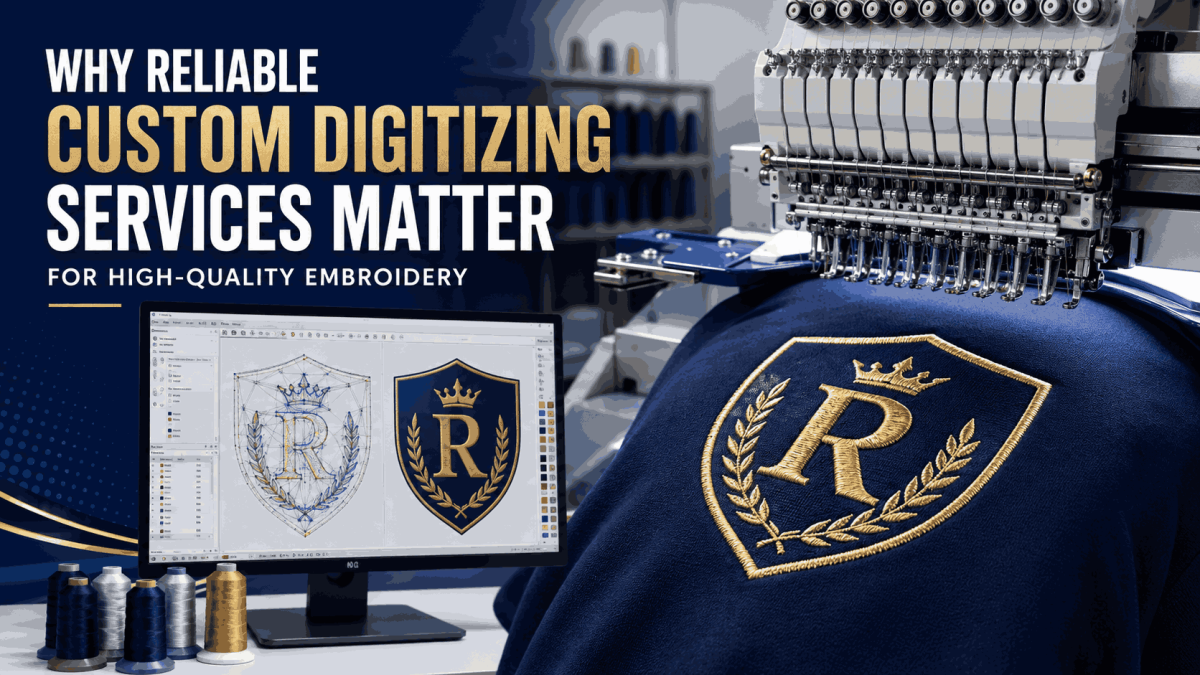
High-quality machine embroidery starts with a well-prepared embroidery file. Even when businesses have advanced embroidery machines, quality thread, and suitable fabrics, the final result can suffer if the design has not been digitized correctly. reliable custom digitizing services help transform logos, artwork, names, and other graphics into machine-readable files that are prepared according to the design, fabric, size, and production requirements.
Custom digitizing is different from simply converting an image into an embroidery format. Every design has its own shapes, lettering, stitch requirements, and level of detail. A professional digitizer evaluates these characteristics and creates a stitch plan that allows the embroidery machine to reproduce the artwork as accurately as possible.
For businesses producing uniforms, promotional apparel, caps, jackets, bags, patches, and other embroidered products, reliable digitizing can improve consistency and reduce common production problems.
What Are Custom Digitizing Services?
Custom digitizing involves creating an embroidery file specifically for a particular design and its intended application.
The digitizer decides how each part of the artwork should be stitched. This includes selecting stitch types, setting density, determining stitch direction, creating underlay, arranging stitch sequencing, and applying pull compensation.
The file is then prepared in the format required by the embroidery machine, such as DST, PES, EXP, JEF, VP3, or another supported format.
Because each project can have different requirements, custom digitizing provides more control than using generic or automatically generated files.
Why Reliable Digitizing Matters
An embroidery machine follows the instructions contained in the digital file. If the file has incorrect stitch settings, the machine may reproduce those problems during production.
Poor digitizing can result in thread breaks, uneven coverage, fabric puckering, distorted shapes, excessive jump stitches, and unreadable small lettering.
Reliable custom digitizing focuses on how the design will actually behave when stitched. The digitizer considers the physical characteristics of embroidery rather than treating the artwork as a simple digital image.
1. Accurate Stitch Placement
Precise stitch placement helps preserve the structure of the original design.
A professional digitizer creates stitch paths that follow the intended shapes and outlines. This reduces gaps, unnecessary overlaps, and uneven borders.
Accurate placement is especially important for logos with geometric shapes, detailed outlines, or multiple design sections.
When stitches are positioned correctly, the final embroidery can reproduce the artwork with greater consistency.
2. Better Stitch Density
Stitch density has a direct effect on embroidery quality.
Too many stitches in one area can create heavy thread buildup, stiffness, fabric puckering, and increased thread breaks. Too few stitches can produce weak coverage and allow the fabric to show through.
Custom digitizing allows density to be adjusted according to the design, fabric, thread, and finished size.
This creates a better balance between coverage, appearance, and production performance.
3. Improved Fabric Compatibility
Embroidery does not behave the same way on every fabric.
Cotton, polyester, denim, fleece, canvas, towels, caps, and stretch garments have different characteristics. Some materials are stable, while others move or stretch during stitching.
Reliable custom digitizing takes these differences into account. The digitizer can adjust underlay, density, stitch direction, and compensation to suit the intended material.
This can reduce puckering, distortion, and uneven stitch coverage.
4. Cleaner Small Details
Small lettering and fine design elements can be challenging to reproduce with thread.
A thin line or tiny letter that looks clear on a computer screen may become difficult to read after stitching.
Professional digitizers understand these limitations and adjust small details when necessary. They may modify spacing, stitch width, or shapes to improve readability.
In some cases, simplifying a tiny element can produce a better embroidered result than trying to reproduce every detail of the original artwork.
5. Better Pull Compensation
Embroidery stitches can cause fabric and design elements to move during production.
This effect can make circles look slightly distorted or cause borders and lettering to shift from their intended proportions.
Pull compensation helps the digitizer account for this behavior when preparing the file.
Proper compensation can help the finished embroidery remain closer to the original design, especially on fabrics that move significantly during stitching.
6. Efficient Stitch Sequencing
The order of stitches affects both quality and production efficiency.
A poorly sequenced design may require excessive trims, jump stitches, thread changes, and machine movements. It may also cause some design elements to shift during stitching.
Custom digitizing allows the stitch sequence to be planned logically.
Efficient sequencing can reduce unnecessary machine operations and make production more consistent, especially for businesses handling large embroidery orders.
7. More Reliable Repeat Production
Businesses often need to embroider the same logo repeatedly.
A professionally prepared file can serve as a reliable production asset for future orders. Once the design has been tested and adjusted for a specific application, the same file can be reused when the same size and material are required.
This helps businesses maintain consistent logo appearance across uniforms, promotional apparel, caps, and other products.
Custom Digitizing for Business Logos
Business logos require careful treatment because they represent a company’s visual identity.
Important elements such as lettering, proportions, colors, borders, and shapes need to remain recognizable after conversion into stitches.
Custom digitizing allows the artwork to be adapted to the physical limitations of embroidery while preserving its key characteristics.
This is particularly important for logos containing small text or complex shapes.
Why One File May Not Work for Every Size
A common mistake is assuming that one embroidery file can be used for every logo size.
A small chest logo may require different stitch settings from a large jacket-back design. Small versions often need simplified details, while larger versions can accommodate more complex elements.
Using size-specific files can help maintain consistent quality across different products.
The Importance of Underlay
Underlay provides a foundation beneath the visible stitches.
It helps stabilize fabric and supports the top layer of embroidery. The appropriate underlay depends on the fabric, design size, stitch type, and level of detail.
Too little support may result in unstable embroidery, while excessive underlay can contribute to unnecessary bulk.
Professional digitizing considers the balance required for the intended application.
Manual Digitizing vs. Automatic Conversion
Automatic digitizing software can generate embroidery files quickly, but automated results may not account for the specific requirements of a design or fabric.
Common problems can include excessive stitch density, inefficient sequencing, unsuitable underlay, and poor treatment of small lettering.
Manual digitizing gives the professional greater control over individual design elements. The digitizer can evaluate how the artwork should be stitched and make adjustments based on actual production requirements.
For detailed business logos and commercial embroidery, this additional control can improve reliability.
How to Choose a Reliable Custom Digitizing Service
When selecting a digitizing provider, businesses should evaluate experience and actual embroidery results.
Look for a service that provides manual digitizing, quality control, multiple machine formats, revision support, and clear communication.
Reviewing stitched samples can be more useful than looking only at digital previews because physical embroidery reveals how the file performs on fabric.
Before starting a project, provide the original artwork, finished size, fabric type, placement, machine format, and any specific production instructions.
Common Mistakes to Avoid
Businesses can avoid many embroidery problems by providing complete project information.
Do not assume that a low-resolution image will automatically produce a good embroidery file. Avoid using the same file for dramatically different sizes and do not ignore the characteristics of the fabric.
Choosing a digitizing provider based only on the lowest price can also result in additional production costs if the file requires extensive corrections or produces inconsistent embroidery.
Quality Testing Before Production
A test stitch-out is an important quality-control step, particularly for new logos, unusual fabrics, or large production orders.
Testing allows businesses to evaluate stitch density, lettering, alignment, thread coverage, and fabric behavior.
If an issue appears during testing, the digitizer can adjust the file before the complete order is produced.
This approach can reduce material waste and prevent large batches of incorrectly embroidered products.
Conclusion
Reliable custom digitizing services play an important role in producing high-quality embroidery. Accurate stitch placement, balanced density, suitable underlay, pull compensation, fabric-specific adjustments, and efficient sequencing all contribute to better results.
Professional digitizing can also reduce thread breaks, fabric puckering, excessive trims, and other production problems. For businesses that regularly embroider logos on uniforms, caps, jackets, bags, and promotional apparel, a properly prepared file provides a reliable foundation for consistent production.
iDigitize provides reliable custom digitizing services designed to create accurate, production-ready embroidery files for business logos, apparel, patches, and other embroidery applications.
Frequently Asked Questions
Q1. What are reliable custom digitizing services?
Reliable custom digitizing services create embroidery files specifically according to the artwork, fabric, size, machine, and production requirements of a project.
Q2. Why does custom digitizing improve embroidery quality?
Custom digitizing allows stitch density, underlay, sequencing, stitch direction, and compensation to be adjusted according to the specific design and material.
Q3. Can custom digitizing improve small lettering?
Yes. A professional digitizer can adjust stitch width, spacing, density, and design details to make small lettering more readable.
Q4. Does fabric type affect custom digitizing?
Yes. Different fabrics require different approaches to density, underlay, stitch direction, and compensation.
Q5. Should I test a digitized design before bulk production?
Yes. A test stitch-out can identify problems with density, lettering, alignment, and fabric behavior before a large production run.
Q6. Can one custom digitized file be used for every size?
Not always. Significantly different embroidery sizes may require separate files with adjusted stitch settings and design details.
Q7. What information should I provide to a custom digitizer?
Provide the original artwork, finished embroidery size, fabric type, placement, machine format, thread requirements, and any special production instructions.
idigitize