
In today’s competitive manufacturing landscape, efficiency, consistency, and precision are critical. Welding automation has emerged as a cornerstone for modern factories seeking to improve throughput, reduce labor costs, and maintain high-quality standards. From automotive assembly lines to heavy industrial fabrication, automated welding solutions empower engineers and production managers to achieve repeatable, reliable results.
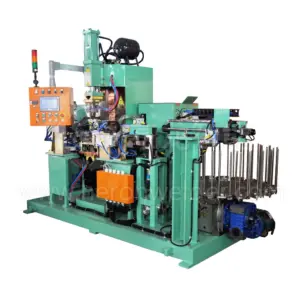
Heron Welder, a global leader in industrial welding and metal-joining technology, provides a full spectrum of automated welding equipment, including resistance welding machines, clinching systems, self-pierce riveting, and complete production lines tailored to OEMs, integrators, and manufacturers.
What Is Welding Automation?
Welding automation refers to the use of machines and robotic systems to perform welding tasks with minimal human intervention. It combines mechanical devices, programmable controllers, and advanced welding technology to execute repetitive or complex welds with high accuracy.
Automated welding systems typically include:
-
Robotic arms or gantries for movement and positioning.
-
Welding guns and electrodes tailored for specific materials and processes.
-
Controllers and software to manage parameters, sequences, and quality monitoring.
-
Sensors and feedback systems for real-time process optimization.
By automating welding processes, manufacturers can achieve superior quality, reduce human error, and handle high-volume production efficiently.
Key Principles of Welding Automation
Understanding the principles behind automated welding helps manufacturers select the right solutions:
-
Consistency and Repeatability
Automated systems ensure each weld is identical, reducing variation caused by manual welding. This is especially important in industries such as automotive and aerospace. -
Process Control
Parameters such as current, voltage, force, and speed are precisely controlled through programmable logic controllers (PLCs) or welding-specific controllers. -
Integration with Production Lines
Welding automation can be seamlessly integrated into broader manufacturing lines, enabling synchronized assembly and reducing cycle times. -
Data-Driven Optimization
Modern systems monitor real-time performance, allowing engineers to analyze and fine-tune processes for maximum efficiency and minimum defects.
Common Welding Automation Processes
Heron Welder offers a variety of automated welding processes suited for different applications:
Resistance Welding Automation
Resistance welding, including spot, projection, seam, MFDC, and capacitor discharge welding, uses electrical resistance to generate heat and form welds. Automated resistance welding ensures consistent weld quality, reduces material waste, and is ideal for sheet metal assembly.
Self-Pierce Riveting (FSPR)
For joining multi-layered or coated materials without pre-drilling, FSPR systems automate the riveting process. This solution is widely used in automotive and lightweight structural manufacturing.
Clinching Systems
Mechanical clinching is a cold-joining method suitable for high-strength steels and aluminum. Automated clinching machines from Heron offer high-speed production and minimal material distortion.
Robotic Welding Cells
Robotic systems can combine multiple welding techniques, including MIG, TIG, and spot welding, into a flexible automated cell, capable of handling complex geometries and high-mix production.
Benefits of Implementing Welding Automation
Investing in welding automation provides tangible advantages for manufacturers:
-
Enhanced Productivity: Automated systems operate continuously with minimal downtime.
-
Improved Quality: Consistent welds reduce rework and scrap rates.
-
Safety: Reduces operator exposure to fumes, heat, and repetitive strain.
-
Scalability: Production lines can easily adapt to increased output or product variations.
-
Cost Efficiency: While initial investment is higher, long-term savings in labor, scrap, and cycle time are significant.
Heron Welder’s integrated solutions ensure that these benefits are maximized for OEMs and manufacturing facilities worldwide.
Best Practices for Welding Automation
To optimize automated welding performance, consider the following best practices:
-
Process Selection: Choose the right welding method based on material type, thickness, and production volume.
-
System Integration: Ensure welding machines, robots, and controllers are seamlessly integrated for synchronized operation.
-
Regular Maintenance: Prevent downtime by scheduling maintenance of electrodes, tooling, and robotic components.
-
Operator Training: Even with automation, skilled personnel are essential for programming, monitoring, and troubleshooting systems.
-
Quality Monitoring: Implement real-time monitoring and data analytics to maintain weld integrity and compliance with standards.
Heron Welder supports clients with both equipment and expertise to design and maintain optimized automated welding lines.
Choosing the Right Welding Automation Partner
Selecting a trusted partner is key to achieving seamless welding automation. Heron Welder offers:
-
Global experience in industrial welding and automation.
-
Customizable systems for resistance welding, clinching, FSPR, and robotic integration.
-
Expert guidance for line layout, process optimization, and operator training.
-
Ongoing support and spare parts availability worldwide.
With Heron, manufacturers gain not just equipment, but a complete solution tailored to their production goals.
FAQs About Welding Automation
Q1: What industries benefit most from welding automation?
A: Automotive, aerospace, appliance manufacturing, construction equipment, and heavy fabrication industries see significant efficiency and quality gains.
Q2: How does automated welding compare to manual welding in terms of quality?
A: Automated welding provides higher consistency, precision, and repeatability, reducing defects and rework.
Q3: Can welding automation handle different materials?
A: Yes. Modern automated systems can weld steel, aluminum, coated metals, and multi-layered assemblies using appropriate methods like resistance welding or FSPR.
Q4: How long does it take to implement a welding automation line?
A: Implementation time varies with complexity, but Heron works with clients to minimize downtime and accelerate production readiness.
Q5: Is operator training required for automated systems?
A: Yes. While automation reduces manual labor, trained operators are essential for programming, monitoring, and maintenance.
Conclusion
Welding automation is no longer a luxury but a necessity for manufacturers seeking efficiency, precision, and scalability. By leveraging advanced resistance welding, clinching, and robotic systems, companies can achieve superior quality and productivity while minimizing costs and risks.
Heron Welder stands as a global partner for manufacturers, offering customized automation solutions, advanced technology, and expert support.
Ready to upgrade your welding operations? Contact Heron today to request a quote or consult on tailored welding automation solutions for your production line.
harry