
Laptop Market Size and Forecast 2025–2033
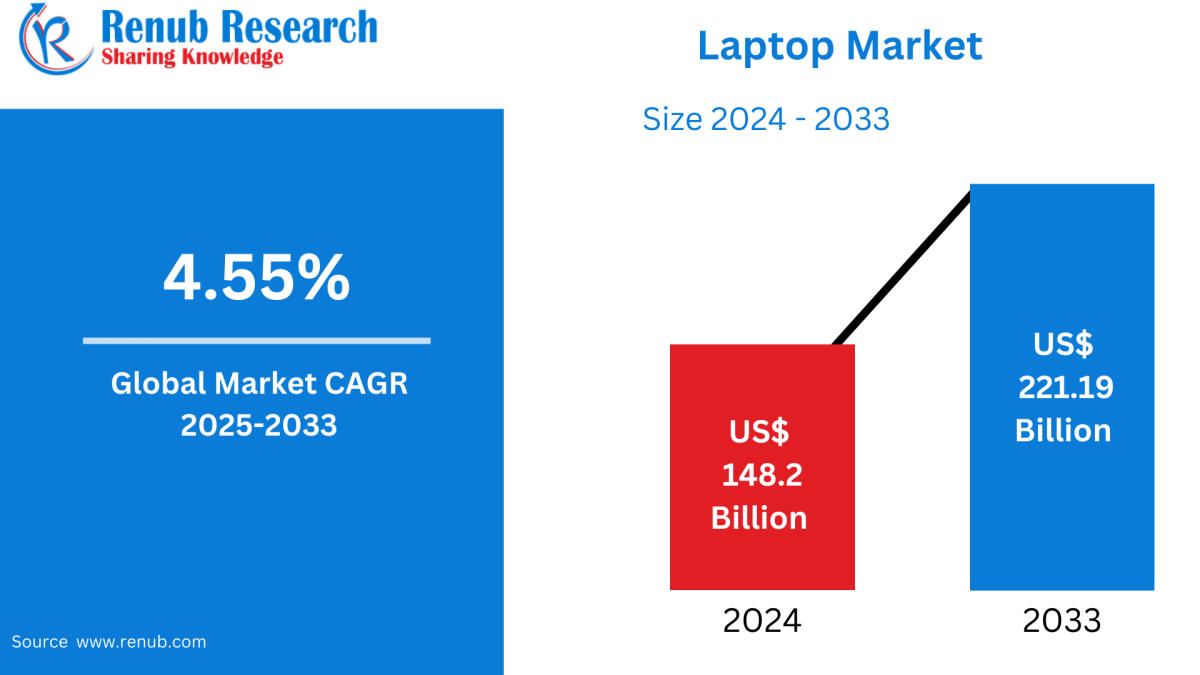
According to Renub Research global laptop market is projected to witness steady growth over the forecast period, supported by rising demand for portable computing solutions and the rapid digitalization of work, education, and entertainment. The market was valued at US$ 148.2 billion in 2024 and is expected to reach US$ 221.19 billion by 2033, growing at a compound annual growth rate (CAGR) of 4.55% from 2025 to 2033. Key factors driving this growth include the increasing preference for mobility, the expansion of remote and hybrid work models, the fast-growing education sector, technological advancements, and the rising culture of digital nomads.
Laptops have become indispensable personal computing devices, offering a balance of performance, portability, and connectivity. As lifestyles and work environments evolve, laptops continue to adapt to meet the needs of professionals, students, gamers, and enterprises worldwide.
Global Laptop Industry Overview
A laptop, also known as a notebook computer, is a portable electronic device designed for both personal and professional use. It integrates the essential components of a desktop computer—including a central processing unit (CPU), memory (RAM), storage (SSD or HDD), display screen, keyboard, and trackpad—into a compact and mobile form factor. Modern laptops also support a wide range of connectivity options such as Wi-Fi, Bluetooth, USB ports, and external display interfaces, enabling seamless integration with digital ecosystems.
The global laptop market has evolved significantly over the years, driven by the need for productivity on the move. Laptops enable users to perform a wide range of tasks, from basic web browsing and document creation to advanced activities such as software development, graphic design, data analysis, and high-end gaming. Their versatility makes them suitable for diverse use cases across industries.
The rapid adoption of remote work and digital transformation initiatives has further accelerated laptop demand. Businesses increasingly rely on laptops to support virtual collaboration, cloud-based applications, and flexible work arrangements. Similarly, the growth of e-learning and virtual classrooms has made laptops essential tools for students and educators, reinforcing their importance in modern education systems.
Request a free sample copy of the report:https://www.renub.com/request-sample-page.php?gturl=gLobal-laptop-market-p.php
Key Factors Driving the Laptop Market Growth
Widespread Adoption of Digital Transformation and Remote Work
Digital transformation and the global shift toward remote and hybrid work models are major drivers of laptop market growth. Organizations across industries are equipping employees with laptops to ensure uninterrupted productivity, secure access to enterprise systems, and efficient virtual collaboration. Laptops with advanced security features, high-quality webcams, noise-canceling microphones, and long battery life are increasingly in demand.
As remote work becomes a permanent component of corporate strategy, laptops remain central to maintaining workforce flexibility and operational continuity. Manufacturers are responding by developing devices optimized for prolonged usage, enhanced connectivity, and enterprise-grade security.
Rapid Growth in the Education Sector
The expanding education sector is another key growth driver for the laptop market. The rise of e-learning platforms, digital classrooms, and hybrid education models has increased laptop adoption among students and teachers. Laptops provide access to online lectures, research materials, collaborative tools, and educational software, enabling personalized and flexible learning experiences.
Educational institutions are increasingly integrating laptops into curricula to equip students with digital skills required in the modern workforce. As education continues to evolve, demand for affordable, durable, and performance-balanced laptops is expected to remain strong.
Growing Need for Portability and Mobility
The growing demand for portability and mobility is reshaping the laptop market. Professionals, students, and digital nomads require devices that allow them to work, study, and communicate from anywhere. Laptops bridge the gap between home and office environments, supporting both professional and personal tasks.
Manufacturers are focusing on lightweight designs, slim form factors, and energy-efficient components without compromising performance. The ability to carry a powerful computing device in a backpack or briefcase continues to drive laptop adoption globally.
Challenges in the Laptop Market
Changing Consumer Preferences
Shifting consumer preferences present a notable challenge for the laptop market. Many users are increasingly relying on smartphones, tablets, and other mobile devices for everyday tasks such as browsing, media consumption, and basic productivity. These alternatives offer convenience, touch-based interfaces, and multifunctionality, reducing reliance on traditional laptops for casual use.
As a result, laptop manufacturers are focusing on innovation, hybrid designs such as 2-in-1 laptops, and specialized devices tailored for gaming, business, and creative professionals to stay competitive.
Intense Market Competition
The laptop market is highly competitive, with numerous global and regional brands offering devices with similar specifications. Intense competition has led to price pressure, reduced profit margins, and increased marketing expenditures. Differentiation based solely on hardware specifications has become challenging, prompting companies to emphasize design, user experience, software optimization, and value-added services.
To maintain growth, manufacturers are investing in new technologies such as AI-powered features, improved battery efficiency, sustainable materials, and enhanced customer support.
Laptop Market Overview by Regions
North America Laptop Market
North America represents a mature and technologically advanced laptop market. Strong demand from professionals, students, and gamers drives sales of high-performance and premium laptops. Remote work, online education, and digital entertainment continue to support steady market growth across the region.
United States Laptop Market
The United States laptop market is driven by diverse consumer needs across business, education, gaming, and personal use. Users prioritize performance, mobility, design, and battery life. Continuous innovation, rapid adoption of remote work and online learning, and growing interest in sustainable and energy-efficient devices are shaping market trends.
United Kingdom Laptop Market
The UK laptop market is evolving rapidly, influenced by advancements in artificial intelligence and increasing adoption of hybrid work models. Demand is rising for laptops that support cloud-based applications, AI-powered features, and enhanced productivity outside traditional office environments. Continuous innovation and strong consumer interest in advanced technology support market expansion.
India Laptop Market
India’s laptop market is experiencing strong growth due to rising digital adoption, expanding education and IT sectors, and increasing remote work culture. Growing affordability, improved internet connectivity, and government-led digital initiatives are accelerating laptop penetration across urban and semi-urban areas, positioning India as a key growth market.
Middle East Laptop Market (Saudi Arabia & UAE)
Laptop demand in the Middle East, particularly in Saudi Arabia and the UAE, is growing steadily due to technological modernization, rising digital literacy, and increased adoption of remote work. Consumers show strong interest in advanced laptops with AI-powered features, high performance, and seamless cloud integration, supporting long-term market growth.
Laptop Market Segmentation
By Type
Traditional Laptop
2-in-1 Laptop
By Screen Size
Up to 10.9 inches
11 inches to 12.9 inches
13 inches to 14.9 inches
15 inches to 16.9 inches
More than 17 inches
By End Use
Personal
Business
Gaming
By Region
North America
Europe
Asia Pacific
Latin America
Middle East & Africa
Competitive Landscape and Company Analysis
The global laptop market is highly competitive, with leading players focusing on innovation, design differentiation, performance enhancement, and strategic partnerships. Key companies analyzed in the market include Acer Inc., Apple Inc., ASUSTeK Computer Inc., Dell, HP Development Company, L.P., Huawei Technologies Co., Ltd., LG, and Lenovo.
These companies are evaluated based on company overview, key leadership, recent developments and strategies, and revenue performance, offering a comprehensive view of the competitive landscape.
Conclusion
The global laptop market is expected to maintain steady growth through 2033, supported by rising demand for portable computing, digital transformation, expanding education needs, and evolving work styles. While challenges such as shifting consumer preferences and intense competition persist, continuous innovation and adaptation to emerging user requirements are creating new growth opportunities. Laptops will remain a core component of modern digital life, enabling productivity, learning, entertainment, and connectivity across the globe.
renubresearch