
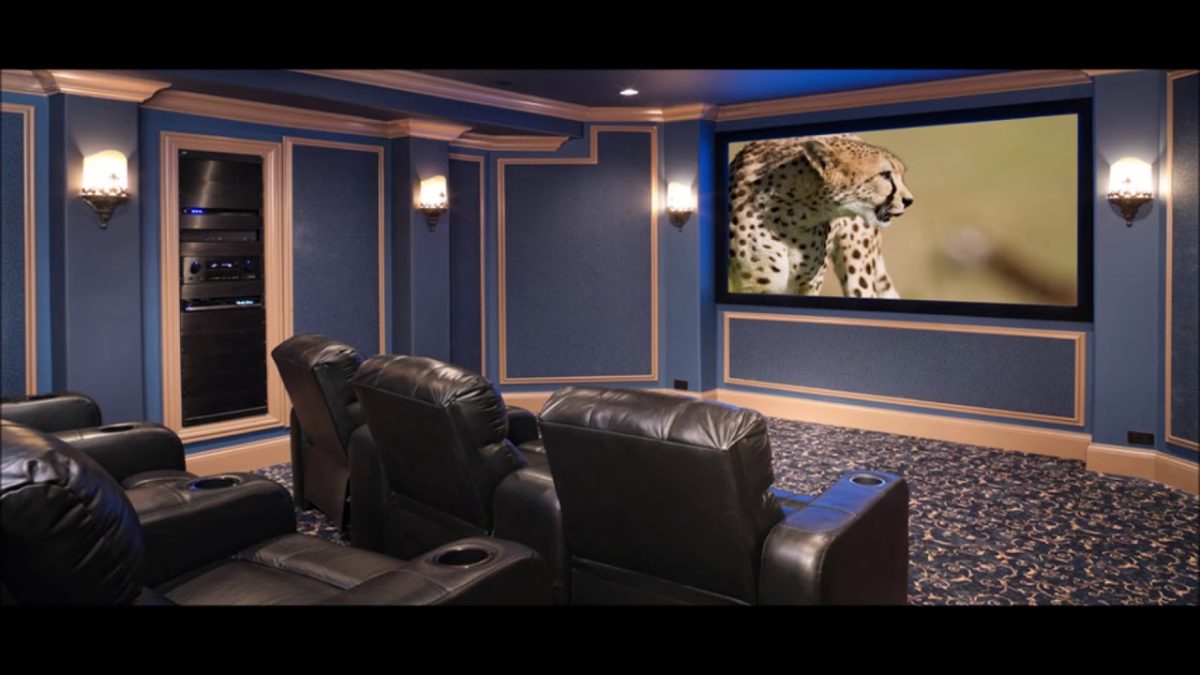
A professional home theater installation is more than a big screen and powerful speakers; it is the careful integration of acoustics, sightlines, infrastructure, equipment selection, and user-friendly control to create a cinematic experience that people actually use. The difference between a loud living-room TV and a dedicated theater is not just gear cost — it is planning and execution. When a home theater is thoughtfully designed, it becomes a repeatable ritual: friends gather, movies feel immersive, and the system is simple enough that anyone in the household can operate it. This article provides an end-to-end, practical guide to planning, installing, and maintaining a home theater that delivers on the promise of cinema at home.
Start with the room and the audience
Every successful home theater installation begins with a realistic assessment of the room and how it will be used. Dedicated rooms provide the best opportunities for light control and acoustic treatment; if you must use a multi-purpose space, plan for effective light-blocking and flexible seating. Consider who will use the room, how often, and for what content — movies, music, sports, or gaming. Seating layout determines screen size and speaker placement; a single-row design simplifies sightlines and acoustics while multiple rows require stepped seating and more complex sightline planning. Use the room geometry to guide choices about screen gain, projector lumens, and speaker placement rather than forcing equipment to fit a poor space.
Plan sightlines, screen size, and display type
Selecting the right screen size and display technology depends on seating distance, ambient light, and content type. Projectors create true cinematic scale and are ideal in darker, dedicated rooms, while high-quality large-format displays perform better in rooms with ambient light. Calculate the optimal screen height and width based on seating positions so viewers don’t strain their necks. Ensure the projector’s throw distance and lens shift can deliver the planned image without awkward mounts. Consider retractable screens if the room needs to remain multi-functional while preserving a cinematic image when in use.
Acoustic design: treat the room, don’t just buy speakers
Acoustics make or break a home theater installation. Untreated rooms produce echoes, resonance, and muddy bass that drown out detail. Treat first-reflection points on side walls and the ceiling with absorption panels to improve clarity, use diffusion on the rear wall to avoid slap echoes, and install bass traps in corners to tame low-frequency buildup. Choose materials and treatments that fit the room’s aesthetics — fabric-wrapped panels, tasteful diffusers, and decorative acoustic elements achieve both form and function. The combination of measured acoustic treatment and good speaker placement yields far more improvement than spending the same money on bigger speakers alone.
Speaker system architecture and placement
A classic home theater layout starts with a left-center-right front stage for dialogue and primary imaging, supplemented by surround channels for lateral immersion and one or more subwoofers for low-frequency foundation. Modern object-based formats like Dolby Atmos add height channels, which may be installed in-ceiling or via upward-firing modules that reflect sound for overhead effects. Time alignment and level matching during commissioning are critical: use test tones and measurement tools to align delays so all drivers produce coherent imaging. Proper speaker selection and placement tuned to the room give the illusion of larger, more enveloping sound than hardware alone suggests.
Wiring and rack planning: make it neat and serviceable
Professional home theater installation hides wiring for aesthetics but leaves it serviceable. Run in-wall rated speaker cable, HDMI conduit, and Ethernet to the AV rack. Centralize equipment in a ventilated rack with labeled patching and a clear power distribution strategy using a dedicated circuit or power conditioner. Avoid daisy-chained power strips and leave spare conduit for future upgrades. Label both ends of every run so future modifications do not require blind tracing. Good wiring discipline makes upgrades and troubleshooting quick and safe.
Control systems: simplicity is the ultimate sophistication
An intuitive control strategy is essential for a home theater installation that is used regularly. Program a single “Movie” scene that dims lights, lowers shades, selects the projector/source, and sets audio levels. Use a simple handheld remote or wall keypad with clearly labeled actions and leave a physical light switch for safety lighting. Avoid creating multiple complicated app flows that require training; the goal is to make the system operate with one or two taps. Reliable automation combined with a simple fallback control empowers guests and family members to enjoy the theater without an operator.
Lighting design and sightline protection
Lighting significantly affects perceived image quality and audience comfort. Provide low-level aisle lighting and wall sconces for a soft ambient glow that doesn’t reflect on the screen. For daytime use, motorized blackout shades integrated into the control system provide fast light control. Use dimmers compatible with AV systems to avoid hums or interference. Thoughtful lighting design enhances immersion and ensures the theater can transition between viewing and social modes with minimal fuss.
Video and audio calibration: tune for the room
After installation, calibrate both video and audio to the room. Video calibration sets color balance, gamma, grayscale, and contrast for natural images, while audio calibration aligns speaker levels, delay, and crossover frequencies. Use both automated room correction as a starting point and manual adjustments by ear or by a trained calibrator to achieve the best result. Calibration unlocks the full potential of your equipment and adapts it to the actual room, producing more satisfying results than unchecked “out-of-box” settings.
HVAC and noise control
A quiet HVAC system is crucial for a home theater installation. Locate supply and return ducts away from the seating area and use low-velocity diffusers to minimize noise. Consider separate zoning for the theater to keep fan speeds low during viewing. If the home’s HVAC cannot deliver low audible noise, explore decentralized solutions such as a mini-duct or a quiet inverter-based heat pump for the theater. Acoustic isolation of ducts and ducts lined with sound-attenuating material reduces mechanical noise intrusion.
Isolation and neighbor considerations
If late-night viewing is a concern, invest in sound isolation measures such as decoupled walls, thick doors with seals, and a floating floor. Complete isolation can be expensive, but targeted improvements — a sealed door, acoustic seals, and isolated HVAC — significantly reduce sound leakage. Good isolation preserves neighbor relations and prevents the rest of the house from being disturbed during deep-bass passages.
Maintenance, firmware, and lifecycle care
Maintain the home theater by keeping firmware current on receivers, projectors, and sources, cleaning filters and vents, and replacing projector lamps when lumen output declines. Periodically check speaker mounts, cable terminations, and rack ventilation. Keep a simple inventory list with model numbers, serials, and calibration settings so future service or upgrades proceed smoothly. A bit of proactive care preserves performance and prevents mid-movie surprises.
Budgeting and practical trade-offs
Great results do not always require the highest-priced components. Prioritize room treatment, proper wiring, and a well-calibrated front stage over the newest trend. For many projects, a mid-range projector and a well-designed acoustic plan outperform a high-end projector in a poorly treated room. Phase upgrades: install solid infrastructure, a good front-end, and room treatment first, then expand with immersive audio or upgraded display hardware later.
Final thoughts: design for repeatability and usability
A successful home theater installation combines technical discipline with empathy for how people use the room. Design for comfort, build for serviceability, and program for simplicity. When sightlines, acoustics, wiring, calibration, and controls are thoughtfully executed, the system becomes a repeatable ritual rather than a tech chore. The result is a room that reliably delivers cinematic moments — time after time — for family, friends, and guests.
Karen Avila