
Residential elevators are no longer a luxury reserved for large estates and multi-million-dollar homes. With families choosing multi-floor living, seniors aging in place, and accessibility becoming a top priority, home elevators are now one of the most practical upgrades for modern households. However, with growing demand comes an essential question:
What is the safest residential elevator?
When evaluating residential elevators from a safety perspective, several factors matter—mechanical reliability, fail-safe features, maintenance requirements, installation complexity, and emergency response behavior. In recent years, pneumatic elevators have emerged as one of the safest options for home use due to their engineering simplicity, minimal moving parts, and air-powered lifting technology that eliminates the risk of free fall.
This article explores how different elevator types compare and why pneumatic elevators are increasingly seen as the safest choice for residential installation.
Understanding Elevator Safety in Residential Use
Unlike commercial buildings with routine professional servicing, residential elevators must be inherently safe even with less frequent maintenance and simpler user oversight. A safe home elevator system should offer:
Smooth and Controlled Movement
Elevators should not jerk, bounce, or shift unexpectedly, especially when used by seniors, children, or people with limited mobility.
Fail-Safe Technology
The safest elevators are designed so that even in the event of a power failure or mechanical malfunction, the cabin will not drop or stop suddenly.
Minimal Dependence on Complex Machinery
Fewer components mean fewer potential failure points, reduced servicing needs, and simpler long-term maintenance—which increases overall safety.
Emergency Accessibility
Features such as emergency brakes, alarms, telephones, backup power, and manual descent capabilities can make a vital difference in unforeseen circumstances.
Certified Installation
A safe elevator must comply with recognized safety standards and be installed by qualified professionals with proven reliability.
Comparing Different Types of Residential Elevators
Residential elevators fall into several categories, each with distinct mechanics and safety profiles.
Hydraulic Elevators
Hydraulic elevators use a piston and hydraulic fluid system to lift and lower the cab.
Advantages
-
Strong lifting power
-
Smooth motion
-
Widely available
Safety Considerations
-
More moving parts
-
Possible oil leaks
-
Requires regular inspections
-
Emergency operation depends on mechanical backup systems
Hydraulic elevators are safe when well-maintained, but their complexity increases the possibility of wear-related failures.
Traction Elevators
Traction elevators use steel cables and counterweights, similar to commercial systems.
Advantages
-
Familiar technology
-
Smooth long-distance travel
-
Effective for multi-floor homes
Safety Considerations
-
Cables and moving components require monitoring
-
Lubrication and scheduled servicing needed
-
Power failure requires additional stopping systems
Traction elevators are reliable but involve more mechanical elements, increasing the long-term maintenance and inspection requirements.
Machine Room-Less Elevators (MRL)
MRL elevators are a variation of traction systems that eliminate the need for a dedicated machine room.
Advantages
-
Saves space
-
Flexible for smaller homes
Safety Considerations
They share the same mechanical dependencies as traction elevators, meaning regular servicing is essential for ongoing safety.
Why Pneumatic Elevators Are Considered the Safest
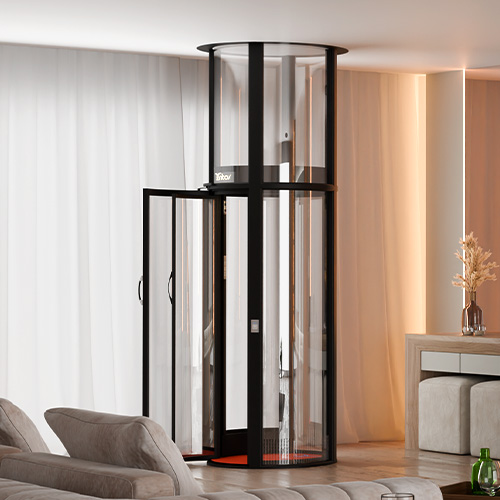
Pneumatic elevators—also known as air-driven elevators—operate using air pressure within a sealed vertical cylinder rather than cables, fluids, or heavy machinery. This fundamental engineering shift significantly increases their safety profile.
No Risk of Free Fall
In pneumatic elevators, the cabin is supported by air pressure. If power fails:
-
The elevator gently descends to the lowest floor
-
There are no cables to snap
-
No pistons to fail
-
No hydraulic systems that can lose pressure
This natural, gravity-assisted descent makes pneumatic elevators one of the safest solutions in emergency situations.
Minimal Moving Parts
Traditional elevators may use:
-
Motors
-
Bearings
-
Gears
-
Pulleys
-
Cables
-
Pumps and fluids
Pneumatic elevators operate with dramatically fewer mechanical components, meaning:
-
Lower risk of malfunction
-
Straightforward servicing
-
Reduced maintenance costs
-
Reduced likelihood of sudden, unexpected failures
Mechanical simplicity is a significant contributor to safety in residential applications.
Smooth and Comfortable Travel
Thanks to air-pressure control, pneumatic elevators offer:
-
Stable speed
-
No shaking or cable shifts
-
Gentle starts and stops
This is especially beneficial for elderly passengers or individuals sensitive to movement disruptions.
360-Degree Visibility
Most pneumatic elevators feature transparent construction, enabling riders to see outside from any direction. This enhances safety by:
-
Eliminating claustrophobia
-
Allowing easy monitoring
-
Providing peace of mind for caregivers
Visibility is especially reassuring in households with seniors or children.
No Machine Room and Minimal Installation Needs
A major safety advantage is that pneumatic elevators are fully self-contained. They require:
-
No shaft
-
No pit
-
No underground machinery
-
No separate machine room
This reduces:
-
Installation risks
-
Exposure to mechanical hazards
-
Space required for electrical and structural components
Because the system is clean, compact, and enclosed, long-term safety improves without dependence on additional construction.
Who Benefits Most from Pneumatic Elevators?
Pneumatic elevators are ideal for:
-
Seniors who want independence at home
-
People with mobility challenges
-
Retrofitting older or compact homes
-
Families that prefer low-maintenance systems
-
Homes where structural modification is difficult
They are not only safer but also more practical for everyday residential environments.
Nibav Home Lifts – A Trusted Name in Safety and Reliability
Among pneumatic elevator manufacturers, Nibav Home Lifts has earned a global reputation for innovation, safety, and user-centered engineering. Their elevators offer:
-
International safety compliance
-
Quiet, efficient operation
-
Elegant panoramic design
-
Low maintenance requirements
-
Fast installation
-
Energy-efficient travel
Nibav integrates advanced pneumatic technology with modern design aesthetics, making them a standout choice for homeowners seeking the safest and most dependable residential elevator solution.
Conclusion
When comparing mechanical systems, engineering design, and emergency response behavior, pneumatic elevators emerge as one of the safest residential elevator options available today. Their air-driven operation, absence of cables or oils, minimal moving parts, and natural fail-safe descent system make them exceptionally secure for families, seniors, and mobility-focused homeowners.
For those looking to upgrade their home with the safest, most reliable, and stylish elevator system, pneumatic elevators—especially from trusted providers like Nibav Home Lifts—offer confidence and peace of mind for years to come.
lucasmithu